• This thread is just the tip of the iceberg.The people ahead of the curve aren't Googling for answers — they're already in here, having the conversations you haven't found yet. DealerRefresh is free.Get the full picture →

How to Reach Buyers at Every Stage of the Journey

Are you finding that your digital marketing is less and less effective every year?

That’s not because you’re doing anything wrong, it’s more the fact that there are just more players coming into the game every month which is diluting the playing field.
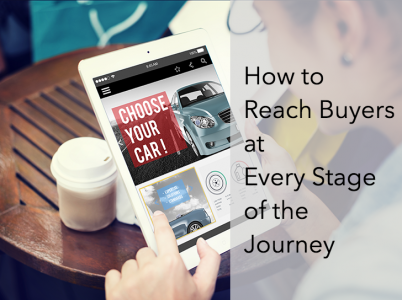
ssm-attract-more-buyers-overlay.png

This isn’t anything new. Even in late 2014, Media Post found that “... ad budgets are up 17% [for the automotive sector]. Online media accounts for 95% of this year’s increase.”

As digital marketers it’s your job to attract buyers that are shopping online. As General Managers you have seen the impact that online media has on sales and the bottom line. However, with new players coming into the fold and existing dealers upping their investments, it will be increasingly difficult to reach car buyers with your dealership’s message.

One way to increase your message reach is to customize your marketing on different parts of the buyer’s path to purchase.

[highlight color="#CCE6FF" font="black"]
High traffic, Low Conversion?
Learn how to turn Browsers to Buyers with Hyper-Relevant Dynamic Display Advertising.


[/highlight]

In 2012, Microsoft Advertising had created a report that identified the stages of a car buyer’s journey from the initial realisation of a need (or want) all the way beyond the purchase to ownership.

Each of these stages has a variety of media outlets and online information sources which are useful at each stage. Back in the day (or until just a few years ago) we marketers would rack our brains to determine the best time and place to display each ad. Fortunately, in today’s digital marketing age we can get extremely targeted with our messages and our content.

Thus, the ability to move from "educated guessing" to "data driven certainty".

What we found missing from the stages that Microsoft had outlined is that car shoppers aren’t actively engaged in shopping 100% of the time. As a result, we need to add another dimension to these stages - Active Auto Shoppers vs. Passive Auto Shoppers.

Actively Shopping

Simply put, this is when shoppers are actively researching or looking for a vehicle.

Actively Researching

During this time, shoppers are looking at review, research and comparison sites to determine which car best fits their needs and wants.

Historically, one of the only methods to reach these buyers with your dealership message is through basic display advertising. Typically, this is a branding or offers strategy with messages that talk about financing or general dealer incentives.

However, in recent years, new inventory advertising products have been able to provide dealerships with the ability to show live dealership inventory during this stage to entice buyers to visit their website.

Actively Searching

During this time, car shoppers have selected the car, their car of the moment, and are then looking for where they can find one to test drive or evaluate in person.

Reaching buyers during this mindset is relatively straightforward as people are actively looking for vehicles. As long as you have your inventory listed, and have a decent SEM campaign, you’re in the mix.

Traditionally, this is also where the bulk of the digital budget is spent. As a result, this stage is also where dealerships encounter the highest competition and see the most diminishing returns. As we mentioned above, the more players that come into the game, the less effective per dollar your digital marketing becomes.

Due to this oversaturation and highly competitive arena of vehicle listings and SEM, some savvy digital marketers have expanded into Inventory Display and other digital mediums to drive VDP traffic. Similar to vehicle listings advertising, Inventory Display feature interactive ads that link directly to your VDP. However, unlike vehicle listings advertising and SEM, Inventory Display does not yet suffer from a high level of saturation and competition

Passively Shopping

During this time, car shoppers have stopped actively looking or researching the cars they want to buy. These people are going about their other browsing habits in other environments that are completely non-automotive.

Typically, dealerships rely on retargeting or demographic targeting for this phase. However, retargeting only works if the buyer has gone to the dealership’s website and targeting by demographics paints everyone with a wide brush and may not be as effective as you think.

A better method would be to combine retargeting from the dealer’s site and behavioural targeting based on the shoppers actual online auto browsing history, learned by a Data Management Platform (DMP) in the Active Stage. By doing this, you can deliver advertising that is relevant even in an environment that is not automotive specific

By having tactics to reach buyers at every stage, you will be able to increase your chances of attracting more car buyers to your website and ultimately help increase the sales of your dealership.
What other strategies has your dealership employed to attract potential buyers at all stages?

Chime in on the DealerRefresh Dealer Forums

How to Use Display Ads that Drive In-Market Buyers

Sponsored-Blue.png

No, you’re not dreaming it. It is getting more expensive to attract the same amount of in-market shoppers as last year. What happened? As a digital marketing professional, how is it your budget gets bigger every year but the amount of in-market buyers you attract don’t grow by the same margin?

It's pretty straightforward - Everyone else is now using similar tactics to get valuable, in-market shoppers and the field is getting saturated.

Yesterday your dealership was one of the pioneers in the digital game, and you were reaping the rewards of a fairly open playing field. Today, anyone who has the budget can easily achieve what you have with a handful of vendors. Dealerships are competing with the guy across the road, across town, and across their own dealer groups and these guys are all using the same tactics you are.

You used to be able to invest a good chunk of your budget into listings sites online, a little bit extra for the top spot on SEM and BOOM! your showroom was the top seller in your area and your team thought of you as their “Digital Guru” (PS - don’t ever call yourself a digital guru). But now everyone is using precisely the same tactics.

That was then; this is now.

You can’t just go out and throw more money at the problem and expect to be back on the top of the heap. Dealership advertising has moved way past the “good ole days” listings and search solving all problems and the sooner you realize these problems, the better.

[highlight color="#CCE6FF" font="black"]

[Learn How to Attract In-Market Buyers to Your Website]

[/highlight]

Not All Display Ads Are Created Equally

While display advertising on the web is facing skepticism, display ads themselves aren't the problem. It’s how they’re used and measured that makes dealers feel like they hold little value for their local dealership. Display ads, like billboard ads, are similar standing on top of the tallest building in your town and shouting through a megaphone. Some people will hear you. Some may act on your speech and maybe one or two may buy what you’re selling.

As a GM, you want everything you spend your advertising budget on to generate opportunities and revenue (Leads and Sales). This is exactly where typical display ads have fallen short at the dealership level. They are great for advertising the big events, building up your brand and presenting evergreen ideas - Like: “Family owned for 45 years!” OR “The best service”. What they don’t do well is promote an ever changing and variable set of inventory.

If your goal is to get car buyers directly to your inventory where you know you stand the best chance for a sale then you’re going to have a challenge doing that with traditional display advertising.

Nobody knows your market better than you and auto shopping behavior changes constantly and quickly. Don't be left playing catch-up in an increasingly competitive marketplace. Take the time to sit and brainstorm the next evolution in your dealership's marketing direction.

ssm-aan-attract-buyers-small.png

What Do Dealers Really Want from the Vendor Community?

Fifteen years ago the auto industry, the world really, was faced with an extraordinary situation. We were at the dawn of the digital age and the World Wide Web was threatening to take down brick and mortar shopping, including car buying. At the time, most dealers hated “Internet shoppers.” These folks knew too much and were eating their profits.

Suddenly, a highly coordinated group of terrorists got hold of four airplanes in US skies and used them to attack the nation’s most sound and solid structures. For the next several months, car sales were on hold as consumers were frozen in shock. Dealers didn't know what to expect.

A decade and a half later, most dealers had a record year in 2015. But was it real? Some argue that your record year could be a bad thing and that if you're going to survive you need to always be growing your market share.

If you don’t know how you got to the top, you have no idea how to stay there. - Steve Stauning

What does it take to grow your marketshare today, and what will it take to continue doing so into the future? How are top dealers tackling this problem and what sort of resources are they leaning on to do so?

Dealers are overwhelmed with unsolicited sales calls and vendor inquiries, but if they tune everything out then how will they discover and learn about new things? Some (small) percentage have established a vendor protocol to handle it all. Most however struggle to find a passageway through the chaos.

At the end of the day, you only want to concentrate on the tasks at hand to sell cars and service customers. Thinking and overthinking the future is unpredictable, unreliable, and risky.

To explore these challenges I've initiated a discussion thread over in the forums titled simply What Do Dealer Really Want/Need?

Rather than producing content that tells you what is what (there's an overabundance of that out there), I'm hoping to get a better idea what dealers really want and need from the industry, from blogs like DealerRefresh.

  • Do you need more advice, more tips, more educational information?
  • Do you need a daily stream of emails and social content telling you what you should and should not be doing?
  • Do you need more training and trainers? Consultants? Coaches?
  • Do you need more conferences, expos, and workshops? More 20 Groups?
  • Do you need more relationships with people/vendors you can trust?

On that note, what are some resources you've come to rely on?

  • Which blogs, conferences, and media outlets are important to you?
  • What aspects of the auto business are proving solid for you and growing your business?
  • Which ones are not growing your business?

Please chime in and share your thoughts I'm anxious to see what Refreshers have to say because it will help us come up with ideas for new content and features on DealerRefresh. 

How to Make Conquesting Easier from Your Service Drive

Sponsored-Blue.png
Soft credit pulls provide the needed insight to truly understand your service drive to see which customers are in equity position whether they previously bought from you or not. While this approach to conquest business is on the rise, Dominion was the first to offer real-time bank agnostic soft credit pulls where you retain full ownership of the firm offer credit.

These real-time pulls do not require customer consent, social security number, or date of birth. They are quick, easy, and fully compliant with the FCRA.

Think of real-time pulls as the on-demand pull of preference. They are perfect when immediate information is needed on a customer in the service drive.

Batch Processing

A second pull that Dominion offers is batch processing. The batch process runs overnight guided by a pre-determined set of dealer criteria.

The service drive will have a new batch of credit and equity summaries available to them each morning. The approach creates a steady stream of new business opportunities without the need for human interaction.

Want to learn more about how Dominion's unique approach to soft credit pulls and how they can make conquesting easier from your service drive? Click on the image below.

Dominion-Dealer-Deal-Activator-Find-Out-More.png

Are you a “System” team or a “People” team?

A dealer owner recently caught me by surprise.

Chatting about the business, past, present and future, the conversation turned to opportunity and people. He explained that while there are opportunities “around,” without the right people to nurture and manage these opportunities, it didn’t make sense to pursue them. He then expanded upon what amounts to a very people-centric philosophy toward running his businesses.

I thought, “How rare.” 2016 marks 20 years in and around dealerships – I started selling Honda’s in 1996. I find it refreshing and rejuvenating that I can still be pleasantly surprised and learn a thing or two in the dealership.

I’ve been chewing on this for a few weeks, and with the NFL draft recently conducted, and NBA free agency in full swing, I see some parallels.

Are you a “System” team or a “People” team?

Chip Kelly – Oregon and then the Philadelphia Eagles – hell of a system! Really, based on a numbers game – up-tempo means more plays, more plays create more opportunities to score (sound familiar?)

Chip is a “System” coach. He is going to find players that fit into his system, and when he does - look out! At least for a while…

The perfect system matched with the perfect personnel for that system will be successful, at least until someone figures-out how to beat the system. And of course, the players come and go - so finding the perfect match is a constant effort.

Phil Jackson – NBA, Triangle Offense. Sure worked great with Jordan and Kobe executing! But what’s happening in NY with the Knicks? About the same level of success as the Eagles, I’m afraid.

The Triangle, the Triple-Option, the Run-and-Shoot, the Spread – all good, successful systems, for a time. And then there’s the "People" approach. In Sports, it’s the idea that you’ll take the best available talent, and coach around those talents.
Ever wonder why some teams are just always good?
Why some teams seem to have a culture of excellence and winning year after year?

The Pittsburgh Steelers are an excellent example – and as much as I don’t want to admit it – the New England Patriots. While both teams of course have systems, both organizations are renowned for creating space for their talent, coaching the people to maximize and capitalize on their talents. It’s not about finding round pegs for round holes. When there’s a square peg (or triangle, or trapezoid), you create and nurture a square space and the organization at large benefits.

I think a lot of businesses say they are people-centric. Can you imagine a business owner saying that they are not? LOL – preposterous. But how many really focus on maximizing talent vs. finding the round pegs that fit their round job descriptions? How many create an environment to systematically understand their talent vs. systematically filling the roster the system demands?

Dealerships are by and large systems operations. We’ve had largely similar processes in place for over 100 years, and we’ve been successful!! We fill our rosters with the best candidates we can find to operate the system. But has someone/something figured-out how to beat the system? Is there another game, another team that is showing us that the system has seen better days?

Are we still running the Power-I in a passing league? I love running backs too, but…the answer is obvious.

What would a people-centric approach look like in your business?

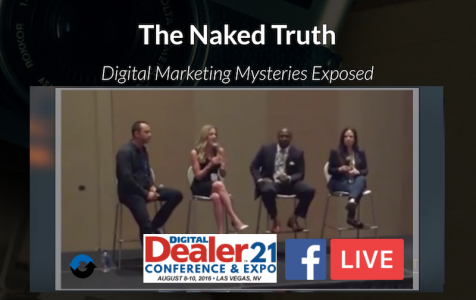
Digital Marketing Mysteries Exposed at Digital Dealer 21

In August 2016 at Digital Dealer 21 in Las Vegas, Digital Marketing Mysteries were exposed during the Naked Truth panel session moderated by April Rain. In the weeks leading up to the event, hundreds of questions were submitted through the AutoHook website which a committee then sorted through to select but a few to address with the panel.

The collection of “Hard Questions” that were tackled by the hard knocks panel (see below) centered largely on paid media spending, social media, and attribution, and effective tactics.

Included on the panel were:

Scott Empringham, Owner/CEO of Flashpoint Communications
Alex Jefferson, E-Commerce Director of Proctor Dealerships
Kelly McNearny, Senior Auto Retail Strategist at Google

The Naked Truth stripped down the roaring complexities of the digital world to reveal the most common pain points dealers face today when shaping their marketing strategies and we were able to capture it live on Facebook for people not attending the event. Be sure to check out the recording and let us know what you think.

autohook-dd21-naked-truth-panel-fb-live.png

The Naked Truth campaign was a real success for AutoHook and for Digital Dealer and it brought up new ideas and opportunities for doing something similar at future such events as well. Shouts out to everyone that was involved and be sure to stay tuned for future similar initiatives.

We are being beaten by socks. SOCKS!

Steve -

I love your actionable operations advice. I read you on you a regular basis and pay attention to that advice. Where I took small issue is when you advised folks NOT to pay attention to major studies from Google and others. Should ISMs and desk managers need to pay attention? Probably not. My point is that there should be a couple folks that do take the time and expend the effort to have a better understanding of the "Customer Journey", what influences customers, and when that influence occurs.

That is when we, as an industry, can do a better job with attribution. Having a better grasp on attribution gives us the ability to spend marketing dollars more effectively, cutting costs and selling more vehicles.

Now my back to my day, completing a Zip Matchback Analysis for a dealer. Influence and Attribution.

ps. Even though you put 'thought leader' in quotations, I choose to take that as a compliment. I actually started in the business in 1992 and have worked for dealerships, manufacturers, and advertising platforms, 'on the front line', since then.

We are being beaten by socks. SOCKS!

Ed great post, however attribution in the automotive vertical is available now. Capturing a consumers online path to purchase across multiple devices while building/appending profiles with select 3rd party data, then coupling those results with what is measured from specific traditional mediums can be done currently and will get you a "high degree" of attribution across all of your website users. Culminating in the ability to sales match your web visitors to which ad campaign(s) drove them to your website. The Nirvana of ROI.
But as referenced in your article, Google Analytics is not enough.. In fact in many instances Google Analytics is a hinderance and can be downright worthless-
GA does NOT provide IP data, the ability to cookie a user or capture a user's device ID. All of which are critical components required to determine if the visitor is a human or not, and a must to determine one's online path to purchase. In this day and age, people's online browsing behavior can be tracked rather easily with even basic Adtech chops. We filed a track one patent for SYSTEM AND METHOD FOR TRACKING CAR SALES" U.S. Patent Application No.: 15/158,882 which we believe will solve the attribution conundrum in the automotive vertical. Google, FB and others could provide "attribution" with their existing Adtech, but your AdSpends would decrease substantially because waste would be greatly reduced if not eliminated. Thus why attribution still remains a mystery for most.

We are being beaten by socks. SOCKS!

I was reading a great article about attribution on MarketingLand.com when it struck me, “Why are we so far behind other segments?” We are being beaten by socks. SOCKS!

Socks and cars are as different as can be

Socks are what’s called a low-involvement purchase; limited thought goes into the purchase and there’s very little risk to the consumer. Cars on the other hand, are a big purchase that consumers tend to think about a lot and research extensively. Consumer feel that the purchase of a car carries more risk than a pair of socks and they’re right automobiles are the biggest depreciating asset most consumers ever buy, unless they’ve bought a home with wheels underneath it or a large boat. Automobiles are the quintessential high-involvement purchase.

But there are some similarities...

Most sock purchases aren’t made directly off a manufacturer website just as most cars aren’t bought or sold that way either – they are purchased in stores (dealerships). They are Research Online, Purchase Offline (ROPO), also known as Research Online, Buy Offline (ROBO) or Online-to-Store (O2S-Factor) items. In the case of the socks, while the purchase may be made online, but it doesn’t have to be made from the manufacturer – it can be made from an (online) store. The socks looked at in the article were a little higher end, made by SmartWool. I’ve purchased them in the past and yes, they are extraordinary socks, but they are just socks.

Where socks are beating us

Let’s start with the fact that they are employing advanced attribution analytics. They understand that many of their customers are ‘multichannel’, using multiple sources to do their research. Because of this fact, the sock guys aren’t just relying on Google Analytics. Google Analytics does a great job on one very specific task – looking the performance of one particular channel out of many used; your website. Now remember the sock guys don’t sell the majority of their socks using ecommerce from their website (just like most car dealers don’t sell most of their cars using ecommerce from their website), the website is just one channel out of many used. They want, no, they need to see the big picture.

The sock guys have learned to love third parties

Rather than saying, “We’re just going to concentrate on OUR channel, our website, the one we own”, the sock guys wanted to look at the hard data. The hard data is pretty clear; when consumers used multiple channels they spent more money and they converted at a significantly higher rate. They also dug into influence, “The data showed the influence one publisher had in driving users to the site at the start of the customer journey, who later converted via other channels.” I read where one marketer in our segment is concentrating on folks “who are 12 days or less from purchasing a vehicle”. That’s great, but has he lost the ability to influence this potential customer to another dealer by not being around a little earlier? SmartWool sock shoppers average about 3.4 touch points per journey – car shoppers use 24 (on average). Using advanced attribution tools and analysis simply makes more sense (and makes more dollars) than reducing your concentration down to just your website.

The Customer Journey matters

Lately, I’ve had some fun with the folks who don’t seem to place much credibility in the importance of the ‘Customer Journey’. They seem to concentrate on the last the click – the lead (when there is one). Not that the lead (when there is one) doesn’t matter, because it surely does. But leads are just a small part of a much bigger picture. I agree with the folks on that side of the argument, that the folks handling leads and calls need to pay attention to the task at hand, but I’d submit to them, gaining a little insight into what happens before the last click may be very beneficial. The big picture needs to be paid attention to by the Dealer Principal, the General Manager, and the Marketing  Manager.  We are well past the point in time when we should believe that the analysis of the Consumer Journey and caring about sales and profits are mutually exclusive ideas.

Is our industry ready to leave the dark ages (and stop letting socks beat us?)

The Manager Who Doesn’t: A Guide to Better Sales Management

Hi Joe,

I’m a newly promoted sales manager from finance, never sold cars before and without any trainings, I sure was confused out of my mind what exactly I was supposed to do in the first 3 weeks. Your article gave me a break through! I now know important aspects of this job, why and how.

I very much appreciate the help!!

Sincerely

Leon

Between 30 Seconds and 2 Minutes - Makes ALL the Difference

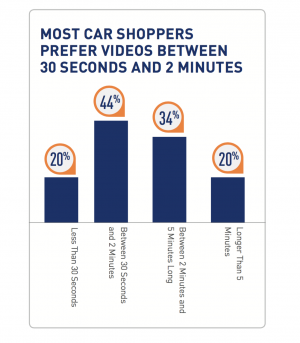
Car shoppers prefer videos between 30 seconds and 2 minutes.

Recording and sending personalized walkaround videos to potential customers is a new strategy for many dealerships, therefore best practices have only recently emerged. As a result, dealers and their sales consultants often struggle with incorporating video into the sales process while also improving video engagement to conversion performance. And as you know once one starts to struggle with something new, it's often abandoned - no matter how effective it can be.

My advice - DO NOT give up on video, the benefits are too rewarding. Automotive News has been telling the industry for some time now that “videos sell cars.” Now a new video study by Cox Automotive reports that 65% of consumers consider video an important part of their car-shopping process.

[Tweet "65% of consumers consider video an important part of their car-shopping process"]

But what if you’re using video and not getting the results you’d hoped for? There may be ONE contributing factor that will be EASY to determine and tweek...

video-length-study.png

Consumers Want Short but Informative Videos

This rings true for me. I like to watch short, informational videos to help me make a decision. If the video runs under 30 seconds, I might come away unsatisfied. Longer than two minutes, and I will most likely bail out before the end.

The content of the video certainly plays a role, as Aaron Wirtz points out in this must read article - “Shoot Video Like a Rockstar". Dealerships need to create content that customers want to watch and need to do it in under 2 minutes.

These simple suggestions can make a big difference on your video engagement to conversion.

  • Keep your videos short (under 2 minutes.)
  • Make your videos informative, focus on the exterior and interior.
  • Allow your personality to shine through and create a lasting impression.

What has kept you or your dealership from recording and sending personal WalkAround Video to potential clients?

Let us know here in the dealer forums.

Buy It NOW! The Button that Drives Change.

Like millions of other Americans, shopping online is a lifesaver in my crazy-busy life.

Amazon has changed the way I do everything, from buying presents, to books, to streaming video, and I LOVE IT. There is a reason Amazon is the powerhouse that it is; they understand where their customer is and know where their customer is going. They meticulously study market and shopping trends, pivot when needed, all without shedding a tear for the days-gone-by.

Buy-now-button-bardi-toto2.png
Just like the automotive industry, but not really.

Sure, our industry has taken steps in the right direction. We’ve done a respectable job at tracking shopping, analyzing the path to purchase, and understanding where the consumer is gaining the majority of their information. We’ve even been able to attract the alien scientists at Google to help us with the research.

Where we have a serious problem is with the pivot. We’re happy to use the technology, but we get all misty eyed and nostalgic about the days of yore. Let’s be honest. The selling strategy has not changed since the 80’s.

I’ll admit the 80’s were awesome. There were great movies, great mullets…great movies about mullets…but, who in their right mind would want to have to go back to the prehistoric research and purchasing process from then? How is Sears doing with its catalog business?


Today’s buyers are online, like it or not. They’re using their smartphones to do research about cars and pricing (even when they are on your lot,) utilizing technology to be as savvy as possible throughout the entire experience. The college class of 2016 has barely lived a day of their lives without the Internet. How does anyone expect them, or anyone who comes after them, to stop using a buying channel that they’re used to?

That’s why it’s time to take this one step further and offer customers a purchasing path they desire.

The Buy It Now Button

Take a deep breath.

I know this is giving some of you palpitations, but it’s once again that time to rethink the way we approach our customers. And, let’s just get this out of the way: not everyone will want to utilize a Buy It Now button. But, by not incorporating it into your process, you are disenfranchising a segment of your population who would click this and purchase almost 100% online.
buy-it-now-button-teespring-new.png

Why would anyone put up a barrier to selling a car?
If someone is saying they are ready to purchase, why put more obstacles in the way?

We need to stop taking an “all or nothing” approach to our customers. We have the ability and the resources to create a boutique experience for them on our website, so take advantage of that and increase customer retention while we are at it. Buying channels are different for each customer, and it's time we meet them where they are, making the experience as simple as possible for them. Simply put, let’s focus on the customer, and
not on what is easy or the dealership.


Who Will Use It?

Let’s make a list. You might have a few of these people...

Prior Customers

You already have the majority of the customer information from the prior sales. They already know the dealership, they chose to business with you again, they don’t need a tour of the service department, and they already know you support a Rocket Football team. Why not allow them the convenience of a shop, click, buy experience? Even if there is still information needed towards the completion of the sale, you can save a monumental amount of the returning customer time. And, as surveys repeatedly tell us, time is a valuable thing to customers (AND dealerships).


Screen-Shot-2016-06-08-at-8.51.44-PM.png
Customers with no trade-in


If a customer is interested in an outright sale with no trade-in, this is an optimal choice. If a customer knows exactly what they want and is ready to purchase, why wouldn't you give them every opportunity to purchase?

Customers who are paying with cash money

Yes, these people still exist. Give them a way to submit an OFAC check online, present them a clickable F&I menu, and take their money; more time available to better serve the "traditional customer."

Change and progress can be uncomfortable. But, uncomfortable is a great place to be. It's where you grow and push forward. Discomfort is a prime motivator to bring about change. Stop thinking in terms of every customer, and start thinking about certain customers. If Plan A doesn’t work, you can always fall back on Plan B.

If there’s one thing I’ve learned in my career, from venture capital to selling cars, to creating technology - if you don’t do it... SOMEONE ELSE WILL.

Are you ready to do it?
If you have a Buy It Now button, what has been your experience so far?

There are 2 very hot discussions happening right now in the DealerRefresh forums on the topic of "Buy It Now". I encourage you to read and participate in both...

  1. Do you offer a "Buy It Now" service on your dealership website?
  2. Online Shopping to Online Buying

What Ellen Degeneres Can Teach You About Off-Make Walkarounds

Depending on the study you read, the average consumer spends between 11 and 14 hours researching their next car purchase, making them extremely well educated on the facts, features and figures. They treat the research phase of the buying cycle as if it were their job.

Seems like a good thing, right?

Conventional wisdom would lead you to believe that an educated shopper would be much closer to a purchase decision when they arrive on the lot, but conventional wisdom doesn’t account for the friction that often occurs when that shopper knows more about their intended purchase than the salesperson responsible for educating them and selling them the vehicle.

Ellen Degeneres recently tapped into the “comedy” this can create on her show by sending one of her writers undercover with a hidden camera to pose as a salesman at a Chevrolet dealership. He performed the kind of walkaround that nightmares are made of.

Warning: although this video may induce a chuckle, it may also induce nausea.

Login to view embedded media View: https://www.youtube.com/watch?v=3ouS8mwCRGY


Your sales team likely knows everything there is to know about the make and models you sell, but what happens when a consumer comes in on that oddball low-mileage Saab you took in on trade?

There is a lot to discuss and I don’t have all the answers, but I do think we should start addressing the key issues.

First of all, how are you helping your salespeople gain the product knowledge they need on the off-make vehicles sitting on your lot?

What do you expect from them when they do a walkaround of these cars and trucks – do you think they should be able to perform more than a “standard walkaround” from the video above?

If so, what tools do you give them to be successful?

And what process have you defined for your team to really be able to educate themselves on your available used inventory?

How can you differentiate your dealership from others that are getting those same calls?

Here are a few ideas to consider:


Encourage your sales team to walk the lot both physically AND digitally!
As much time should be spent reviewing VDPs on your website as popping hoods and tying balloons on your lot. Your customers will likely see your VDP before they see your balloons. Your sales team should be familiar with the presentation of the vehicle online and offline.

Create a small spiff for your sales team to review VDPs with the intent of finding errors.
Is it worth $20 a week to crowdsource your team to find areas of improvement on your VDPs? Perhaps you could encourage them to submit both errors and omissions? Just think how much better prepared they would be to speak intelligently about that vehicle if they were studying VDPs this hard.

Encourage your team to write better custom comments.
A well-equipped model on your lot with rare and coveted options should be shouted from the rooftops and writing custom comments is often your best online sales tool to differentiate your inventory. Your team can certainly benefit from doing the research required to improve those comments.

Encourage your team to review VIN and market specific data.
There are a few tools out there that aggregate market-based data. Ask your team to read those reports and have them at their fingertips during the walkaround.
“Yes, Mr. Customer, we are asking a little more for this than ABC Motors. Remember that white is the most desired color and ours does have 57% fewer miles than the market average here in Austin. ABC Motor’s fluorescent teal one is at the top of the mileage average for this year.”

Market data can overcome an objection even before the objection surfaces.

Full disclosure: CarStory provides exactly this kind of data, and, yes, this could be considered a sales pitch except that we don’t charge anything for the reports. You can even add them to your website at no cost if you’d like to use them to educate your sales team and better inform your consumers. For more information on the free market reports, jump over to dealers.carstory.com

I think we can all agree that consumers expect a lot more than “door handles and tires come standard” when they make the effort to visit your lot. It’s time to maximize all the tools you have to provide a professional, feature-rich and market specific walkaround of every vehicle on your lot, not just the ones with which your team is most familiar.

What tools and/or process do you use educate your salespeople on the product knowledge they need in order to sell off-make used vehicles?

Join this discussion in the dealer forums.

How Much Traffic is Your Dealer Website NOT Receiving?

Sponsored-Blue.png
Every day, your dealership website is visited by hundreds of people. Most people arrive there as a result of searching your dealership on Google. But many arrive as the result of other factors…

Maybe it was a Facebook ad, a tweet, or a link from some other social network. Maybe it was from an email you sent, or from the manufacturer’s website.

But what about the people that didn’t reach your site? Why did some arrive while others didn’t?

Who was turned off by the lack of stars in your Google reviews? How many Yelpers didn’t like what they saw?

How many people ended up on a competitor’s website because of an ad? How many landed on another dealer’s website with the same name as yours?

Is there a way to even know how many people ARE NOT reaching your site?

NO! THERE ISN’T!

You have no idea how much potential business could be leaking due to cracks in your online presence. 

This is why you need to be performing assessments on a regular basis, to help identify where your dealership might be experiencing leaks in its online presence, and then address the issues.

[highlight color="#CCE6FF" font="black"]
What Does Your Dealership Look Like from a Shopper Perspective?

[/highlight]

AutoConversion Online Assessments

Much like mystery shops that put your people and your process to the test, AutoConversion Online Assessments put your online presence to the test. With these assessments we research your dealership online the way a potential customer would who is considering doing business with you. As a result you get an honest and objective analysis and consultation about your presence.

In these assessments we research your dealership on the five most popular networks that offer dealers a local listing -  Google, Facebook, LinkedIn, Yelp, and YouTube. We also investigate your dealership ratings and reviews on Google, Facebook, Yelp, Cars.com, DealerRater.com, and Edmunds.com.

Proprietary Scoring System

We then run our analyses through our proprietary scoring system so you can see how your dealership measures up against other dealers against the same criteria. Scores are not based on the quantity of reviews but rather the quality and consistency of your ratings and reviews together, on each individual site. This way, dealers with hundreds of reviews on sites such as DealerRater.com but lacking in reviews everywhere else aren't skewing the playing field.

Our scoring system also takes into account things like the way each dealership utilizes Facebook Ads, brands the dealership, produces quality professional videos, and more.

No Dealership is Flawless

Whether you believe your dealership is the best thing since sliced bread or at the bottom of the barrel, AutoConversion Online Assessments are designed to find the strengths and weakness of your online presence and offer guidance for addressing the issues.

There's no such thing as perfection. Even top performing dealerships and dealer groups have room for improvement, often in areas where they might not realize. This is what we look for in our online assessments.

[highlight color="#CCE6FF" font="black"]
Request your complimentary online assessment today or text ANALYZE to 555888 and sign up from your phone. Be sure to enter the referral code 'dealerrefresh' when you sign up and you will receive a free gift of your choice.

[/highlight]

The Car Salesman's Lament

Login to view embedded media View: https://www.youtube.com/watch?v=PhC0b5ZwxyU


Please enjoy this little ditty I wrote (to the tune of "Meomory" from the musical Cats) and performed as part of Gridiron at Wichita's Orpheum Theatre in April. Gridiron is a longstanding tradition in which journalists get together to make fun of the news of the last year, and it's been a lot of fun to perform with the cast for three years now.

Keep smiling!

Millennials, Cereal, and The Billion Dollar Implications on the Auto Industry

Nearly 40 percent of millennials don't eat cereal because it's too much work to clean up.

That was the claim of the article that caught my eye earlier this week. The article was based on a study done by The New York Times.

Stunned, I asked the token millennial on our team if he eats cereal. Nope. Our lead engineer chimed in and noted he doesn't either. I guess that makes me the old soul of the team, because I still love waking up with some Cheerios.

While it's easy to point and laugh at these silly, lazy, millennials, what was more interesting to me was the resulting changes in consumer shopping habits. In the last 15 years, cereal sales have dropped by nearly 30 percent, resulting in billions of dollars of losses for the industry.

It's not just cereal.

Take a look at coffee sales over the last 15 years. Everyone knows whole bean coffee tastes better and costs less, but convenience trumps both price and quality here:

Convenience-over-quality-Americans-buy-coffee-pre-ground-Whole-bean-Ground_chartbuilder.png


Source

It seems no matter where you look, more and more consumers are adopting a convenience mindset. Shopping trends in nearly every industry show consumers opting for the more convenient option at increasing rates.

These consumer mindset shifts typically come from well financed upstarts who introduce convenience to the market, which in turn shifts consumer expectations.

Take another look at the chart above for ground coffee sales and you’ll notice ground coffee sales started increasing rapidly in 2004, the exact same year Keurig released K-Cup coffee homebrewers.

It wasn’t a consumer change, it was the new convenient option that caused consumers to expect and demand more convenience from their coffee.

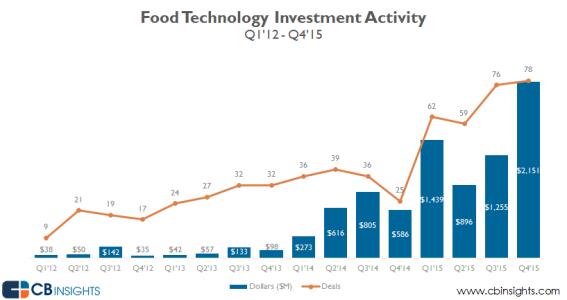
Another example of this is the fast food industry. Over the last two years there's been a major explosion in food technology (delivery) investment.

food-tech-funding-2015.png

Source

These startups make ordering food as easy as pressing a button on your phone. And they've raised billions to do it. This multi billion dollar push for convenience has ingrained new expectations in the minds of consumers.

"The delivery bug, after all, hasn't been exclusive to the fast food world. People have become conditioned to expect Amazon to deliver practically anything to them." - Washington Post

Due to new consumer expectations, a number of major fast food companies have been forced to add their own delivery service to stay relevant including Starbucks, Chipotle, McDonald's, Taco Bell and Dunkin' Donuts.

If you want to learn about the future of an industry, you just need to look at what the largest financial institutions in the world are investing in - this is where every dealership should be paying close attention.

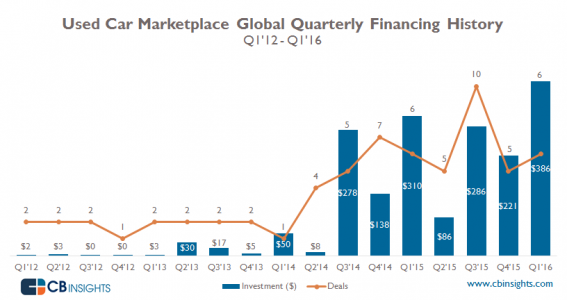
The recent funding for Online Car Marketplaces is strikingly similar to the Food Tech chart above.

Used-Car-Quarterly.png

Source

Billions of dollars are being poured into the auto industry to bring this same level of convenience to car buying. These new startups aren't competing for inventory size or prestige, they are competing for convenience.

Take a look at these new companies and you'll find phrases such as:

"You stay on your couch while we deliver and pickup the car for free." - Vroom

"10 days to Fall in Love. Take your time and fall in love. If not, we'll come pick it up, for a full refund." - Beepi

"TEST DRIVES, DELIVERED. We'll bring the car to you and be there to answer any questions." -Shift

"Need financing? Pick a combination of down and monthly payments that work for you using our proprietary tools. Have a trade-in? We will give you a value in 2 minutes. Ready to buy? 20 minutes at your computer is all it take" - Carvana

Are customers asking for these perks?
Is it what they really want?

Debatable. More on that in my previous post.

What’s more important is the undeniable reality that billions of dollars are being  invested to influence the expectations of your future customers. This effect has been seen numerous times across different industries as demonstrated above.  If you follow the money, you’ll see the auto industry is next.

The largest players are already making moves in this direction. Autonation famously invested $100 million in their own online sales platform and Penske just announced they are rolling out online sales to all of their dealers by the end of this month.

But that leaves the question for every other dealership not belonging to a 100+ rooftop group. How do you plan to compete in an environment of increasingly demanding customers? Comment here, in the dealer forums.

Three Ways Dealers Can Avoid "Mobile Marketing Mayhem"

The accelerating rate of mobile usage is not a trend. It’s not going out of style and it's certainly not reversing.

Mobile best practices need to be hard coded into the DNA of every brand, dealer, and marketer – guiding your digital strategy from this very micro-moment on. Mobile cannot be a segment of your marketing, it must be the core of it.

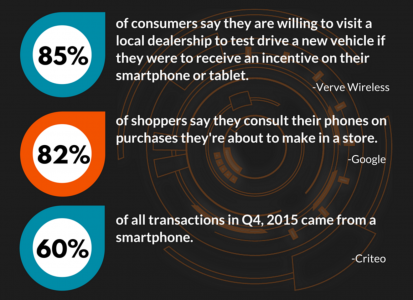
“Showrooming,” or shopping another dealer on a mobile device while physically at your dealership is an increasing challenge that can't be ignored. If consumers are going to compare prices on their smartphones for a $20 item or an $800 item, the probability is even stronger that they’ll do the same for a $40,000-$50,000 item while on a dealer’s lot.

Mobile-driven shopping behavior is rapidly evolving from buying a T.V. at Best Buy to purchasing a vehicle at your dealership.

autohook-2016mobileinfographic-stats.png

View Complete 2016 "Mobile Stats" Infographic

[highlight color="#CCE6FF" font="black"]

Download this Free eBook - Auto Dealers and the State of Mobile Marketing 2016


[/highlight]

We’ve been in the space long enough to know that with all up-and-coming technologies come growing pains. Here are three ways to own mobile and avoid the problems that other marketers have faced.

1. Ensure You Have Access to Accurate, Real-Time Attribution Reporting

According to research, 41% of U.S. marketers said the lack of attribution transparency was one of the biggest, if not the biggest challenge of mobile advertising today. The ultimate goal for dealers and OEMs is to attribute every sale and every showroom visit to a single campaign or path at nearly 100% effectiveness, regardless of the device or media channel.

Dealers cannot realistically do this by themselves, but they can partner with providers to unite technology with intelligent data that executes well and has the attribution reporting to prove it. This is not as far-fetched as some might think.

2. Eliminate Extra Steps

Digital marketing can get complicated when you attempt to break down all the moving pieces that make up a comprehensive strategy. With mobile, it’s more simple. Think of a single goal your mobile campaign must accomplish.

For most, it should be to get a buyer into your showroom. Then, map out the easiest, most straightforward route to get there. The fewer pages, forms, and steps your audience has to navigate, the higher the chances of conversion.

According to eMarketer, over one-third of advertisers say users or consumers not converting on mobile is huge challenge. Friction is the enemy here. If a customer gets “stuck” in your process they will move on faster than you can say "Ferrari."

Always put both speed and simplicity into play when it comes to increasing conversion rates on mobile. Focus on one goal, one call to action, and one destination – your dealership.

3. Zero-In on Buyers

Ninety percent of consumers leave their location services enabled. In addition, 61% of smartphone users are more likely to buy from mobile sites and apps that customize information to their location. Through location and behavioral targeting, dealers can take advantage of these built-in GPS systems by building consumer profiles that offer insight into who is in-market and ready to make a purchase, and who is still in the research phase of buying a car.

At the end of the day, great marketing is about one thing - relating to people. With all the information, analytics and tools available to us, we have an overly complicated, multi-faceted, omnichannel approach of simply trying to relate to people.

The evolution of mobile can be more simplistic. It’s about connecting with people on another level (that happens to be in their pocket, purse, or in their hands roughly 99% of the time).

Try not to blink. Before you know it, over 90% of showroom traffic will be attributable to a mobile device. Rather than being reactive, you want to be there and be ready!


**Example1
[highlight color="#CCE6FF" font="black"]

autohook-mobile-ebook-download.png

Free eBook - Auto Dealers and the State of Mobile Marketing 2016

Mobile customers expect to receive personalized messages and customized offers at the exact moment they’re in your neighborhood shopping for their next car. Give them what they want, when they want it and those customers will be yours.

Download Now

[/highlight]

Is Your Dealership Career Website Ready For Today’s Job Candidate?

You've identified your Dealership's Employment Brand, but now what?

In my previous article we defined, in the simplest of terms, what a Dealership Employment Brand is. But each "dealer" must take hard look at their business structure, operations, standards and practices in order to identify and define their own True Employment Brand. The value of your employment brand will speak volumes when seeking and attracting top talent for employment.

One successful key strategy when building your dealership's employee brand is incorporating a Career Website. Let's consider...

A career website should the first impression for as many job applicants as possible. When a potential customer walks through your showroom doors, they have done their due diligence by not only thoroughly researching the vehicle they intend to purchase but have also researched the reputation of your dealership.

Similarly, job seekers are conducting extensive research when deciding whether or not to apply for a job with that particular company. A poorly designed career site fails to promote your dealership as a great place to work.

The Dollars & Sense of a Strong Dealership Career Website

A dealership’s career site also has a financial impact. Your dealership is probably spending significant dollars on promoting your latest job openings. For example: online job board postings to spread the word about those open positions. If that investment results in the right hires, it’s easy to justify the expense. However, when viable job candidates are introduced to an unappealing employee brand and corresponding uninformative career website, they are less likely to pursue the application process. You also increase your risk in attracting the wrong candidates - meaning the investment in generating applicant flow is wasted.

With this in mind, is your career website ready for today’s job candidates?

We recently measured one of our partner’s hiring activity over six months to see how employment branding affected the quality of applicants in the overall hiring process. The partner utilized both job boards and a strong career site to attract 1,825 applicants for several rooftops. Our findings showed that direct career site visitors drove 18 percent of applicant submissions, but resulted in 79 percent of overall hires. Additionally, career site candidates were more likely to be top performers.

Employee turnover from this candidate group was also 70 percent below the industry average.

To determine if your career site is ready to attract top talent, we encourage you to open your site and ask yourself the following questions:

Does it Make a Good First Impression?

In life, you only get one first impression, and we all know how detrimental or beneficial that can be. Apply this philosophy to your career site. Does the site accurately portray your dealer's employment brand while giving a compelling representation of your team and culture?

Here are some best practices:

  • Showcase your dealership’s culture, benefits and job openings front and center so they are encouraged to continue reading.
  • Use lifestyle photos that advertise a positive and exciting representation of your team, culture and history.
  • Make sure your content focuses on your best qualities by highlighting key employee benefits, perks and community involvement.

Does it Outline a Potential Employee’s Career Growth Path?

It’s important to understand that many applicants are not only looking for a job, but rather a long and fulfilling career. This is something that is not commonly talked about, but can be a huge competitive advantage that draws in higher-quality candidates.

Your career website needs to speak to each and every applicant, demonstrating a potential career path with the company. Whether they are a recent technical graduate or an experienced sales person, they should have an idea of what their future would look like with your dealership.

Is it Accessible on Mobile Devices?

Today’s candidates are tech-savvy and expect information to be available in the palm of their hands. Job candidates will not only want to research your business from their mobile device but will likely want to apply at the same time.

Making sure your career website is mobile-friendly may seem like the obvious but too often company and/or corporate websites are overlooked for providing a fluid mobile experience.  enables applicants to inquire, learn and apply to a dealership no matter what device is being used. With that in mind, it’s important to ensure applicants can simply upload their resume rather than having to spend excessive time copying and pasting it into various fields. Making the application process as simple as possible and easily viewable on mobile devices will help ensure millennials are actually applying for the positions, instead of seeing an overwhelming application process and opting to pass over it.

Today’s candidates expect information to be available in the palm of their hands. Making sure your career website is mobile-friendly may seem like the obvious but too often company and/or corporate websites are overlooked and fall short on providing a fluid mobile experience. Applicants should be able to learn, enquire and even apply for a position by simply upload their resume, no matter what device they're using.

Remember, a strong career website can play a huge part in building your dealerships employment brand. Make sure it’s easy to follow and evokes feelings of excitement in candidates by portraying the dealership’s history, culture and anything else that makes your dealership special.

How are you currently promoting your Dealership's Employment Brand to attract top talent for hire?

Do you have dealership career website? 


Join this discussion with your answer(s) right here in the DealerRefresh Dealer Forums
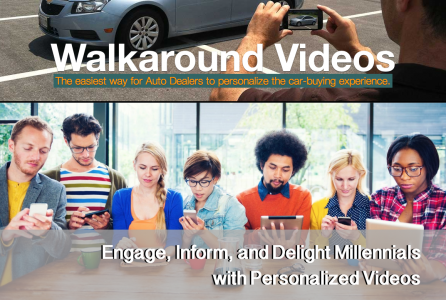
Engage, Inform, and Delight Millennials with Personalized Video Emails

WAV-Millennials.png

sponsored.png
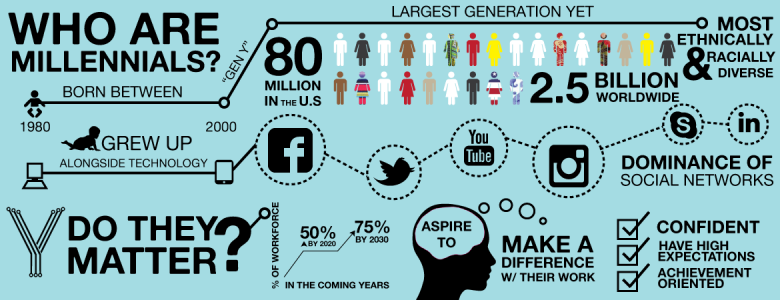
Don’t think Millennials are a big enough customer segment to worry about? Think again. According to a recent DrivingSales study, Millennials are now accounting for 27% of new car sales. “The buying power of this younger market represents a significant growing opportunity for dealerships, the report states.

Who Are Millennials? Why Do They Matter?

According to one source, Millennials are those that were born between 1982 and 2004. Considering the World Wide Web was created in 1995, that makes the younger segment of this generation a teenager at the time the WWW came about. Practically speaking, the Web has almost always been with them since they’ve been buying things.

Here’s a few things we know about Millennials…

We know that Millennials spend time researching online before visiting a dealership – even a dealership where they already have a relationship.

We know that Millennials are more likely to trust dealerships that give them the information they are seeking, and let them come to their own educated decision.

We also know that videos sell cars.

who_why.png

Two Keys to Selling Vehicles to Millennials

While price is important to every customer, there are two other factors that heavily influence a Millennial’s purchase decision - trust and experience. Building trust and creating an amazing shopping experience are two of the most important things you want to focus on while working with a Millennial.

Trusting the Dealership

Since we know that Millennials spend significant time researching online before visiting a dealership, we can deduce that this generation is more likely to trust dealerships that give them the information they are seeking, and let them come to their own educated decision. Thus transparency and personalized interaction in digital form are pivotal when dealing with Millennials.

Amazing Shopping Experience

Because Millennials perform so much of their research online, creating an amazing shopping experience begins online in digital form, most likely on their smartphones. Therefore, you’ll need tools and resources that make it easy for you and for them to experience all your dealership has to offer, ideally on their smartphones.

Using Video to Sell to Millennials

It’s been said that one minute of video is worth a million words, which has much to do with why video helps sell cars. Considering that we know our objective with Millennials is to build trust and create an amazing experience, naturally this is what we should strive to accomplish in our videos for Millennials.

Rather than, “show me the money,” Millennial car buyers are saying, “Show me the video!”

But creating videos can be costly and time-consuming, and not everyone is fit for being on camera or producing video. Therefore, dealers need a tool that makes creating effective videos simple and easy to do, where sales reps can concentrate on building trust and creating an amazing experience rather than producing a video.

wav-three-examples.png

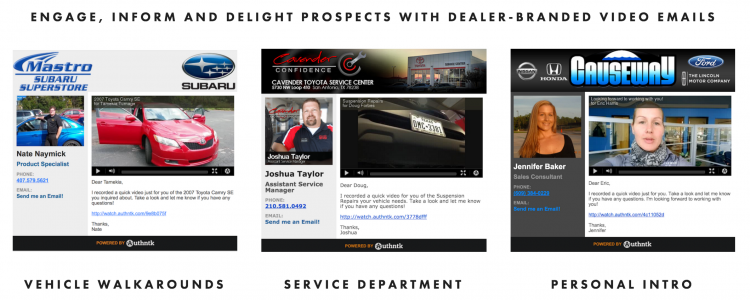
One such tool that hundreds of dealers are utilizing every day to easily create such videos is Walkaround Videos. With Walkaround Videos, you can create an amazing overall experience by engaging, informing and delighting your prospects with customized, dealer-branded videos of each specific vehicle they are interested in.

Creating trust through video can be accomplished with Walkaround Videos by showing the customer the vehicle (or vehicles) of interest to them in a personalized way which they can view on their smartphone or tablet device, not requiring them to visit the dealership to spark an emotional connection with a car. By hearing your voice, the Millennial is also able make a personal connection with you.

Producing Walkaround Videos takes but a few minutes and can be done using your own phone or tablet device with the Authentk Walkaround Videos app available for Android and iOS devices. You simply point your camera to what you want the customer to see while speaking to provide audio narration, or pre-record a video for upload. When ready, you complete the form with the customer’s information and a branded email is sent to the customer, linking them to a branded viewing page.

The entire process can take as little as 2-3 minutes!

With Walkaround Videos, you are putting yourself out there as a trusted source of information. You aren’t selling anything. You are educating buyers and building trust through video. When they are ready to come to the dealership, they will insist on seeing only you, because you’ve taken the time to send them personalized information in a form they prefer - video!

Try It For Yourself

Are you ready to give it a whirl? Take Walkaround Videos for a free test drive by clicking here or the image below and submitting your information. Upon doing so we will send you login credentials and instructions for setting up a demo account which you are welcome to use free for 15 days. Once you’ve had a chance to try it out and see how easy it is to create personalized videos, you’ll be wishing you knew about the tool years ago.

WAV-Get-Started.png

3 Core Issues with Mystery Shopping

How many thousands of hours have been used to develop scripts to respond to inbound calls?

Thousands of dollars and hours have been devoted to phone training. Thousands of hours have been spent on “corrective action” taken by managers in order to improve inbound sales call procedures. After all of this time and money, has the customer experience actually improved and how do you know?

One way dealerships measure this is through mystery shopping, and is it enough?

Here are 3 core issues with mystery shopping:

  1. The majority of manufacturer-driven mystery shopping anonymizes the inbound call or internet inquiry responses. Therefore, we can’t validate or verify what was said or written in response to customers’ questions.
  2. In any given month, even large dealerships only get a handful of mystery shop recaps. With this small of a sample size, there is not enough data to establish a month-to-month trend.
  3. Mystery shoppers aren’t real customers. They’re mystery shoppers. Real customers ask real questions whereas mystery shoppers ask staged questions. Why are you making real decisions or giving real feedback to your real employees based on a staged “role play” session?

If you’re not recording calls, you should!

If you’re not scoring calls, you should.
If you’re not reviewing scored calls with employees, you should.

At the first point of contact a customer makes with your dealership, she/he should get to experience the highest level of professionalism that your store(s) can muster up. If the level of professionalism or quality of the call is one iota short of what the customer expects, then it becomes a problem because their experience suffers from the very beginning of the sales process.

With the increase in mobile-friendly sites and overall mobile phone traffic over last year, it has become easier than ever for customers to call a store from the very device they’re using to browse your inventory.

My point is – more customers than ever before are calling dealerships for specific vehicles they see online. How do you ensure these calls are handled appropriately?

Record and score your calls

Generally, the only people within the dealership who are impartial and critical enough to reliably listen to, score, and review calls are the managers. But isn’t their time better used…managing.

The job of sifting through hours of recorded service/sales/parts/wrong number calls is not something that should be the responsibility of anyone within your organization.

Why? Time, money and objectivity.

No one within your organization should have the opportunity to influence results. What’s the Solution? A 3rd party company that offers call recording, scoring, and sometimes reviewing.

The only people who are unbiased enough to reliably and consistently score calls is someone who does not have any relationship (personal or professional) with any of your employees. When choosing a 3rd party company, ensure they have streamlined procedures in place with employees experienced in scoring calls on a standardized system.

We recommend that all calls be scored based on the same quantitative criteria, free from any outside (or inside) influence or favoritism.

Regularly review calls with employees

Ineffective management is inconsistent, punitive, and reactive whereas effective management is consistent, constructive, and proactive.

Think of how impactful your managers can be with consistent call scores with which they can review with their sales team during weekly 1-on-1 sessions. Each employee is not only given specific items to improve upon, but they are also given strategies, techniques and recommendations on how to improve. These are documented and then reviewed next week.

Positive aspects of calls are also covered so that each employee receives feedback on their strengths as well.

Having trouble convincing employees to use scripts?

After going through phone script training for the first time, an experienced sales person (Sam) approached the dealer (Leo) and expressed his disapproval because the script would make him sound “too robotic” and he would prefer to “wing it.” Unbeknownst to Sam, Leo had just listened to one of Sam’s calls from the day before.

What Leo said next was one of the most meaningful and humorous lines I’ve ever heard:

“Sam, I hope you sound like a robot! That’ll be a hell of a lot better than what I just listened to!”

Effective communication with customers is a top priority at any successful dealership. By recording, scoring, and reviewing real customer calls you are ensuring a positive customer experience.

Observing my Brother... the car shopper

Observing my Brother... the car shopper.

My brother is shopping for a car for his wife. What a great observation experience for me!

My rules are to observe only. Answer questions only when asked. I tie my hands behind my back and put duct tape on my mouth, and off he goes...

My brother is no dummy. He runs multi-million dollar industrial construction projects and he custom builds water cooled gaming PCs for recreation. IOW, he has all the intellectual resources needed... AND like most shoppers, he some what knows cars (makes, models not trims). His wife's Hyundai SUV gave him ~100k miles of trouble free use, so he's devalued new car risk (i.e. he'll buy any brand).

I'll track workflow, hours and websites (websites will be colored blue)

Day 1. Website #1 (1.5 hrs)

Research begins with Consumer Reports.​

Day 5. Websites #2, 3, 4, 5, 6, 7 (>2hs)

This evening, he takes CR's recommendation (make/model & trim) and begins to "find what deals are on it". He won't look at [edit] used SUVs because when buying his truck, he discovered the dollar gap between new and used was too small. So, he assumes that the gap is still small. He googles the dealer's website closest to him and finds that the final prices (less incentives and discounts) are more than he wants to spend (this is a common workflow, he picked a loaded unit and was expecting a larger discount).

He googles & goes to the OEM site. He thinks that if he can buy a lesser trim and add some cool features he'll save some cash. On the OEM site, he custom builds the SUV to his preferences, then he wants to use this custom config & click a button to find matches at dealerships in his market...

#FAIL He tries 3-5 times on OEM site and gives up. He googles another dealership site and hits another dead end. He's 2+ hours into this, he's tired and giving up on this Consumer Report pick (FYI, this is where using past shopping data to create a personalized visit can reinforce frustration). It's late, he's tired, he's got multiple tabs open, and he's realized he's back to zero and those 3-4hrs are lost.​

Day 6. Websites # 8, 9, 10, 11, 12, 13, 14, 15 (>2 hrs)

High level research resumes on work breaks with googling Car&Driver, MotorTrend, He mentioned US News but he discounted it. These sites narrow his focus to 2 new OEMs and 2 models. Later that eve, on google he discovers CarGurus and this makes a significant impact to his "not used cars" planning. I see him using 'Gurus site almost exclusively this eve.​

Today, it's been 2 days since Day 6. No forward movement.

He has 2 outside sources pushing him. #1) My wife is an ex-car sales gal, she told him to buy at the end of the month (mngrs deal more aggressively). #2). His trade has 95,000 miles and he's been told >100k is a tradein negative. He's feeling the pressure to act ;-)

My summary so far.

My brother is 15 websites and ~7 hours into this. He's getting shopping fatigue. He's fully committed to the internet, but, the internet keeps falling short helping him.

More as it comes...

P.S. I see his conclusion coming as clear as day. He is going to be another shopper that will tire from the fragmented shopping UX and abandon the internet and go to the dealer to fill in the gaps. I see this behavior everywhere I look. It's why internet shoppers don't want Digital Retailing ...yet ;-)

P. P. S. It's important to point out that the single sessions 2 hours & more were filled with family interruptions. These stops and re-starts caused him to burn up more time trying to recall where he was and regain the workflow.

Join the conversation.. 

How to Define, Identify and Build an Employment Brand for Your Dealership

When you consider the amount of money and effort dealerships devote to advertising, it’s clear they recognize the importance of a strong consumer brand is critical for success.

According to an eMarketer report, “The US Automotive Industry 2015: Digital Ad Spending Forecast and Trends,” digital ad spend is expected to grow from $7.3 billion in 2015 to more than $12 billion in 2019. Netsertive research found 90 percent of auto dealers are utilizing digital strategies - including paid search, display ads and retargeting ads. In this regard, dealers are far outpacing manufacturers and other auto industry businesses.

With this type of investment in building brand awareness, it’s obvious that car dealers believe that the investment in developing a strong consumer brand will deliver a positive return on investment. Your dealer’s brand is a driving force to establish the credibility that buyers seek out when purchasing a new vehicle.

While building a strong consumer brand is an acknowledged best practice, many dealerships place little effort or have overlooked the importance of creating their Employment Brand

What is a Dealership Employment Brand?

In the simplest of terms, your employment brand is the perception that prospective and current employees have of your dealership. In the case of job applicants, it's the sense that prospective employees get when they see a job advertisement or visit your website to learn more about your dealership's employment opportunities.

As an employer, creating an employment brand that establishes credibility, goodwill and trust that attracts top talent is as important as attracting car buyers.

What is the Value of a Strong Dealership Employment Brand?

Your employment brand is the foundation of your recruitment strategy because it showcases your dealership as a potential employer and differentiates you from other local dealers. It can be the difference between the best candidates knocking on your door or simply hiring your competitors’ castoffs.

With each year, the employment market becomes more competitive due to evolving demographic and economic trends, meaning your dealership will find it increasingly difficult to find the top talent. By not investing in your employment brand, you’re settling for mediocrity. You’re sending the message that you’ll hire anyone and everyone, regardless of cultural fit or shared values.

At the same time, your employment brand will set expectations for existing staff members and future candidates. All personnel should have a clear understanding of the characteristics, skills and business philosophy that you value above all. By doing so, you’ll have a better chance of increasing employee retention rates and fostering stronger morale because you’ll have a staff consisting of like-minded individuals working toward a common goal – instead of people just there to collect a paycheck.

How Do You Identify Your Dealer's Employment Brand?

Formally describing your employment brand may not be something that you’ve given any serious thought towards, but it’s likely a concept that has been floating around in the back of your mind since you first started in the car business.

Identifying your employment brand begins by taking a long, hard look at your current business structure, operations, standards and practices.

To get started, consider asking yourself these questions:

  • What’s the expected balance between management and autonomy for daily tasks?
  • Are workers more interested in generating revenue or providing value for customers?
  • How are teams organized to support overall growth and meet business objectives?
  • How rigid or loose is the organizational hierarchy?
  • What level of transparency and freedom of information sharing is expected?
  • How diverse is your workforce?
  • Do you have any unique benefits or features that differentiate you as an employer?
  • How does your dealership participate in the wider community in which it is located?
  • How do you support employees with benefits and do you provide a clear career path?
  • What are the most important aspects of your company’s culture that make employees successful?

This is just the start. There are countless other questions dealership owners and decision-makers should be asking themselves to help identify their dealership employment brand. The next step to the process is implementation.

How Do You Promote a Meaningful Dealership Employment Brand?

Once you identify the core components of your employment brand, it’s time to promote your dealership to prospective employees based on those characteristics to attract the right job applicants.

Internally - it's critical that a get buy-in from top leadership. Employees at every level of the organization should be able to recognize that what you portray through your employment brand is the one that actually exists, and the values you uphold match the realities of working at your dealership.

Externally - Digital outlets like social media (esp. facebook), content management, and online job boards have made it exponentially easier to promote and communicate your dealership's culture, values and employee benefits .

Another digital outlet (often overlooked) for promoting your employment brand, is an informative and impactful career website.

When buyers visit your dealership, they’ve done their due diligence and thoroughly researched the vehicle and dealership prior to purchasing. Similarly, job seekers are conducting extensive research when deciding whether or not to apply for a job. Job applicants do judge books dealers by their covers, and a poorly designed career site, or lack thereof, can quickly sell your dealership short as a great place to work.

How are you currently promoting your Dealership's Employment Brand to attract top talent for hire?


Join this discussion with your answer(s) right here in the DealerRefresh Dealer Forums


A Fully Customizable and More Profitable Used Vehicle Acquisition Strategy

Sponsored-Blue.png
When you're trying to keep your pre-owned lot stocked with high-quality, in-demand vehicles, dealing with auctions can be a costly and time-consuming process. For one, you have to wade through a range of vehicles that don't meet your needs before finding the right model, in the right year, with the right options. You also risk having your price bid up by competing dealers.

Imagine if you could go straight to the source, acquiring pre-owned vehicles directly from private sellers in your target market?

With the Vehicle Acquisition Network (V.A.N), dealers finally have a tool designed precisely for that purpose. VAN saves you time and money by automatically searching the web for vehicles listed online by private sellers, helping you quickly identify your most sought-after models from independent sellers in your area.

Private party listings are today’s best alternatives to stocking your lot and reducing your expenses. As many dealers already agree, buying used cars from consumers is more profitable compared with auctions and even vehicle trades.

There are multiple examples of dealers maximizing profit potential through used cars. Not just independent dealers but franchise dealers too, often creating satellite stores or buy centers for this purpose alone.

[highlight color="#CCE6FF" font="black"]
>> Free Download - More Profitable Auto Buyers Handbook <<

[/highlight]

The Vehicle Acquisition Network is a used vehicle acquisition tool that aggregates private party listings and allows searching and sorting by most relevant to wholesale values. The system also gives dealers the ability to initiate contact with these sellers via text message which continues to prove to be the most effective means of establishing a dialog.

Here’s what one dealer has to say about his use of the tool...

Login to view embedded media View: https://www.youtube.com/watch?v=4Za_oPW-yMA


Reserve Your Market Exclusivity Today

Interested in learning more? Better act fast! VAN is sold with market exclusivity meaning it’s not necessarily available to every dealer in each market. While there are often enough vehicles to go around for multiple dealerships, market supply is limited which means access to those vehicles using the this tool is limited to select dealers, particularly to dealers running a true profit center.

The Vehicle Acquisition Network is not meant for the average dealer, but for those dedicated to making their used car business as profitable as possible, VAN is a tool you’ll want to consider. Find the pre-owned vehicles you want faster than your competitors, and for hundreds less than you would pay at auction.

van-find-out-more.jpg

Online Sales Isn’t The Future Of Car Buying...

Depending on which article you read today you’ll either hear online sales is the absolute only way cars will be sold in the future or that the entire thing is some hyped up nonsense that consumers don’t want.

So, who should you listen to when deciding how to plan your digital strategy for the rest of 2016 and on?
“Does anyone here have any data? Because if we’re just sharing opinions, then mine wins.”  - Netscape CEO, Jim Barksdale

Well as it just so happens, I have a ton of data. Data that’s never been released publicly before, that I’d like to share with you today.

The big experiment and how it all began

For the last 6 months we’ve been running an invite only experiment with over 20 dealerships, ranging from small independents to some of the largest groups in the US.

The experiment was incubated and backed by the Stanford - StartX Fund and run by top Silicon Valley Engineers from Dropbox and Uber.

The idea was simple enough. Add a “Buy Online” button to vehicle detail pages. When the button was clicked, customers would be able to walk through the full checkout process for buying a car - from trade-ins to OEM incentives, real time loan approvals and scheduling delivery or pickup.

Every single mouse click, key press, user interaction was meticulously tracked, tagged and analyzed in a multitude of analytics platforms.

Analytics-Platforms.jpg

All of this was done to answer ONE SINGLE  QUESTION: Is online sales the future of the car industry?

Now, after months of data collection and analysis I’d like to firmly answer that question.

Let’s start by analyzing a simple data point - what was the click-through-rate (CTR) of a “Buy Online” button when placed on a dealership’s VDP and how does it compare to the CTR of more traditional call to actions (CTA). Our platform analyzed every click on a dealers page to answer this question.

When we began the experiment, we estimated a 2% CTR would be deemed a success.

Screen-Shot-2016-04-20-at-8.57.59-PM.png

Fun fact: “Text Us Now” had a .5% CTR and “Save Vehicle” came in at .2% CTR. Obviously, we missed the mark with our 2% estimate by a good bit!

As it turns out, shoppers were almost equally likely to click a high commitment “Buy Online” button as they were to click a low commitment “Contact Us” button. But what happens after they clicked? Did the shoppers actually buy the cars?

YES, they did, 

Shoppers clicking a “Buy Online” button had a 3-4x higher conversion rate than typical online lead sources on average.

Truth be told, at this point our team was skeptical. Typical adoption curves start with just 2.5% of the population (the innovators) being receptive to a new technology - why then were we seeing such high adoption rates?

Diffusion-of-Innovations-1.jpg

To answer this question, our team needed to talk to some customers who had bought online. With permission of the dealers, we started interviewing their online customers. The feedback was almost depressing.

The customers didn’t think anything was particularly “special” or “revolutionary” about our online sales platform. They thought it was...normal.

In other words, these online shoppers had absolutely no idea they were using a system only a handful of dealers in the entire world had access to. They just assumed buying a car online was a normal thing that all dealers offered. After all, it’s 2016, who doesn’t buy things online?

So the simple answer to our question was a surprising one: Online sales isn’t the future of car buying. It’s the current expectation of your customers.

Key Takeaways:

  • Click through rates for “Buy Online” buttons are very similar to those seen from industry standard CTA’s
  • Shoppers that click a Buy Online button are 3-4x more likely to purchase a car than traditional leads
  • Customers don’t think that online car shopping is revolutionary - they think it’s normal and expect you to support it

UPDATE: Some people requested more in-depth data which I've posted HERE. Additionally, you can see a video of the actual product by going HERE and clicking the play button.

[highlight color="#F0F0F0" font="black"]**We have an ongoing discussion around this in the forums right here. You can start from the beginning if you like but the conversation picks back up RIGHT HERE.[/highlight]

What Do You Mean We're Blacklisted?

If this dealership in the cartoon would have created a newsletter with an OPT-IN, or double opt-in list, and mail it once a month - like they promised from the inception of the idea to create an email newsletter - they would not be struggling. It's also about providing good content, not about "getting people in".  I've seen lots of "email blasts" go out, and most never create more than a lot of "send to spam" clicks. This is why a blog is so important, and why it could replace an email newsletter with RSS feeds.

Filter