• This thread is just the tip of the iceberg.The people ahead of the curve aren't Googling for answers — they're already in here, having the conversations you haven't found yet. DealerRefresh is free.Get the full picture →

What Do You Mean We're Blacklisted?

I get these "please email our entire database" requests at least once a month - answer is "no"... Small targeted blasts to active leads or recently sold are ran through our CRM tool, and anything larger is used outside of our domain with an external provider. The big problem most dealers face is when their sales rep has full access to their CRM tool and does a blast to the entire database without them realizing it, and then they get blacklisted...

How Facebook is Outperforming Google in Display Ad Revenue

Sponsored-Blue.png
It’s a mobile world. Everybody is on-the-go all the time, and the smartest digital marketers are realizing this and making sure they stay in the game.

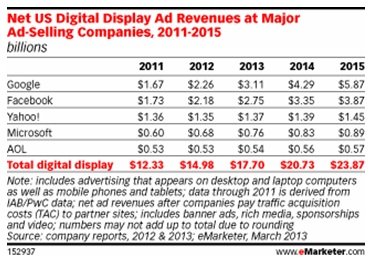
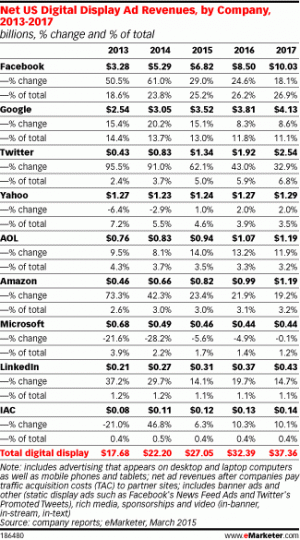
Although Facebook is desktop-friendly, they have made mobile their specialty with a UI that features thumb-friendly infinite scrolling, seamless third-party integration with Safari, Instagram, and other applications, and push notifications. Because more and more users are on mobile devices vs. desktop computers, Facebook has been able to surpass Google in digital display ad revenues.

Facebook’s success has come as somewhat of a surprise – many research firms published reports forecasting that Google would stay in the lead. Check out the reversal in eMarketer’s predictions on Facebook vs. Google display ad revenue in 2013 vs. 2015:
2013

lotlinx-emarketer-chart-2013.jpg

2015

lotlinx-emarketer-chart-2015.gif

So, why is Facebook performing so far beyond expectations? Well, for starters, it’s #1 in audience engagement compared to every other social media network. Its mobile app has become a “one-stop shop” of sorts, allowing its users to read the news, find current sports scores, socialize with their friends and families, shop and play games all at once.

Additionally, Facebook has incredible advertising technology unmatched in its industry. The ability to offer custom audiences based on user data that is only available to them puts Facebook and their advertisers in a win-win situation by providing better results than traditional display advertising such as Google AdWords (Related: How To Reach The Car Online Shoppers Your Competition Can’t).

It doesn’t seem like Facebook is planning on stopping any time soon, either. They’re taking on Google’s AdSense with the Facebook Audience Network (FAN) and challenging DoubleClick with their ad server, Atlas. They also have bonus revenue from their video ad network LiveRail – and let’s not forget about Instagram.

If you’re ready to have your dealership take advantage of the power of Facebook advertising, check out LotLinx Deeplinking™ for Facebook to experience 44% better results than AdWords at 66% of the cost.

btn-view-video-red.png

This blog post used information from this article by Marketing Land: Does Google stand a chance against Facebook in mobile display?

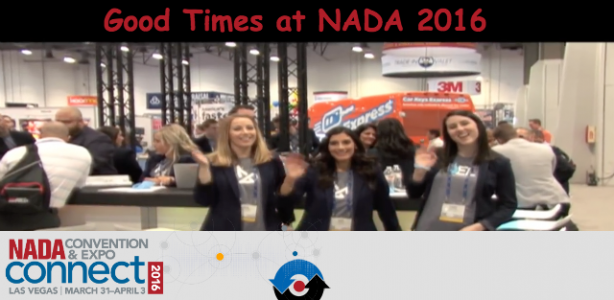
VIDEO: Good Times for DealerRefresh at NADA 2016

NADA is always an incredible time of hustling, shuttling, walking, conversing, learning, and of course socializing. This year in Las Vegas was no exception. Multiple people I spoke with told me it was their most successful NADA event in a while.

I too had a terrific experience, conducting interviews, making new friends, and catching up with others. Friday and Saturday I spent walking back and forth between the two halls capturing interviews and cameos of more than a dozen folks. On Sunday, Jeff and I were able to walk the expo hall and hit a few booths together as well, this time with no camera action, which was a relief.

The Cars.com party is the only social event I hit. You'll see a clip from it in my video below where the hi-performance rock band Royal Machines put on a fantastic show with guest appearance from Juliet Lewis signing CCR's Green River which was a welcome and pleasant surprise.


Good-Times-at-NADA-2016-for-DealerRefresh-1.png

The video is about 4 minutes in length with good upbeat background music from South Hill Records. The first minute goes from scene to scene showing familiar faces across the industry, then there's about two minutes of greetings from most of them. The last minute of the video is B-roll footage, which you will find is good for a few smiles and laughs.

Please enjoy and share with your friends. Shouts out to everyone that helped make the video come together. I truly appreciated it and enjoyed working on it together.

PS - There's a discussion thread on the forum where some folks took a moment to share offer their takeaways from he conference. If you have something to share be sure to do so by clicking here.

Login to view embedded media View: https://www.youtube.com/watch?v=Yyl2q5TtqOw


Included in the video are:

Bill Wittenmyer (ELEAD1ONE)Don O'Neill (CreditMiner),

Caroline Schweich (Fizz Communications)Scott Pechstein (Autobytel),

Tara Wagoner (Autobytel)Keith Gaytan (Automotive Mobile Solutions)

Shane Born (ProMax)Craig Lockerd (AutoMax),

Sara Callahan (Carter West PR)Bruce Thompson (Pearl Technology),

Erik Nachbar (Helios)Jennifer Suzuki (e-Dealer Solutions),

Amanda Hubbard (GoMoto)Karla Buendia (Autobytel),

Tim James (Flick Fusion)Gina Reuscher (Flick Fusion),

Shawn Foster (DealerStrong) , Jeff Kershner (DealerRefresh),

Melissa Maxey (ELEADONE)April Rain (Digital Rain),

Cliff Banks (Banks Report)David Metter (AutoHook),

Ken Potter (The Appraisal Lane)Harry Siskand (AutoSpin),

Casey Ching (Servco)Christine Picchietti (Cars.com)

Christian Ziegler (Dealers United), Barry Brodsky (eAutoAppraise)

Marc Peckler (MAX Digital), Joey Little (Auto Alert)

Danny Benites (Comedian), Mark Tewart (Consultant)

Evan Berney (CarBiz)

Danny Orleans (Corporate Magic)


Solving Your Dealer's Attribution Confusion

Sponsored-Blue.png
Through endless digital and traditional channels, consumer influence is happening both consciously and subconsciously as they navigate along a digital roadmap equipped with double-digit research touch points that follow no predictable path or straight line. This new age buying behavior makes attributing a sale to ONE source almost impossible.

While new and developing channels provide marketers with an abundant assortment of avenues to reach potential customers, the challenge of measuring the return on your investment (ROI) has become complex.

“Big data” is a widespread term used relentlessly in digital marketing across all verticals. But how can you (dealers) properly leverage big data to attribute a single sale to a single action?

Is it even feasible to attribute one sale to one ad source within the surplus of information available today?

Let’s first properly define Attribution

According to Forbes, “Attribution is the science of using advanced analytics to allocate proportional credit to each marketing touch point across all online and offline channels, leading to a desired customer action.” MarketShare defines it as “giving credit where credit is due.” To simplify even further, attribution is who or what receives credit for a sale.

For car dealers, attribution is synonymous with the conduit that led the customer from screen, to search, to showroom. Attributing a sale or a lead translates to knowing exactly where it came from, how it came to you, and why.

The problem with digital marketing is that this process can be very challenging because there is yet no conventional path to follow when it comes to tracking online (and offline) actions. Attribution helps define which elements of your marketing compounds will result in a reaction, or which will ultimately prove to be effective.

There is a reason Amazon is the #1 online retailer. The master of digital merchandising has the most straightforward attribution chain in the business - consisting of three (3) steps:

  1. ...a search
  2. ...a click
  3. ...a buy

On the contrary, there's very few (if any) polished “search-click-buy” methods in the automotive industry. But the question is, could there be?  If so, how do we turn it into a measurable science?

The reality is, well below 5% of the total buyers in the market behave in a direct, attributable fashion. Therefore, dealers and manufacturers must focus on the 95% of buyers that physically visit the showroom to purchase a vehicle and really drill down to determine their personal, unique path to purchase. But dealers are not dentists, and drills are not a part of the standard dealership sales toolbox.

According to this Dataium study, “One-third of vehicles purchased today are a direct outcome of internet-generated leads.” Lead conversion must be measured at the dealership level. More importantly, measuring attribution, or the accountability of a sale is of growing importance as more and more media and social networks adapt to a paid advertising model.

Four Tips to Overcome the Hurdles of Attribution:

1. Don’t be afraid to get personal. Customize your messaging based on a user’s previous actions and their digital footprint. The smartphone is regarded as the most intimate device ever. Therefore our marketing must follow suit and get personal. Custom-built, targeted messages elicit fiercer impacts. Consumers not only want personalized messages, but they now expect them, and respond better when marketing tactics convey a dynamically tailored message.

2. Implement a streamlined form-fill process on all devices in conjunction with responsive design. Evolving technologies have arrived that allow geo-targeting on mobile devices that currently provide dealers with a first ever, “showrooming” solution that is 100% measurable!

3. Consumer experience plays a significant role in the attribution process. When considering the experience, focus on the variables that include specific IP addresses, number of pageviews before an initial offer or incentive is provided, and closing the loop with re-engagement and retargeting practices.

4. Attribution is more accurately measured when conversion is streamlined via e-mail or text message delivery. When the consumer data is captured during an incentive redemption, we then know which channel led the buyer to your lot. When you offer something valuable in return for a consumer’s personal information, the probability of them completing the form drastically escalates.

At the end of the day, there is a simple method to the madness. When a customer physically shows up in your showroom, it enables you to collect more accurate information than you ever could from the average online lead form, or even phone call for that matter.
It’s crucial we all take a moment to step back and put aside all the math and the logic. At the end of the day, there is a simple method to the madness. Waiting until a customer physically shows up in your showroom to collect their information enables you to collect more information (and more accurate information) than you ever could from a typical dealer lead form. This is simple quid pro quo; you have to give something to get something. We have to think differently in order to capture the information we need to make smarter budgeting decisions.

To learn more on how to solve attribution confusion please check out our attribution whitepaper, “Automotive Attribution: Fundamentals and Future.

[highlight color="#CCE6FF" font="black"]

Free eBook to Auto Sales Attribution


The Internet has already made massive changes to our industry and more are coming. Keep yourself  so quickly that it sometimes feels that in the time it takes you to get up to speed, you’ve already fallen behind.

This eBook Contains

  • Attribution in the Past
  • Attribution Today
  • Attribution in the Future
  • How to Ensure Proper Attribution at the Dealership Level

Click here to download your free eBook now

[/highlight]


Don't Worry, No One Clicked on The Sidebar Ads Anyway

How will the recent changes to Google Adwords affect my dealer's Paid Search Adwords Campaigns?

The simple answer is "Not Much."

I'll rephrase that.. Not much for SEM-Master Level Dealers and Agencies. Yes, the right sidebar ads are gone (smell ya later) meaning there are far fewer spots for Dealers' ads to fill. So the question you should be asking yourself is how do I get my ads in the top 4 spots without further breaking the bank?

The answer to this question is simple. Do the things you should have been doing all along.

What Should I have Been Doing All Along?

You know, weird things like ensuring your selected keywords are relevant to your business and the products you sell. Making sure you're geographically targeting locations where you have a history of success, IE Where You Sell Things. Checking the Quality Score and relevance of the relationships between your Campaign(s), Adgroup(s), Ad(s), and Keyword(s) constantly. Making sure your ads contain keywords that are relevant to both your target customer, your ads, and perhaps most importantly your Landing Page URL. Making sure you build and maintain strong ad rank. Let's not forget to include this often overlooked but vitally important negative keywords.

In a nutshell, be sure you are being relevant in Google's eyes and more importantly your customers' eyes.

So Why Did Google Remove The Sidebar Ads?

"Lack of relevance" is one commonly accepted answer. "Money" is another good one.

If you can reach far back in your memory do you ever remember any sidebar ads as being particularly "relevant", as in having compelling ad copy and linking you to the item or idea the ad promised? Me neither.

Let's agree that the ads that typically inhabited the far right "sucked" and as a result Google wasn't making any money off of them. Now I know there will probably be someone that stands up and brings tons of great stats and data on how their position 4-5 ads were half as expensive as the 3 and provided a great ROI. To this person I would have to agree the cost tended to be low BUT the clicks were even lower. Focusing on "just being there" as a strategy is the digital equivalent of going to the high school dance to hide in the back to stare at the girl you like while others dancing with her. Yes you're there but she's unlikely to find you and ask for a dance. You can either be at the party or the life of it - which do you choose?

Is My Cost Per Click Going to Rise?

I was convinced that Cost Per Click would increase drastically but in reality the CPC I've seen across the roughly 90 Dealership Adwords accounts I manage stayed around the same. Some went up .01 - .11 cents before decreasing back to just above their normal monthly CPC averages. In some case I even accounts and campaigns saw enormous drops in CPC believe it or not. The example below shows a Nissan store I have been managing since April, 2015

Nissan-Adwords.jpg

Nissan-Adwords-CPC-Since-Google-Serp-Change.jpg

On this particular account you can see that AVG CPC dropped slightly from approximately November of 2015 until around February 2016 before climbing back. That change equates to a $3.11 (November 2015) to $3.03 (March 2016) difference or in other words "pretty much business as usual" a - 2.6 reduction in cost per click over a 5 month stretch.

Facts about this Account:

  • All CPC increases from start (April 2015 - October 2015) were due to extending Advertising Radius to from 25 - 40 miles.
  • No Display or Re-targeting has ever been run on this account.
  • This is an aggressive, high-performing Nissan dealership.
  • The above CPC performance chart depicts a combination of Branded, Model-Specific, Used, and Competitor Campaigns.

How Did You Manage To Keep Your Costs Consistent?

I am happy to share how I kept my Cost Per Click in check even though the recent Google SERP change while increasing my market share. Just ask me.

Only 12 Percent say NO. But you need to ASK!

The recent passing of former First Lady Nancy Reagan was a sad occasion. Many heartwarming stories unfolded, but I found myself particularly fascinated by her personal war on drugs.

In 1980, then soon to be First Lady Nancy Reagan found her calling on the campaign trail. It started at a New York City substance abuse clinic. It continued during her husband’s two terms as president. She was moved by the great work at these clinics and took on the noble endeavor of making drug prevention a part of the public dialogue.

Drugs were a problem in the early 1980’s (See: Pablo Escobar). Mrs. Reagan’s particular concern wasn’t just the infiltration of South Beach nightclubs though. The real fear was our youth. And our schools. We don’t want little Miss 4th grader Sally around, offered, or tempted by drugs.Her recommendation for Little Miss Sally?“Just Say No.”

Three words became the backbone of America’s war on drugs. Three words that are still ingrained in our minds and pop culture today. But Nancy Reagan’s simple campaign faced a pretty big problem. Getting Little Miss Sally to say no is actually pretty hard.Ehhhh Yes?It’s true. People don’t like to say no. Psychology offers us some basic reasoning:

  • No creates subtle conflict
  • No creates guilt
  • No is awkward
  • No feels rude
  • No disconnects us from others

Vanessa Bohns, an assistant professor at Waterloo University, describes that rationale as “We don’t want to reject people. We don’t want people to think poorly of us….

How about a value size?

I first noticed the thrill of this concept in high school. I was a cashier at Chick-Fil-A. One day, the franchise owner held a contest to entice cashiers to up-sell customers to “Value Size” their combo meal. For 49 cents more, you could get a bigger drink and fries. This is high margin territory in the fast food world. The most up-sells took home first place.

I was determined to win and quickly mobilized a complicated strategy. I would ask 100% of my customers to value size their combo. I know, tricky right? It was simple but I was clearly a brainiac because it worked. Other cashiers balked in the moment. They sheepishly avoided offering the value size. It felt awkward. They forgot. I asked for the business every time and people said yes almost every time.

I’m proud to say I won the contest. The prize was a Blockbuster $5 gift card. Seriously.

So what?

One of the biggest areas of opportunity I see in dealerships is simply asking for the appointment over the phone.

Every day, my company reviews hundreds of thousands of dealership phone calls. We identify if appointments are requested and what happens on those requests. Out of millions of phone calls, a fundamental truth always stands out: asking for the appointment works.

More specifically, shoppers only decline an appointment request 12% of the time. If you request an appointment 100 times, you will receive 88 acceptances of some kind. I like those odds. You should too. The real question is why not ask for the appointment?

It’s not SO bad...kind of.

Unfortunately, our industry leans into a notion that salespeople are stereotypically awful on the phone.

We find that one comically terrible instance to highlight how south a conversation go. You know the type of call I’m talking about. The one where a salesperson crunches potato chips, drops an expletive, and eventually tells the customer a dealer down the street definitely has the car they’re looking for in stock.

I hear a different type of call much more often though. It’s the one where the salesperson is polite and friendly. He uses a few of those phone techniques taught in a training course. It appears to be going well and the caller even seems satisfied with the answers and insight. Then it goes downhill fast. The failure point is hard to tell but it’s right in front of us - it’s when the salesperson hangs up without inviting the shopper to visit the dealership.

This type of call should be a punch to the gut for anyone in management.

The Appointment Culture

The concept of an appointment culture is brewing in automotive right now. Phone calls are skyrocketing. Consolidation is creating more competition. Capturing marketing share is the name of the game.

There are a million urgent things for management to tackle every day though. It’s easy for the urgent to take priority over the important. Don’t let that happen. Make it your mission to build a culture focused on phone excellence. Here are three ways to steer your dealership toward more appointments:

  1. Tape a small piece of paper near every sales phone. The paper should read something like: “Remember: Every call has an appointment request.” If this feels too simple, even silly, remember that many salespeople don’t request an appointment only because they forget.
  2. Talk with phone handlers right after their calls. Ask them if they requested an appointment. If you didn’t hear one requested while listening, give them feedback on how and where it could have happened. The key here is immediate feedback. We tend to learn best in the moment.
  3. All sales meetings should include a mention of the phone and phone appointments. Every single one. This takes discipline and effort from management but will pay huge dividends.

So yes, I applaud Nancy Reagan for tackling a tough issue with the psychological odds stacked against her. Use those same odds in your favor on every phone call. Heck, you could even run a contest one week. I just recommend the spiff isn’t a Blockbuster gift card.

Are Your New Car Specials, Really Special?

Nearly every dealer website provider offers a New Car Specials feature, so why is it NOT a big part of your marketing strategy?

Maybe because it's like pulling teeth.

Whether you call them "New Car Specials", "Offers", "Deals", "Incentives", or just simply "Specials" chances are good you have a page dedicated to your best new vehicle offers and chances are equally good you're not using it right. The idea here is to create a stand out offer that is unique to your dealership.

Sure, you are more than welcome to run the regional offers your OEM provides but is it really "Special" when it's the same pricing message all of your competitors can use as well?

SO what exactly are you missing?

All dealer websites have some form of New Car Specials Page. Some "Specials" are built using inventory filters that are set to list the new vehicles by longest days in stock. Others require dealership personnel to log into the website backend and hand pick a few stock numbers, throw on a discounted price and call it a day. While other more savvy dealers build their offers (typically using Photoshop or other photo editing equipment). And the most sophisticated dealers turn their homepage slides into their specials page and link each slide to the model-specific inventory. This too is only "O.K." in the grand scheme of things.

Let's talk about a fully inclusive New Car Specials Marketing approach...

Don't Just Use The 5 Models that Sell for Specials

 
Go Big Or Go Home

You need to pick more than just the 1-5 Models that sell in high volume. Everyone already does that, you need to do better. I recommend creating at least one new car special for every new model that you sell. Even if the 2016 Nissan Versa Note doesn't sell in high volume doesn't necessarily mean that no one will buy it. If there's a customer in your PMA searching for a low monthly lease on a hatchback and you're the only game in town... You Win.

Showcase Multiple Offers Per Special

 
Variety and Offer Diversity will Increase Clicks, Calls, Chats and Online Forms.

OK, I get it, it's a pain in the a$$ to run leases for one price leading model for every model you sell. But this is another way to get a huge leg up on the competition. Just because you have a lease penetration of less than 18% doesn't mean your customers wouldn't consider leasing.

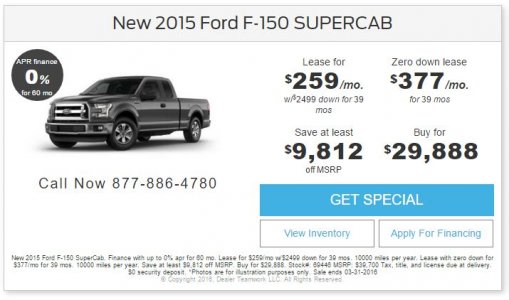
The reality is too few dealers are educating their customers on the benefits of leasing. Take advantage of this situation and showcase the best lease, zero down lease, savings amount, buy price, and APR financing rate for every new model. This will give your customers or website visitors a variety of options. Nine out of ten will have questions about the terms and exclusions which can increase calls, chats and form submissions.

Multiple-Offers.jpg

Don't Stop With Just On-Site Specials Optimizations

 
Build a Push and Pull Email Strategy

Having email marketing templates that include your most up to date offers is a great way to get previous leads to resurface and return to your dealer's website. If you are already using a homepage slideshow slides for Specials, then you're one step ahead of the game. Use the images in your slideshow in your email campaigns. This is a great way to repurpose pre-existing website content while encompassing a 360 marketing approach.

Use these slideshow images for both response emails for people seeking more information on special or just want to know more about your best deals. This is your pull strategy at work. I also recommend developing a 3rd set of emails specifically designed to be sent out as email blasts to those who submitted model specific leads in prior months but have yet to purchase. Segment your list correctly and you could be looking at a serious home run month in and month out!

Build a Funnel that Drives as Many Eyeballs as Possible to Your Specials Page(s)

 
Use OEM-themed, sales event banners, homepage slides, VDP sidebar graphics, Pop-ups etc to drive awareness and build familiarly with your visitors. This will help guide them to your best offers without being completely obnoxious. Using OEM themes in your homepage slides, SRP Banners, etc will help drive traffic into your specials. And should help to keep call and email submission levels at their maximum throughout the month.

Hint: you need to update these new car specials at least every two months or when the OEM changes gears.

Streamline PPC Efforts to Include Model Specific Offers

 
I can not stress enough how powerful this method can be. When a customer searches "Ford Focus Lease" and you're the only one showing up with the "New Ford Focus Lease Price" in the results, do you have any idea how much damage this can do to the competition. Don't be surprised if you're the only dealership showing your specials in your ads. Make sure you have a good price and lease for every vehicle.

*Hint: if you're the only dealer showing offers in your ads you don't necessarily need to be the lowest priced. 

Using the marketing strategy laid out above, I have had dealerships result in a 30 - 60% increase in conversion within a few months, and without making any major changes to their advertising budget.

How are you leveraging your New Car Specials?  Comment over in the dealer forums.

5 TIPS That Will Jump Start Your Sales with Less Stress and More Focus

As each month comes to an end so begins the nearly week long process of aggregating everything that impacted your sales and service results.

If it was a good month this process is usually shorter, however if the final tally was off from your targets the fact finding mission is usually quite painful. We subject ourselves to this to determine how to repeat past successes and turnaround under-performing subsets of our business.

Here are 4 trends we have found over the years and countless reviews of individual dealership month end results:
1. Good results can lead to reporting with a goal to validate recent efforts that in the past have been subject to scrutiny.

2. Reporting bias is a real thing.  The person who creates the report, even if 100% genuine, will inadvertently portray their findings in a way that feels like an agenda is under the surface.

3. Bad results lead to a ‘CYA mission’ that seeks to remove protected individuals from the cause of the bad month.

4. The effort that goes into determining the decision to stay the course or plot a new one is a highly stressful and demotivating experience for most involved.

Here are 5 recommendations to get your month started faster, with less stress and more focus:
1. Automate your reporting process so no one has to “pull reports” to see what happened.  Every time you hear the words, “pull reports” stop and ask yourself, “What’s the goal?” and “How can we automate this?”

2. Establish a roster of metrics that you will track each month and a system that is 100% independent from reporting bias. Here are the 74 we track

3. Map the decisions you made each month against your results – although this isn’t necessarily causation it does measure the impact your adjustments may have on long term trends.

4. Shift the focus of your improvements to the future versus the past.  Create a dealership forecast based on data, not goals, to measure your progress.  Here is how we built ours

5. Daily and weekly feedback loops are essential to determining how effective you are. Keep the conversation going and everyone’s goals aligned.

The quicker we absorb the lessons from the past the faster we can engage in the future. Stop isolating this review to the start of the month – keep it in front and center each week.  Give your team a break from the distraction of monthly self-appraisals, your customers will thank you with their business in the beginning of the month!

The Worlds Best Used Car Manufacturer

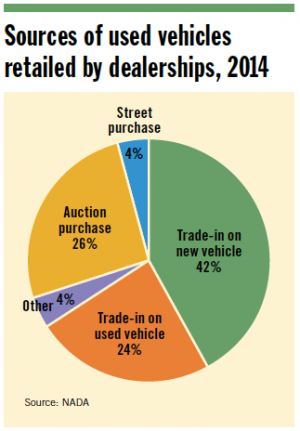
Sources-of-used-cars-pie-chart.png
Cause and effect.  This is a simple model to apply to solve problems.

What factors that we can control influence outcomes in our life, our business, or our job/role.

Let’s take a look at Used Cars.

Where do Used Cars come from?

Owners, of course. There is no used car manufacturer. Of course, the auction or other wholesale dealer-to-dealer channels can account for some.

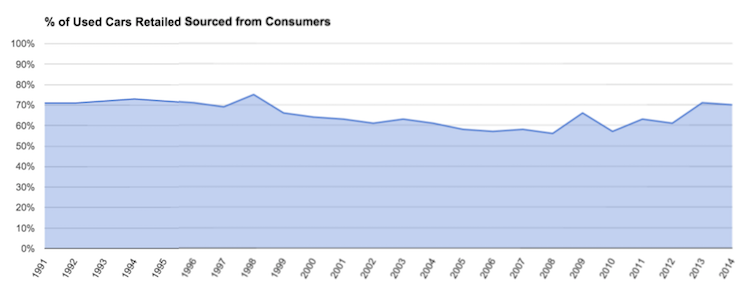
But, did you know that nearly 70% of used vehicle sales by dealers came from direct-from-consumer transactions?  To be exact, in 2014 66% of all used cars retailed by dealers were sourced from trade-in.

How has that number changed over the years?

Well, here is the same % of source of used cars retailed for trade-in and street purchase over the previous 10 years:

Percentage-of-Used-Cars-Retailed-Sourced-from-Consumers.png
I speak with many dealers on a regular basis, they ALL say they would love to improve their New to Used sales ratio.

So what do you think?

I contend that if you want to sell more used cars then buy more. To buy more, you need to have more conversations with prospects about their car. Your own dealer website can be a tremendous source of these particular conversions. Even Tesla recognizes the importance of these conversations.

In order to have more conversations, we need to get in front of more prospects and it needs to be easy.

Take a moment and place yourself in the consumers seat, now go on your own dealer website and step through the process (if you have an online trader-in tool) of obtaining a "trade-in value", just as a consumer would...

How long did it take?
How many clicks did it take?
Was the returned value transparent? (where did the value come from?)
How was the overall experience?

Now do the same on your Phone... 

How long did it take?
Was it easy to do on your phone?
Could you even accomplish it on your phone?

Potential customers are all over your dealership website each day. Most of these customers have a vehicle to trade; a conversation to have. Studies and surveys have shown when visiting a dealer website, researching the value of their trade-in is in the top 3 areas of information they are seeking. Yet, many dealers make it difficult to obtain this information. And when the consumer does finally get to the end of the process, they are presented with a value that provides little to no transparency to where it came from. Making it extremely difficult to even start a conversation.

Cause and effect…

What can you do to improve and increase the number of conversations you're having for acquiring more trade-ins.?

Two Important Goals for Long-Term Profitability

As multi-million dollar local brick and mortar businesses offering people a significant product and service, the expectations for what a dealer can and should be achieving must be high.

While I believe that the majority of dealers do strive for excellence, one area where dealers are not exceeding expectations is with Social Media.

Considering that social media sites such as Facebook have caused a permanent shift in the way we live our lives, conduct business, and advertise, this is a problem that must be solved. The dealers that do solve it will have a huge competitive advantage.

How does this tie in with long-term profitability, you ask?

Market Share Achieves Longevity

The path to long-term profitability hinges on your success in continually growing market share... profitably. Cutting prices eats at your profit so you can’t do that. Reducing marketing expenses decreases your market share, so that’s not a good strategy either.

Growing market share requires increasing exposure AND creating the ultimate customer experience, because an exceptional customer experience goes viral and sustains the business you acquire.

Unlike most franchise businesses where all the local store has to do is provide a customer experience consistent with the global brand, local dealerships do not have this luxury. Local dealers must provide a unique brand experience that engages customers and creates loyalty, advocacy, and influence.

If your dealership does not have a unique dealer brand that gives you a competitive edge, then your competition will continue to eat you (and your market share) for lunch. When the market goes flat (which it always does), you will lose because you can’t grow market share when it’s flat.

Customer Engagement with Verifiable ROI

Growing your market share profitably with verifiable ROI is key. The type of verifiable return on investment dealers need to know requires deep levels of attribution. Attribution such as:

  • What percentage of business is from existing customer relationships, what percentage is re-activated, and what percentage is newly acquired.
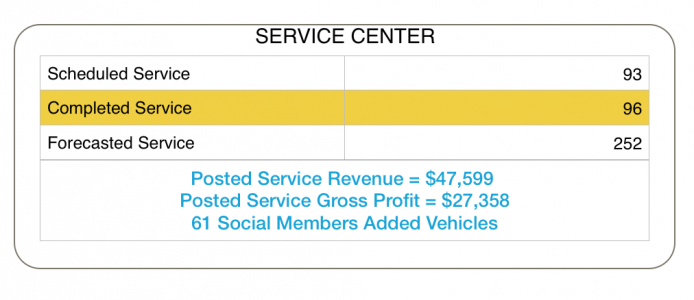
  • What the gross revenues and gross profits are in both sales and service as a direct result of a campaign.

helios-stats-service-center.png

Gross Profit Attribution

While running paid social media ads is proving to be effective for branding and top of mind awareness and driving website traffic that is trackable, this form of push marketing does not:

  1. Fix the broken engagement funnel
  2. Provide the type of verifiable ROI described above

Dealers are looking for ways to promote their business and ultimately be profitable with Facebook. But until these metrics and measurements can be attributed through social media advertising, and until social media can be used to fix the broken engagement funnel, dealers will continue to be skeptical of the return on investment and how it impacts their long-term profitability.

[highlight color="#CCE6FF" font="black"]

Free eCourse and eBook: Keys to Verifiable Social Media ROI

To assist with this, I (Ryan) have created a free 7-day e-course designed to explore the obstacles and causes behind why dealers and agencies are not able to produce a verifiable ROI with social media, and what it will take to do so (namely DMS and CRM integration with Facebook). The e-course is absolutely free and at the end of the course you will receive a free e-book that contains all the curriculum in the course, and more. It was designed for dealers, automotive marketing firms, and ad agencies alike. Please enjoy![/highlight]

"Hope & Change" - NOT a Strategy For Your Used Cars

Login to view embedded media View: https://youtu.be/CyWWE9pQn1g


“Hope and Change’” was President Obama’s campaign slogan for the Presidency and it worked for him - twice. Regardless of your political views, this slogan doesn’t equate to a winning strategy for your used car operation.

I see too many dealerships use this strategy, and all it leads to is aged inventory and loss of gross. In this video I explain how “Hope and Change” doesn’t work for your used car operation.

You might be able to sell a car or two (20%) with this strategy with second chance buyers but overall I would the remaining 80% will bleed through and age. That 80% of inventory is costing dealerships from not achieving good gross margin spreads.

I would bet 90 plus percent of your current aged inventory, you knew were going to be problems from day 1. Get off the “Hope and Change” strategy, move that inventory quick and reinvest that money into something better.

Price? No, it's Trust - What is it with these Millennials?

Show Me The Money – such a 20th century way of thinking.

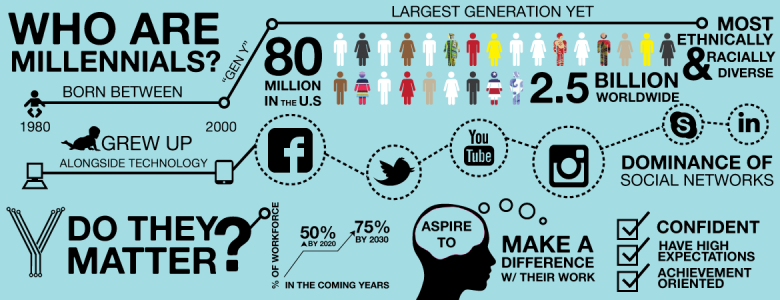
Millennials don’t think that way. True, price is important with every customer but for young car shoppers, apparently two things are more important:

  1. Trusting the dealership
  2. The overall experience

The good news is, you can make one simple change that will dramatically improve both of those. Send'm a video.

With a personalized video, you can create an amazing experience by engaging, informing and delighting your prospects. It’s not difficult, matter of fact it's quite easy to make a personalized video to send to your potential customers.  It can takes less than 2 minutes.

who_why.png

Why does video work so well with Millennials?

Because they're watching video, online. All the time! Ask the younger generation which channels they're spending the most time on; YouTube, Twitch, Instagram, Vine, Netflix (and chill), etc.  And much of this video consumption is on their mobile device.

Matter of fact, according to Animoto45 percent of millennials prefer to watch video on their mobile device rather than on a laptop or desktop.

With numbers like that, there is no reason to believe this behavior doesn't apply to when they are researching their next vehicle, OR even the dealership they plan to visit and purchase from. Millennials are spending a great amount of time researching online before visiting your dealership.

And get this...the younger generation is much more likely to trust dealerships that provide the information they're seeking. You mean Transparency?

With video, you are putting yourself out there as a trusted source of information. It's not viewed as selling. It shows you are interested in educating the buyer and building trust.

[Tweet "Rather “show me the money,” #millennial car buyers are saying, “Show me the video!”"]

Don’t think Millennial are a big enough customer segment to worry about? Think again. According to a recent study by DrivingSales, Millennials are now accounting for 27% of new car sales. “The buying power of this younger market represents a significant growing opportunity for dealerships,” the report states.

To serve this expanding market, remember, building trust and creating an amazing experience are most important. With video, it’s quick. It’s easy. It's works with the technology you ALREADY have.

Don't feel like you can get started on your own? There's a number of good companies out there providing mobile apps and dealership video services. Browse through the forums and you'll find some great discussions around it.

What are you doing to build trust with your younger customers?

Shoot Video Like a Rockstar

Login to view embedded media View: https://www.youtube.com/watch?v=tKgCtbqtrsw


It’s time to get serious about video.

The writing is on the wall for the digital marketing industry as we know it. The true scale of the rampant and systemic fraud in the digital ad space is coming to light. Apple continues to annihilate online annoyances with their iOS ad blocker. With the introduction of Red, YouTube’s ad-free subscription service, even pre-roll best practices will soon be a thing of the past.

Communications giant Cisco has predicted that by 2019, 90% of all internet traffic will be video traffic, which means that video will not be just a mode of communicating online, but the primary method through which information is transmitted.

So, it’s time to learn how to make content that customers actually want to watch.

As car people, we prefer manual transmission whenever possible, and yet, we’re bombarded by industry messages that suggest we turn our marketing on automatic. Here’s the thing - There’s no automatic way to make great video. That’s what makes it great. That’s why it represents such a massive opportunity for your store in your market right now—Your competitors probably just don’t want to bother.

Great video is algorithm-proof. There is no gimmick or shortcut. By now, all of us can probably name some digital marketing investments we now regret, but I can’t think of a single video I’ve ever taken part in—behind the camera or in front—that I wish I hadn’t done. Video is always a good idea.

So what keeps us from shooting like rockstars at the dealership? Here are a few objections I commonly encounter.
Objection #1:  I’m not creative. It’s too bad that people in the “creative” industries go to great lengths to make the rest of us feel this way, and often times, these feelings are very deeply rooted in who we are. For me, it goes back to all those times in art class when I just couldn’t figure out why my drawings weren’t as good as everyone else’s. Good news, though—there’s no magic to video production. It’s just work like anything else.

Objection #2: Video is too expensive. So is a telephone system. So are computers. The truth is, high quality video equipment gets cheaper all the time and is worth the investment. Learn how to do it yourself with your own stuff, and you’ll save thousands of dollars.

Objection #3: We don’t have time to make video. We all get busy. Sometimes it’s a wonder how the dealership phone gets answered. However, we have all the time in the world for what we find important. Video is one of the things that separates the merely “good” from the “legendary,” a distinction that is more important than ever. Learn the fundamentals of production, and you might be shocked at how little time it takes.

For 2016, I’ve made it my personal goal to teach as many dealers about in-house video production as I can, to condense my years of trial and error into a streamlined, efficient learning system. Coming this spring, Dealerography will do just that. Dealerography is a training system that teaches the fundamentals of in-house video production in the dealership setting, so that you too can shoot like a rockstar.

I’d love to hear about your goals, challenges, and successes with dealership video. Sound off in the comments below!

Why Every Dealer Website Should Be Using SSL in 2016

SSL, or secure socket layers, is commonly misunderstood.

SSL is the technology to authenticate the connection between your browser and the server hosting a website. This usually happens through 3rd parties whose job is to gather proof of identification of the person or company who owns the domain for the website. You may have heard of a few of these companies. Some of the popular SSL providers are Geo-Trust, Norton, GoDaddy, Verisign and Comodo. If you haven't heard of them, you may recognize a couple of their logos below:

web_security.png

The system is based on a ‘circle of trust’.  The browsers ‘trust’ certificates from certain vendors, who in turn, ‘trust’ or ‘sign’ certificates for others, for whom they can validate identification. When a site is authenticated through an SSL certificate, the browser displays an HTTPS instead of an HTTP. HTTPS stands for Hypertext Transfer Protocol Secure. Notice the “secure,” which is the “S” in HTTPS. Traditionally, online banking, shopping websites, government websites, and any other website where there is an increased sensitivity of capturing personal information has utilized HTTPS.

Does SSL make my site safer or prevent hackers from obtaining my information?

The answer is yes and no. This is where the misunderstanding comes in. You would assume HTTPS by its own name would mean you are safe and secure. Unfortunately, you are not. If a website is compromised via a hack, having it reside on an SSL secured server would be like having an alarm system in your home when the burglar is already inside.

Phishing

SSL certificates are reasonably easy to obtain and a hack could redirect to you to a phishing page with a valid SSL certificate. This is an important point as the malicious website could easily reside on HTTPS because the domain name is registered to the hacker. I see mischievous stuff all the time, specifically websites pretending to be something they're not.

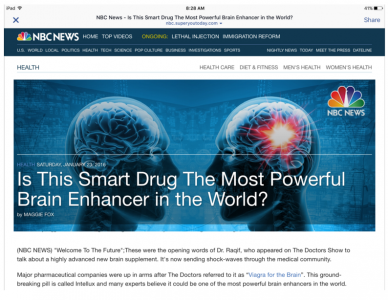
Have you ever seen the Facebook ad for the pill Limitless, which the movie was supposedly based on? If you click on the FB ad you will go to a page that surprisingly looks like NBC with logo and all. The domain is nbc.superyoutoday.com. The website is not owned by NBC but it uses NBC in the subdomain and it has an SSL certificate.

Why? Because the fraudsters own superyoutoday.com. Hopefully you know this is a phishing scheme or unethical way to sell a pill that's probably equally as tainted.

I am digressing so let me get to the point. Why would a dealer want SSL?
smart_drug.png

Why SSL?

SSL is better than no SSL. I would compare it to having an ID card or driver's license issued. Can you imagine the fraud if the DMV issued driver's licenses without proof of identification? Eek. We would be living in a world akin to Back to the Future 2 or Mad Max. As the web gets more cluttered and bad people try to find ways to take advantage of good, the problems that exist with identity theft and fraud can only expect to get worse. SSL will help.

Why should a dealership’s website use SSL?

This is what you've been waiting for, right? There are a few key reasons:

  1. Browsers are demanding it
  2. Analytics and SEO
  3. You will have to read next article dedicated to #3 which will be big news

Browsers are demanding

Okay, so let's talk browsers. Internet Explorer, Chrome, Firefox, Opera, and Safari are the most popular browsers. The main job of these browsers is to grab content from servers and deliver the content back via HTML so that we consumers can view and utilize websites or apps on our devices. During the process of delivering this content, the browser collects a lot of data about the user. This can include, but is not limited to, the user's IP address, geography, device type (user agent), timestamp, http referral, sound, and video.

With a little ingenuity it's feasible to collect enough information to identity visitors. Technology like fingerprint.js and the like help in these efforts. As the web develops more, data is becoming available via the browser and it could be used for malicious marketing and more. Therefore, in Q1 2016, many of the popular browsers will not allow websites to collect much of this data unless they reside on HTTPS.

That's right. Geolocation, video (webcam), audio, and more will not be available any longer to you if your website is on HTTP.  Just a quick audit of websites in our space revealed that nearly 100% are not using SSL. Therefore, this is a major problem and it is not isolated to our industry. Just as we marketers were starting to use geolocation data and video chatting, poof! It's gone.

Unless, of course, your website is on SSL.

Another problem with dealer websites is the use of 3rd-party plugins that are not using SSL. Even if your site is using SSL, you may still get left out of the party because your chat or trade-in provider is not using SSL. Browsers will block non-SSL content if the site is loaded via SSL; this could impact your analytics, remarketing, or other 3rd-party integrations.

Analytics and SEO

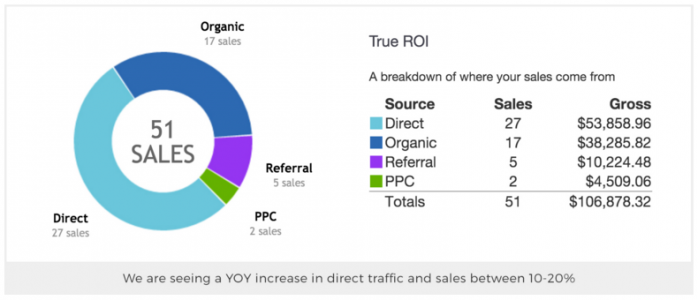
Raise your hand if you’re seeing an increase in direct traffic while reviewing your analytics data? Okay, put your hand down, this is an article, but I'm glad you're still with me. Did consumer behavior change so drastically that visitors research for website URLs and type those in direct? Sure, some of it is coming from the URL bar playing double duty as a search bar, but do you know the other part? It actually has to do with SSL. Generally, when a referral comes from an SSL website to a non-SSL website the http referral is omitted. The direct bucket in almost all analytics tools plays double duty too, like a lost and found area. In other words, if Google analytics doesn't know where the data should be placed, it goes in the direct bucket.
DIRECT_TRAFFIC_AND_SALES.png

As many of you heard, Google announced a little over a year ago that sites using SSL may get preferential treatment in search rankings. After much analysis of websites rushing to make this change, the search results were not remarkably different. Therefore, the news faded and was quickly buried with another algorithm update and self-driving car announcement. My take on this is that Google couldn't deliver both the best search results and make a change this drastic. The reason is simple; just because a website is on SSL doesn't mean that website would provide the best answers for the user's search query while using Google's search engine. Therefore, Google would intentionally have to provide worse answers. That would never happen.

However, I do believe as more websites become enabled with SSL we will start to notice a difference. I also believe if Google had a choice to show two similar results today, they would rank a secured site higher. Therefore, while not an immediate cause for concern, it's with fair certainty if you want to stay on top of search engine rankings, start the move to HTTPS.

Please keep an eye out for my next article which will offer even more compelling reasons to use SSL.

(To be continued)

1,500 Price Changes, 25+ Meetings & 3 Lessons

Take 19 years in the industry, 25+ weekly meetings, and nearly 1,500 price changes weekly and you learn a few lessons, understanding the pulse of the evolving retail market for used cars.

Low Mileage Budget Cars do not Work

 
Budget cars are typically rental cars priced to accommodate those seeking a vehicle based on price or a budget. Referring mainly to late model Malibu’s, Altima’s, Focus, Fusion’s, Chrysler 200’s, Accord’s, Camry’s and others . Some Managers will try and buy the above models with features and miles that make them stand out in their marketplace. The problem, however, is that the dealer tends to pay more for vehicles with lower miles and stand out features. Thus, the pricing for the car ends up being more than the average comparable vehicle, which ends up adding that vehicle to the aged units list.

One of the biggest problems with this buying philosophy is that hundreds of vehicles nationwide end up sitting on the lot becoming aged inventory. The budget customer does not pay for the low miles if it does not fit their budget. There are also many banks that will not allow the customer to pay $20 more a month (or $1000 more) for 2014 with 21, XXX miles (low miles) than one with 35, XXX (market average miles) miles. Miles and Features do dictate the average pricing for the budget car. The manager has to price the car based on average market value.

The Online Black Hole in Exposing Higher priced High Volume Vehicles

 
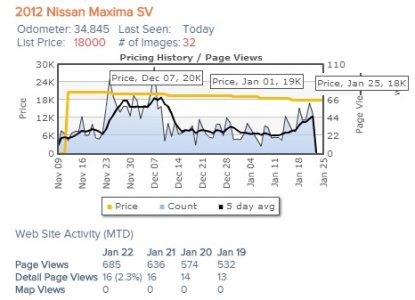
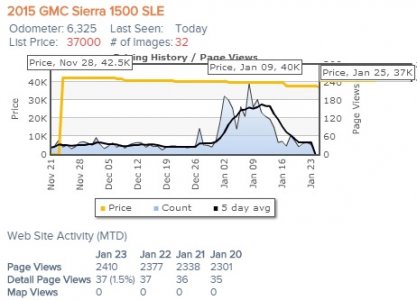
Higher priced, high volume vehicles, for example, would be late model pickup trucks and SUV’s. When customers go online shopping for a Ford F150 putting in a budget of $35,000-$40,000 - there might be eight pages of listings. AutoTrader and Cars.com will default to sorting that list from highest price to lowest. So if you are priced at $40,000 or very close to 40k your truck gets exposure because you will be on the first page or two of the listings. But as this truck ages and you start dropping the price you start falling further and further down the page(s), which greatly reduces your exposure like this example below:

If you end up at a price of $37,500 on the F150, the truck is now in the black hole of exposure. You are on page 4 of the listings, and most customers will only look at the first page or 2 of listings. From low to high or high to low. So if you are close to the $40,000 or the $35,000 range you will get exposure. However, when you end up in the middle of the price band, the exposure is significantly reduced. This is where spotlight ads come in handy to increase exposure. This can also be said on high volume cars that fall in the middle of any popular price band search, example $10,000-$15,000.

price-peaks.jpg

price-spikes-high-volume.jpg

Wholesaling an aged retail unit too soon

 
Countless times I have talked to a used car manager about an aged car. And as soon as I do, they tell me “I just wholesaled it.” To which I ask them how much they wholesaled it for, and they tell me something like “$14,500.” I would then see that their last asking price was $16,000 - asking them why would they wholesale it for $14,500 if their last asking price was $16,000?

They would then ask me “what else should I have done? It was 70 days old, and I was already #1 in the market at 85% for two weeks.” I would tell them that they need to throw away the market data, and start pricing it until it sells or until you can get more at the auction than your current asking price. I would have much rather priced it at $15,000 getting a ton of exposure on the price point, and then take $14,500 in the lane.

Better yet, I would have rather retailed it at $14,500 or even $14,000 before wholesaling it for $14,500 because at least I might have a shot at a trade-in and F&I. Do not wholesale an aged retail unit until you tried to sell it for wholesale values. I know pay plans sometimes drive these types of decisions, but that's another topic.

Ask yourself, are you wholesaling budget cars too soon? Are you taking advantage of price structuring for maximum exposure in the listing websites?

Filter