• This thread is just the tip of the iceberg.The people ahead of the curve aren't Googling for answers — they're already in here, having the conversations you haven't found yet. DealerRefresh is free.Get the full picture →

Eye Candy…How Stock Photos Can Kill a Vehicle’s Love Life

//www.ispot.tv/share/7dwH

“Hey Chief – eyes on your own paper, okay?”

If you’ve laughed at the Sears Optical TV spot where the near-sighted husband mistakes a mannequin for a dude eyeing up his wife, we’re already on the same wavelength.

Now think about this: let’s say you’re perusing a dating website, one that’s replete with pictures of prospective love interests.

avatar.jpg

At some point, you happen across a page with four incredibly attractive women/men and one avatar. Now, the avatar may have an edgy hairstyle and really big doe eyes (if you like that sort of thing), among other articles of perfection.

Here’s the question: Aside from satisfying your curiosity (“Why the heck would someone use an avatar in place of a photo of him or herself ON A DATING WEBSITE?”), wouldn’t you be most likely to click on one of the profiles represented by an actual photo? Of course! Admittedly, you’d be running the risk of missing out on an actual living, breathing avatar-like human, but what are the chances of that? Seriously?!

Next, put yourself in your automotive customers’ shoes.

If you’re online looking for a new or pre-owned vehicle, would you rather see the actual vehicle in which you’re interested, or an approximate representation thereof?

If you said something like, “Well, duh, Jon – of course I’d rather see photos of the vehicle I’m considering and not a stock photo,” then you have to explain to me why so many dealerships still use stock photos for their new vehicle inventories. I hope you can see why stock photos NEVER fly with pre-owned vehicles – it’s akin to listing a $10,000 motorcycle on craigslist with no pictures! But is it as important to show actual vehicle photos for shoppers looking for new?

According to the 2014 Inventory Shopping Experience Study by James Fabin and Dave Hollander, participating consumers said that stock inventory photos left them with the impression that the vehicles were “all the same.” The study continues:

“Consequently (and not surprisingly), vehicles represented by stock photos on the vehicle search results page had a much lower clickthrough rate than those with actual photos of the vehicle.”

In fact, in the study, 70% of the shoppers did not click through from a vehicle search results page to a vehicle details page on vehicle listings with a stock photo. Yes, it can be a little more expensive to take multiple photos of your entire new inventory...

It may be time-consuming and even require you to hire an outside company to help. Is it worth it? Of course it is! And, inasmuch as you’re probably not going to send an email to the sweaty, unshaven guy wearing a deep v neck tee in his profile picture, you’ll want to be sure all your vehicles, new and used alike, look their absolute best for the photo shoot. Some may need makeovers.

Screen-Shot-2014-02-20-at-3.22.21-PM-300x226.png


The bottom line is this:
Don’t let your vehicle be a wallflower. You have to make it stand out in the crowd!

To be sure, customers seldom buy the exact vehicle that most attracts them. When they actually visit your physical store, they often want to ‘date’ more than one (for some it’s “Speed-dating!”). But, until you see them in person, you need to be prepared to show them what they think they’re looking for.

Now, go get ‘em, tiger!

[highlight color="#F0F0F0" font="black"]This is just one example of information and data you'll find when you download the  2014 Inventory Shopping Experience Study. Cobalt will be showcasing all of their findings in their upcoming webinar, 4 Sure-Fire Ways to Annoy Shoppers & Sabotage Your Inventory, on March 20th. Register today! - Kershner[/highlight]

Apple CarPlay, Google, and the Future of in-car Technology

The era of connected cars is officially well underway. Automotive and technology giants recently announced substantial partnerships that will pave the future of cars and technology.

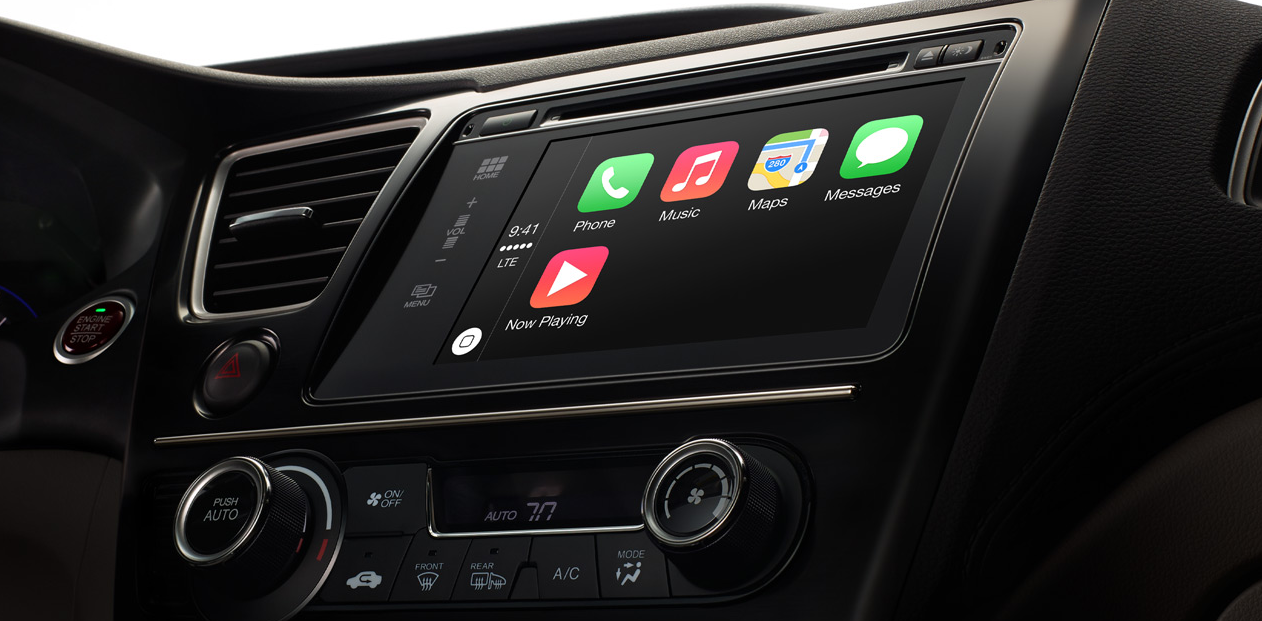
Today, Apple announced CarPlay, bringing its brand new in-car infotainment system to Honda, Mercedes, Volvo, Hyundai and Jaguar as well as a dozen committed partnerships from some of the largest manufactures in the automotive sphere.

Google recently announced partnerships with GM, Audi, and Hyundai. Ford’s relationship with Microsoft revs up the continued adaptation of in-car apps with Microsoft’s SYNC system now in over 8 million vehicles.

The merge of technology and automobiles makes sense on many levels, but future control of the connected car lies in the balance.

Mobile technology platforms have widespread audiences that cover large demographics. For many consumers the choice is one of two mobile operating systems; Apple or Android. Automobiles are a different story. 35+ unique brands exist in the US alone and different automotive platforms and model offerings create even greater segmented audiences.


What will technology’s impact be on automotive brand loyalty?

Drawing A Divide:

An automaker’s decision in a technology partner is a crucial one. With more and more buyers basing purchasing decisions on automotive technology rather than traditional features, control of in-car tech has serious future value. Thirty-nine percent of car buyers today rate in-vehicle technology as the top selling point. The importance of the connected car is gaining some serious traction.

Technology preference can be a hindrance to brand loyal buyers. A buyer traditionally loyal to Audi’s product line may be an avid iPhone user. Audi’s partnership with Android may force that buyer to make a choice between technology and automotive preference.

A consumer's mobile device is a highly personal item, connecting the consumer to their digital lives. Mobile devices spend huge amounts of time with the consumer - 2 hours being spent on apps alone daily . On the flip side, the automobile remains the primary transportation hub for consumers. The average American spends 2.5hrs a day traveling by car.

Automotive Experience:

One of the largest “benefits” seen from these partnerships is the unlocking of new connected experience opportunities between consumers and their vehicles. While the level of interaction involved with automobiles and mobile technology are equally high, buyer demographics show distinctly different motivations. Millenials interact with their cars because they have to and interact with their phones because they want to. The connection they have with their smartphone is more readily apparent than those they have with their vehicles.

The implementation of mobile apps into vehicle infotainment systems is an example of the connected car experience merging with personal mobile devices. While the pathway of connected cars is already largely adopted, the question becomes how will automotive and tech companies divvy up the control of the in-car experience?

Experience, Keeping it Fresh:

One of the largest considerations for OEMs is to build or partner. In-car technology is quickly becoming a larger part of the purchase decision. With technology’s constant push forward, implementation of established mobile platforms into vehicles makes for an interesting case study. Over the past 10 years, the average vehicle's lifespan has risen from 5.7yrs to 11yrs. In today’s world a car’s interface technology can be a contributing factor in the lifespan of a vehicle. Even systems a few years old can feel clunky, outdated, and lack significant features of newer models.

One of the arguments for OEM partnership with established technology giants is centered around hardware and upgrade roadmaps. Android and Apple’s torrid innovation pace breathes new life into their mobile hardware even when that hardware is a few generations old. As we saw with the recent iOS 7 update, the upgrade path included older iPhone 4, 4S, and iPhone 5 models.

With small exceptions the older hardware was able to perform many of the features of current gen tech. This model has beneficial implications for automotive manufacturers who require vehicle lifespans to extend beyond a few years. Partnership with Apple or Google allows manufacturers to update older generation connected car systems – keeping the experience fresh and extending vehicle lifespans. For manufacturers this helps devalue the importance of predicting where technology will be 5 years down the road.

applecarplay1.jpg

Control, Who Gets It:

For manufacturers, concern centers around branding and control. Permitting tech companies to control the “connected experience” of the automobile has the potential to dilute automotive brand value. With more and more of customer’s automotive experience coming from in-car technology, brand differentiation needs to be weighed carefully.

Additionally, automakers stand potential losses from higher margin “tech packages.” Bluetooth, Navigation, and in-car concierge services have been traditionally represented by checkboxes on the options sheet. With iOS in the Car or Android’s new take on automotive technology, many of these features are inclusive. Implementing a more widespread mobile medium into a manufacturer model line risks loss of important margins.

In summary, while similar platforms across automobiles has beneficial aspects, manufacturers risk losing control of the connected car experience.

Connected Car and the Dealership:

How will your dealership utilize the connected car experience to drive more service revenue?

When your customer thinks service, will your dealer be present on their digital dashboard? How will the connected car automate scheduling a service appointment with your dealer?

Smartphone connectivity in vehicles will alter the way in which your customer interacts with your dealership. While today’s dealer app includes the ability to schedule service on a smartphone, consider the value of that app on the customer’s digital dashboard. App specific features such as Location Targeting are enhanced when connected to the car.

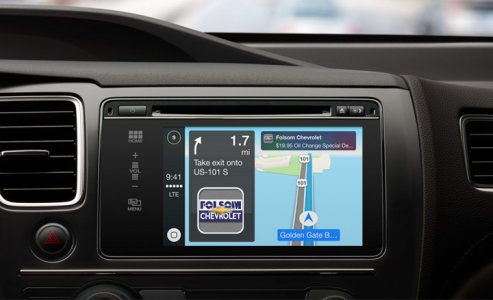
Consider this example: Mary is running errands on a typical Saturday. She visits a quicklube store near her dealership. She is alerted through her car that the nearby dealership has delivered an oil change special. She engages with the coupon in her car, sees an opening at 2pm, schedules the appointment, and receives directions to the dealer. This is targeted messaging delivered at the moment of decision! Location Targeting, through an app, connected with the car.

The automotive experience is shifting to a mobile focus. Smartphone integration across all aspects of the automotive economy is changing not only the vehicles themselves but they ways in which we shop, own and experience them.

What other examples would you like to see become a reality with location targeting?

Should ROI Principles Dictate Your SEO Spend?


[highlight color="#F0F8FF" font="black"]Let's give Jerry a warm welcome for his first contribution in article format here on DealerRefresh. I've know Jerry for sometime now so when we bumped into each other at NADA, we got into some heavy conversation. One subject we both are passionate about is SEO and how dealers are measuring the ROI around whatever SEO strategy they may have. I invited Jerry to put together some of his thoughts on paper (digital) around the subject to share with our readers. After reading, take notice to the questions at the end and share your answers in the comments. - Kershner[/highlight]

Have you ever considered that your typical ROI principles may not be the best metric in developing your dealers SEO strategy?

I am sure a number of eyebrows were raised with that question. ROI (return on investment) has been and will likely continue to be the way most dealerships detwemine if their expenditures, are good/bad for the dealership. But Return on Investment is only ONE metric. I can tell you that other industries look at ROI as a mere component of the overall justification of the expense.

Allow me explain.

Let's say you're considering a widget to capture more leads from your dealership's website, a trade appraisal tool for example. You sign up and install the widget, and in return you increase overall conversion that results in more leads. At the end of a given time period (typically month to month) you add up the total gross made on each trade appraisal lead sold, then subtract the total cost of the tool to determine your ROI for that particular widget.

If the ROI is in the green and the gross exceeds the cost by a considerable amount, then it's a justifiable expense. Most of the time.

How does ROI relate to your dealerships SEO strategy?

There was a time before Google's Panda, Penguin and Hummingbird algorithms when "gaming" the system was easy. Remember the days when you could "keyword stuff" pages and get away with it? How many of you had (I hope no longer) hundreds of micro-sites?

Today, the SEO road map to best practices are much more defined and freely available and it basically comes down to two words - Relevant Content.

What is relevant content?

Relevant content is that your online visitor finds informative, engaging and helpful. This is why websites that use such content are rewarded with top placement on SERPs. Search engines, like Google, highly value relevant content because of the heightened experience it returns to the visitor.

Tip: Leverage your Google webmaster tools and take advantage all of the free advice provided. From guidelines around HTML improvements to understanding structured data are there for reference and additional education.

What can you do TODAY for immediate results?

The short answer is NOTHING. Nothing you do "today" is going to have an immediate impact in increasing unique visitors, driving higher conversions and getting your dealership website to rank higher. There is NO silver bullet. Believe me, I have been looking for one for 10 years!

The long/right answer is CONTENT, content and more...content. Google has set the rules, there is no fighting it.

The most effective way to add content to your dealership website is to have a blog type platform included (in the root domain / URL). Blogging takes a strong commitment. A commitment to consistently writing crazy sexy content that's relevant, informative AND optimized for the search engines.

Most high performing blogs, are not being used to directly sell a product. Instead they include reviews, product data and information while engaging the reader. Articles should be published on a regular basis. I recommend at least 2 per week that contain at least 250 words.

Bonus Tip: Don't forget your Specials!

I am not referring to the new and used car specials pages already included on your dealership website. I'm saying take it to the next level by creating individual pages (or blog posts) around your specials each month that are content driven for additional SEO value. If you're re-purposing your print ads or having your agency re-create your specials into one large image for your website, STOP, as it provides zero value to your SEO strategy.

Remember, you can't allow general ROI principles to govern your SEO/Content strategy. A solid strategy takes time, time to mature, dedication, and consistency. I have seen numerous dealers who were not looking for the "quick fix" or "silver bullet" eclipse their competitors by having a sound SEO strategy. This typically happens when the GM or Dealer Principle share the vision and understanding of its importance. The ROI on your SEO strategy MUST be viewed in an iterative basis as opposed to what did we get for it today, or this month.

Questions:

Does your GM and/or Dealer Principle share the vision and understanding of a solid SEO Strategy?

How are you currently measuring the Return on Investment (ROI) of your SEO Strategy?

What type of content have you found to have the most impact on increasing your traffic?

Market Supply to Scarcity - Understanding Demand

Since it’s introduction in 1948, more than 28 million F-Series truckshave been sold and the F-150 is consistently one of the most popular vehicles on the market. But when deciding whether or not to take one more in trade, or buy another one at auction, or wholesale one, it is important to look at marketplace supply and demand.
Are there too many in the local market?
Are there too few?

It’s more complicated than just your sales rate and the day’s supply. We can learn a lot from market demand and that can make you a better buyer, and a smarter seller.

I sat down with the data scientists at Vast again to get their insights on how we can use market demand to tell us whether something is scarce or there are too many. We looked at F-150s as our example.

First, they started by looking at how many F-150s are out there for sale today. Vast processes more than 23 million inventory records every single day and consolidates it down to the 6 million used vehicles that are real and ready for sale, so they know what’s out there.

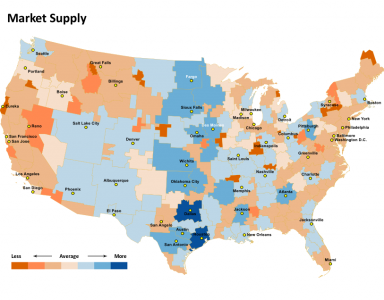
The scientists put the chart below together, showing Market Supply by DMA. They went a step further though, and looked at how many F-150s are in each market, relative to the number of people who live and drive there. This tells us where F-150s are more popular, like TX (shown in Blue) where there are more per person, compared to places like California where there are less (shown in Orange).

SupplyLayout3.png

Ford F150 Market Supply Across the US

When we look at this chart by itself, what it tells us, while interesting, is not especially helpful. In order to get meaning from it, we have to look at Demand relative to Market Supply. Vast sees more than 100 million used vehicle consumer searches each month, so the scientists have a very large base of demand to look at to help decide if there are too many F-150s for the market, or too few.

They also aren’t looking in the rear-view mirror the way day’s supply does. We all know that going into the winter, day’s supply leads to too much inventory, and going into the spring, too few. Vast scientists see the demand today, compared to yesterday and last week and are able to establish near real time trends. That’s accurate demand.

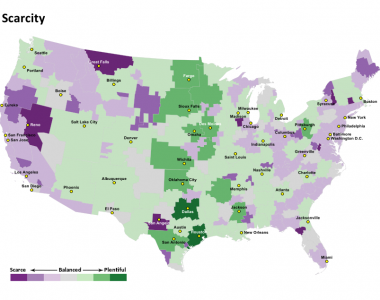
The chart below called Scarcity shows what they do. They compare the amount of demand (click and search activity by real buyers) there is for F-150s and compare it to the supply, based on the size of the market and its relative popularity (Market Supply above). Markets shown in purple, like Reno, NV are markets where there is more demand than the relative supply of used F-150s can support – call those markets Scarce.

In other markets, shown in green, like Dallas, there are plenty of available F-150s to support the supply. So even though the F-150 is very popular and a good seller in Dallas, the demand comparison tells us that there are plenty, perhaps even too many, out there for sale.

Scarcity_Layout.png

Ford F150 Scarcity Across the US

So what? Scarcity tells what to expect from sales rates and prices in the next few weeks. In scarce markets, prices should be firm, trades should be a little harder to find, and auction sales should be brisk. In markets where the F-150 is plentiful, we should expect to see some softness. A used car manager who stays on top of these trends can avoid wholesale loss from aged inventory, even in popular models, and avoid the kind of price discounts that are not needed when vehicles are expected to be scarce.

We can learn a lot by understanding demand and we can use this to price better, advertise smarter and buy more opportunistically.

Here’s a the top 5 markets where F-150s are more scarce:
Rockford, IL
San Angelo, TX
Utica, NY
Great Falls, MT
Charlottesville, VA

Here are the top 5 markets where F-150s are more plentiful relative to the kind of demand in those markets:
Dallas-Ft. Worth, TX
Houston, TX
Omaha, NE
Kansas City, MO
Oklahoma City, OK

Remember, it doesn’t mean that F-150s are not popular or large sellers in those markets, rather, it means that relative to demand, there are more than enough already out there for sale.

Are you regularly reviewing your marketplace supply and demand reports before heading to the auction or placing a number on that next trade-in?

Turns Out Facebook Advertising Is A Big Lie

[highlight color="#F0F8FF" font="black"]If you follow the "other" industry forums, there's a good chance you've read one of Mr. Stephen Jackson's many enthralling articles. I happen to intercept this one, and asked if we could exclusively host it here on DealerRefresh. I believe you'll enjoy this article as it's very relevant to the conversations we've had lately. Read this one all the way through. Think about how you're advertising on Facebook (if you are) and use the comment section to share your opinions and findings as you stroke a check to Facebook for advertising. Enjoy! -Kershner[/highlight]

I ask, how many “likes” does your dealership facebook page have? More importantly, how did you get those likes?

Marketers value the ubiquitous Facebook Like for two main reasons:


  1. Your likes are a numerical way to represent your popularity. Every thumbs-up is a public display of brand loyalty and recognition. Marketers hope that an extended social media reach equates to brand advocacy among consumers - an ideal that has yet to be proven.
  2. Facebook Likes help your messages travel further. Here’s the way it’s supposed to work: as you gather likes, your fans see more of your content and this drives engagement. If you can build a bigger following, you have the chance to speak to a larger segment of your target audience.

At least, this is what we’re told. Facebook sold us on the value of likes-as-advertising back in 2012, right before it went public. The company was valued at $100 billion, but only because it showed the potential to exponentially increase ad revenues. As a result, Facebook opened it’s own ad exchange, allowing users to bid on ad space to promote their page on the social networking site.

We know lots of dealers who have employed Facebook campaigns over the past few years. We’ve talked to a few who have noticed that engagement wasn’t growing, and return was exceptionally poor. You might remember that these thoughts were echoed by GM almost two years ago, when the OEM decided to stop advertising with Facebook just a few days before the company went public. Many marketing pundits were shocked that the third-largest advertiser in the country was cutting its ads from the largest social network in the world.

But the owner of science video blog Veritasium has poked a few giant holes in the validity of Facebook’s business practices. In a video that was released on Monday, blogger Derek Muller examined some of the Facebook fans he’d acquired through the site’s ad platform.

Login to view embedded media View: https://www.youtube.com/watch?v=oVfHeWTKjag


Though he’d targeted the U.S. and U.K., he was getting a lot of fans from developing countries such as Egypt, Indonesia, and the Philippines. He was also getting a lot of attention from people in unlisted locations who seemed to like tons of things. Some of his new fans had liked over 300,000 pages, some with conflicting interests (for example, liking AT&T, Sprint, and Verizon).

It seems plausible that these users were born of “click farming,” a practice in which social media accounts are created and exploited by constantly “liking” as many things as possible. These users like your page, but will never interact with your brand or buy anything you’re selling. This results in a large following with zero value. These kind of fans are worse than useless.

The rabbit hole goes even deeper as Muller starts to investigate his engagement. After posting his ad, Muller’s page received an influx of these suspicious fans, but his engagement (the amount of users commenting or interacting with his posts) was lower than ever before. He realized that this was due to the way that Facebook’s ranking algorithm interacted with his newly-found fake friends.

See, when you post something to Facebook, it isn’t distributed immediately to your friends and followers. First the network tests the waters by evaluating the social worth of your content. Facebook releases your posts to a random sample of your fans and gauges its immediate reaction. If people start liking or commenting on the post, it is gradually shown to more and more users.

When you buy fake fans (those accounts created through click farming), your content is initially shown to some of them. Fake accounts have no chance of interacting with your brand, forming a relationship with you, or ultimately buying anything you’re advertising. Even worse, your posts consequently are shown to fewer of your real fans. In this way, Facebook makes money twice: once by helping you acquire “fans,” and then again when your content is restricted - forcing you to buy more.

Essentially, this means that advertising through Facebook actually causes your web presence to suffer - the opposite of its stated purpose.

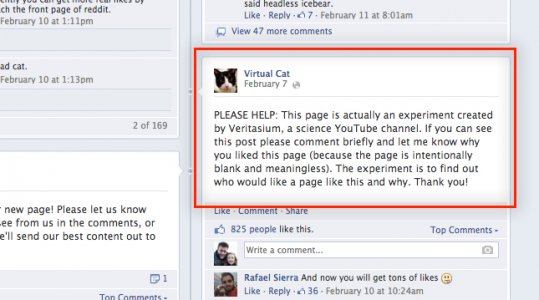
At the end of his expose, Muller demonstrates how he created a blank page called Virtual Cat filled with “the worst, most annoying drivel you can imagine. Only an idiot would like this page.” It says so right in the description. Muller then paid $25 to Facebook for targeted ads in the U.S. Sure enough, the likes came rolling in - but the blogger was testing their authenticity by creating posts such as this one:

virtual_cat_facebookpage.jpg

The virtual cat Please Help post

Despite Virtual Cat’s 300 new likes, this post was not engaged with once.

I do not mean to say that the social company was directly involved with using clickbots in order to deceive advertisers. Muller’s video postulates that these are the results of third parties who are actively trying to avoid detection by Facebook’s fraud algorithms. But removing these “fake” likes and fans would mean that the company would have to admit that Facebook has made hundreds of millions of dollars from providing completely useless fans.

Shortly after its release, this video caught fire. The experiment has been seen by almost a million people - and it’s only been a bit over 72 hours. Brands like Walmart and Target are now acutely aware that they have thrown fortunes away on followers that don’t exist, and they aren’t happy.

The invisible hand of the market is now clenched in anger, and pointed directly at one of the most popular sites on the Web.

Questions:

Have you or your dealership tried advertising on Facebook for more likes?

What results are you seeing from your ads?

Whats your game place for using Facebook ads into 2014?

Your Social Media MUST Be Yours and Yours Alone

Duplicate-Content-Social-Media.jpg

If there's one thing that I absolutely cannot stand in the automotive digital marketing world, it's the demand to make everything scalable. One of the biggest reasons I formed my own company was to help put an end to the automation and bulk-mentality that permeates throughout our industry.

Don't get me wrong. I totally understand the need for companies that want to have a big payday sometime down the line to make their products fit into a scalable process. It makes sense, particularly when considering that there are so many vendors out there vying for a relatively low number of potential clients. They can't turn away an OEM, tier 2 organization, or large dealer group when they come knocking. However, it's grotesque to me that scalability has superseded quality and results for so many. It's the dealers that are hurt the most by this.

Case in point: social media...

It's a realm in which I spend a good portion of my time. It's a potentially incredible marketing venue for dealers, yet it has been cheapened by many vendors and even OEMs to the point that it's now a function of mass distribution rather than personalized communication and experience.

The very nature of social media is geared to allow dealers to express their uniqueness, to talk to current and potential customers in their local area, and to present the dealership in a public light that allows the world to see why they're special. Too many have turned social media into an act of trying to fit in. The goal is not to fit in. The true goal of social media is to stand out.

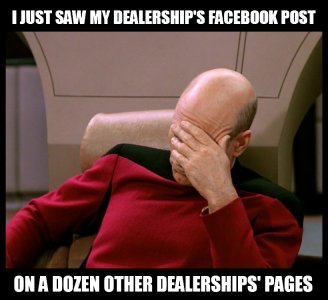
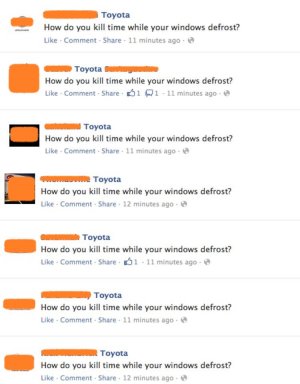
When Brian West from FusionZONE showed me the image below, I facepalmed. I literally facepalmed. This is not how social media is supposed to work. It would be different if the content was so amazing that people were interacting with it, but across the majority of the dozens of accounts I checked that had this question asked, there were no responses. No comments. No likes. No shares. Only crickets.

Duplicate-Facebook-Posts.jpg

Social media is the most under-utilized marketing and advertising venue in the automotive industry. It's not that few dealers are trying. From what I've seen, most dealers are trying (at least a little). However, social media is not like search marketing, classifieds, or even outreach marketing like email.

The gap between bad and good is actually very slim, while the gap between good and great is tremendous. In other words, doing pretty well at social media does not generate much better results than doing it poorly. On the other hand, doing it the right way and taking it from good to great can mean the difference between selling cars on social media and not.

It comes down to building a process around people rather than software. Social media is about being social. Software is not social. People are.

For a company to effectively handle a dealership's social media presence, they need to have no more than 12-15 dealers per social media employee. Once you take it any higher, they are unable to deliver the same personalized experience that dealers (and their fans) deserve.

Even at those numbers, every post on every page must be absolutely unique. The posts must fit in with the personality of the dealership and the brand, the customer base in the local area, and the activity level at the store.

  • They cannot be automated
  • They cannot be reposted dozens of times
  • They must be unique.

There are a handful of vendors that get it. More importantly, a dealership can kill it with an employee spending a few hours a week doing it themselves with the right strategy.

Bulk vendors might be fine for websites, PPC, or other software-driven marketing services, but not social. It simply doesn't work.

Question: Can vendors scale their operations to include unique, personalized content or should dealers revert back to handling their own social media?

Watch these Three Dealers Use Video To Help Sell More Cars

Dealerships all over are using videos as a way to wow prospects and customers. And why not?

Statistics show that, after watching a video, 49% of shoppers visited a dealer (according to the Milward Brown Digital/Google Vehicle Shopper Path to Purchase Study, September 2013), and video sells more cars (according to a recent article in Automotive News).

Given these trends, how can your dealership further differentiate from competitors who are also using walkaround videos?

Here’s a tip: Do it right.

Yes, there’s a big difference in life between doing something, and taking the time to learn how to do it right. If you are interested in getting the biggest bang for your buck with walkaround videos, it makes sense to learn learn from others that are doing it right!

Here are 3 examples, direct from those who are doing it right:

Be Personal

There are many best practices working in this video. James Versiackas from Prime Motor Group showcases the immaculate condition of Toyota Highlander by leaving enough room to walk around, showing the tire treads, paint and interior, all in excellent condition. James calls his customer by name (“Hi, Joseph!”) and leaves his phone number for the customer to schedule an appointment for a closer look and a test drive.

Stage the Vehicle

In this video, Brandon Price of Cavender Toyota does a great job staging the Toyota Tundra before shooting. First, he made sure the vehicle was clean and in a well lit, quiet location. Then he pre-opened the passenger side doors, so as he walks around, we get an effortless look into the interior. He completes the video by returning to the starting point.

Be Creative

Chet Navey of Jeff Wyler begins his video from the driver’s seat of the Kia Optima to show how, with one touch, the vehicle “comes alive.” After letting us see several great features in action, he hops out of the vehicle to show off the “sharp” features from the front. Rather than turning the camera on himself, he keeps the focus on the car.

Remember to be yourself. Everyone has their own personal styles and techniques! Your videos should reflect you and your personality.

Incorporate these great examples into what you’re already doing, and the competition won’t stand a chance!

Questions:
What would, or do you add to your walkaround videos?

What do you do to make your videos stand out?

What do you add to your videos to help brand yourself?

Sound off in the comments! 

Your Digital Marketing Expert's last job was at McDonald's

Latest HOT Discussion in the Forum

Screen-Shot-2014-01-16-at-3.40.08-PM.pngYour "Digital Marketing Expert's" Last Job Was at McDonalds

I enjoy this industry, I really do! I love how fast paced it is. I love the everyday unexpected challenges that are synonymous with the business. What really gets my negative juices raging is the number of "Automotive Retail and Digital Marketing Experts" operating in this space that have little to no expertise in Automotive or Web Marketing.

Don't get me wrong, I think there are plenty of excellent web-minded marketing genius' in this industry and many of them likely have less than stellar web skills. But these REAL Automotive Marketing Experts seem to be few and far between in my honest opinion. So I ask you all this question, Should we really be taking Automotive Website Marketing and Digital Marketing Advice from people and companies that would struggle to build even the simplest HTML Table?

How are so many of these agencies and companies getting away with preaching to us, our peers, and even our competitors Automotive Marketing wisdom when they have no Web or even Automotive retail knowledge? Why are we letting them get away with this?!

Today, I'm in a good mood so I've decided to hold off in calling any one particular company or agency out. But I did want to bring this topic to light and have an open discussion on the refresh board. I may be wrong about this and I'm completely willing to accept it but I want to see the business and this industry improve and become even more competitive. And I firmly believe that will not happen (at least not at the rate it should) with so many non-experts claiming to have the golden Automotive Marketing Ticket.

What do all of you think? </rant>

Let's get the discussion going!
Click here to comment in the forum

Technology Specialist: Your Dealerships Next New Hire

Last Friday I posted a thread in the forums about this, but I think it could use a deeper dive.

With the rate that technology is growing, it’s no wonder vehicle manufacturers are trying to keep pace.  And, they’re doing a fairly decent job at it.  “Call mom” just went to “Update my Facebook status to, ‘Old people driving in the left lane really piss me off.’” I’m not surprised at all (ok, probably no one is) since we consume information anyway we can get it and we’re living in the connected generation.

The new technology found in these vehicles begs the question: Who’s responsible for teaching the proud new owner how to use all of that?

Is it the sales person, or a dedicated technology specialist?

While some manufacturers contribute to the cost of a dedicated technology specialists, others do not. And, when the salary is coming out of the dealerships’s bottom line – do they train the sales person to do it all, or hire a specialist?

I can see the pros and cons of each. On one hand the sales person knowing everything about my new car is appealing. I recall when I purchased my last vehicle I had to laugh when the sales person struggled with showing me “easy access to the third row”. Quick recovery for him – he did know everything about the fancy features in the dash.

On the other hand, I can see the benefits of a dedicated technology expert – the guy or gal coming in to take over the technical, over-the-sales-person-head conversation. However, with that, I can’t help but wonder if a consumer would get irritated they have to wait for “just one more person” before leaving the lot. Picking up a new vehicle is beyond exciting and who wants to wait on something.

At the end of the day, I lean more toward the sales person taking on this challenge and knowing the vehicle from top to bottom, inside and out.

Lastly, and this could be a whole new post – blogging about the technology in the vehicles you sell is great for SEO. Now, who would write the blog….?

5 Principles to Rock your Online Reputation and Win more Customers

[highlight color="#F0F0F0" font="black"]Not long ago I was on the phone with Sean Peoples, VP of Sales for CarGurus. I've known Sean for some time now and there's never a dull moment during our conversations. We got on the topic of online reviews and he was sharing with me some interesting data around customer reviews on CarGurus.com. I asked him to share this data in a post here for our readers. I hope we hear more from Sean in the near future. He's a smart dude! -Jeff[/highlight]

Who cares what people are saying about you online?

By now, you know the answer: everyone that is shopping for a car on your lot.  For dealerships, online reviews offer an opportunity to establish credibility and trust among prospective customers – or they can quickly destroy both when things go wrong.

Our experience with user reviews and online community runs deep (notably, our founder and CEO was the co-founder of travel review site, TripAdvisor).  More than 7 million unique monthly visitors research and shop for cars on CarGurus, and we invite each shopper that contacts a dealership through our site to submit a review of his or her experience.  More than 250 of these shoppers take the time to do so daily.

Recently we spent some time analyzing 100K of our most recent dealership reviews, and I wanted to share some insights from this study that I believe will be useful to your dealership.

The biggest takeaway from our dealership review research is that the majority of dealerships are nailing it when it comes to customer satisfaction are...

  • 75% of the reviews on our site were rated a 3 or higher (on a scale of 1 to 5)
  • A significant 64% had a score of 4 or higher.

That’s good news for an industry that is sometimes maligned in the public eye.

Perhaps more interesting, though, are the comments that are associated with high scoring reviews. Despite in-market buyers’ migration to the Web for the majority of their car research, our analysis of the most positive dealership reviews suggests the human connection at the dealership is still very much a driver in the customer decision making process, especially for those lower-funnel customers you are courting.

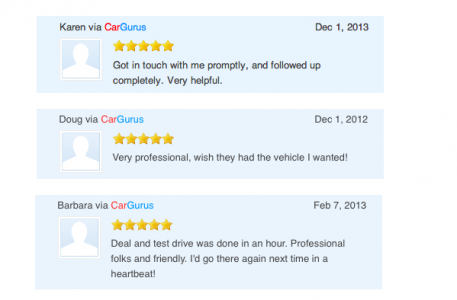
cargurus_reviews.png

Professional, Friendly, Helpful

In reviewing the shopper comments in positive reviews, we found some prevalent themes that appeared again and again. As you’ll see, these are basic customer service principles, but I believe they are worth reviewing with your sales team.  Even the best “online reputation management strategy” cannot help you if you don’t build your reputation on this solid foundation.

  1. Friendly. The words “friendly” and/or “nice,” appeared in nearly 20% of the comments associated with 4 and 5 star reviews. Even customers who didn’t ultimately buy the car cited their positive experience with a “friendly” salesperson.  Friendly service was also often associated with promising referrals (“I would recommend this dealership to anyone shopping for a car.”)
  2. Trustworthy: Establishing trust with a nervous, skeptical customer – particularly when selling used cars – is no small task. In many reviews, customers cited “honesty” and referenced “direct answers to my questions.” That applies to the first phone conversation you have with a customer to what follows when they are in your store. Also worth the effort to make sure you’re connecting the dots on information shared in both cases: consistency breeds trust.
  3. Responsive: Prompt call backs have a big impact – this is cited frequently in reviews. The typical shopper on CarGurus contacts more than one dealer on listings in which they are interested.  Be the first to get back to them. (That said, don’t bug them too much thereafter – too many “annoying” call-backs gets cited in many negative reviews.)
  4. Fair: Perceived fairness usually does boil down to “getting a good deal”, but this doesn’t have to mean the lowest price. Rather, our user comments suggest it’s more about providing transparency around your pricing and your financing terms. At a minimum, make sure your sales staff is educated about current market values as your customers surely will be.
  5. Helpful: It makes sense that dealers who make the entire process seem “easy” make a big impression.  Satisfied reviewers frequently cited salespeople that were “willing to take the time to explain everything.”

Of course, not all reviews are positive.  Twenty-five percent of the reviews on our site score a 1 or 2, and we found some telling themes there too.  Aside from some blatant “bait and switch” experiences (and that’s another whole conversation), most of the consumer complaints boil down to communication breakdowns, which are easily avoidable in many cases.  Some suggestions:

  1. Coordinate all points of communication so that your front desk communicates the same thing as your sales floor, and both correspond to what’s online.
  2. Be straightforward with your pricing – don’t factor special offers into your list price without making it abundantly clear to consumers. It is great that you offer military discounts or special financing deals, but make it clear how those relate to asking price.
  3. Stay on top of your inventory – work closely with your inventory host to ensure your listings are complete and accurate. Don’t let already sold listings linger online, it only frustrates customers (and they will write about it).

At CarGurus, we limit reviews to consumers that we know have engaged with a dealership – they are solicited by invitation only. We do have a dispute process for dealerships that are concerned about an inaccurate review, and we try to address any concerns in as timely a manner as possible, as we know how important reviews are. Staying on top of your reviews wise.  And be sure to point to your stellar reviews in your social media and other marketing efforts.

It wasn’t long ago that reviews would make or break restaurants and hotels, but didn’t have an impact on much else.  The internet gave a voice to the customer, though, bringing hotels, books, plumbers and anything sold on Amazon into the spotlight.  Cars are no exception, and dealers have a huge opportunity to use this to their advantage, using reviews to attract and win customers.

Have you read through your reviews to determine which positive or negative behavioral “keywords” you could use to help your customer service and process at the dealership?

The Social Media Overview Effect

When astronauts look down on our beautiful, fragile planet, they often experience the “Overview Effect,” in which previously held notions of human differences melt away and a feeling of oneness prevails. At DSES, speaker Cam Chell brought up the concept, and I’ve been thinking about it ever since.

On an admittedly less cosmic level, your dealership social media profiles provide a sort of overview effect for your customers, whether you intend for it to or not. The pictures, videos, links and text you post works together to create those concepts that are difficult to quantify, like aesthetic and tone.

A dealership’s social media profile is not an art museum, but hopefully should convincingly answer the question of “do I want to do business here?” when someone consumes years of your history with a few swipes of a finger.

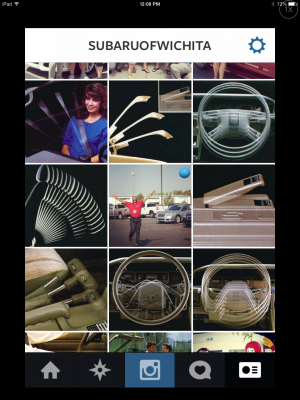
Instagram is great for this. Each picture/video you post shows up individually in your followers’ feeds and then is placed in those lovely rows of three, which make it part of a larger assemblage that tells your story.

I’ve found Instagram to be the perfect platform to showcase the vintage Subaru brochures I collect, and enjoy posting clusters of pictures that share the same quirkily dated camera techniques. While we did not create this content, it offers value to the large community of vintage Subaru enthusiasts on Instagram and establishes us as a brand authority.

Check out these 8 motion shots from the late 80s, which frame our salesperson Demetrius in all of his exuberance:
Insta-Overview.png

Take your pick of platforms. When ingested altogether, your talent for content creation and curation tells a story. The question is—is it the story you intended to tell? Is it a true story?

Jessica Caldwell, a senior data analyst for Edmunds, sent us a message complimenting us on the spirit we put into our Facebook page. She had looked us up for a piece she was writing,  and then admitted that she and her team had spent the better part of an afternoon sharing some laughs by scrolling through our page.

Her admiration spilled into the article, as well: “If you have five minutes,” she wrote, “check out their Facebook page; it’s quite entertaining and looks like a pretty fun place to be!”

What's the ROI on a mention like that? Who cares -- I'll take it!

Each post should absolutely work hard on its own, but as you plan out your social media calendar, also try to think in terms of creating an Overview Effect for your followers. Let them enjoy the progression from one post to another, and remember to periodically scroll through your own pages, enjoying the rich layers of history you helped to document.

Happy New Year!

2013 Mobile Year in Review

Research On Mobile Greatly Influences Purchases

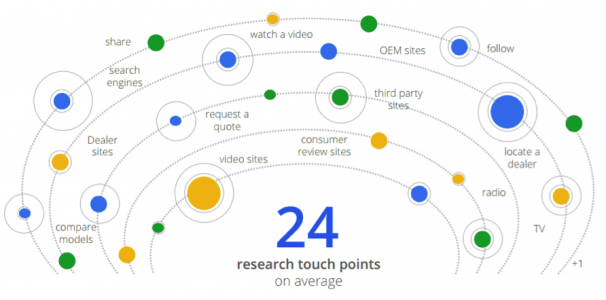
“The average consumer is now hitting 24 research touch points on their automotive journey.” -Google

Research shows search is driving conversions and triggering consumer actions. These actions are driving the consumer experience.

More Research, More Sales: 2013 Holiday Shopping

mobile-2013-1.png

The largest shopping weekend of the year revealed some eye-catching insights on the adoption of mobile in the consumer shopping process.

Smartphones browse, tablets buy; 11.7% OF ALL Cyber Monday sales came from tablets.

“The mobile device has become the shopping companion of choice for consumers, driving record mobile sales with 55 percent growth over last year.” -Jay Henderson, Strategy Director, IBM Smarter Commerce

Push Notifications Become Prominent


With the recently updated TPCA regulations effecting how text marketing and messaging is regulated, marketers and retailers are turning to push notifications to target mobile devices.

Push notifications produce similar results without violation of current regulation. Retailers sent an average of 77% more push notifications over the 5-day holiday period compared to averages in September and October. We are seeing push notification engagement (PNE) rates over 95.4% and growing.  This very simple and cost effective method is gaining traction and many expect more adoption in 2014.

Mobile Quality Time

mobile-2013-3.png

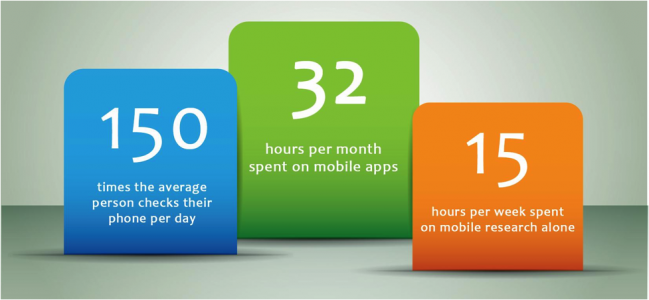
The average person now invests more that 15 hours per week on mobile research alone with over 7.3 hours per week on the mobile web and 8 hours on mobile apps. - Google Think Insights

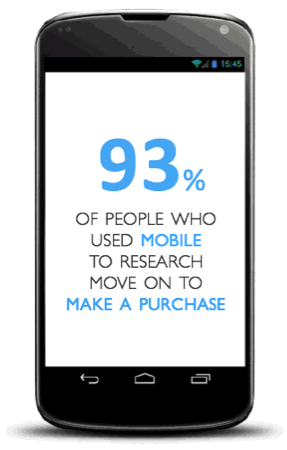
93% of people who used mobile to research in 2013 went on to make a purchase.

Multi-screening

mobile-2013-4.png

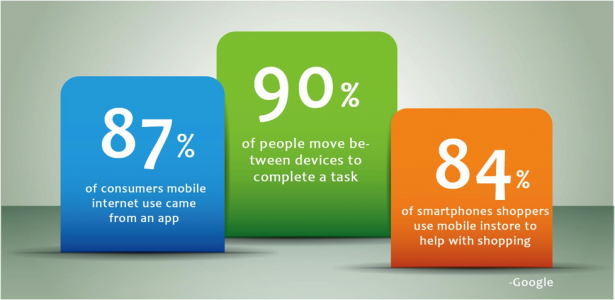
The average consumer uses 3 different screen combinations a day with 90% of them moving between devices to complete a task. The adaptation of tablets across the market has caused multi-screening to become mandatory. This new reality brings showrooming and webrooming into the shopping mix.

84% of smartphone shoppers use their device to help shop in-store.

2014 Mobile Insights and Predictions

Location Targeting

The amount of location-based data continues to drastically influence marketing. Consumer location is a metric of utmost importance to advertisers. Location Targeting allows the marketer to incentivize the shopper precisely at the moment of decision. The effectiveness of a marketing message delivered at the right time has tremendous value.

The shopping process will begin interacting with us in new ways. In-store triggers (iBeacon) will influence our shopping experiences and new methods to combat showrooming will evolve to keep customers interacting with business and brands.

The NOW Generation

Mobile has dictated immediacy as a necessity. Consumers can no longer be expected to take multiple steps to targeted action. Convenience is now the difference between an action and a non-action. In fact speed and convenience are the main drivers to mobile search. Mobile apps and their rise in popularity are a direct result of quicker, easier access to information on the go.

Future Tech

  • Expect more wearable technology to integrate with our lives and create more personalized experiences.
  • Large amounts of analytical data will learn our ways and customize our experience to match.
  • iOS in the Car and similar initiatives will continue to merge our smartphones and in-car technology.
  • Mobile will continue its rapid march towards becoming the main catalyst between customer and dealer.

Question:

How was your mobile presence in 2013? Effective, lackluster?

What will you change for 2014??

Extra Sources:

Think with Google US - Marketing Research, Insights, and Trends
http://www.google.com/think/research-studies/digital-drives-auto-shopping.html
IBM Newsroom

http://www.adtruth.com/sites/default/files/AdTruth_Mobile Meteoric Rise.pdf
http://think.storage.googleapis.com/docs/redefining-advertising_infographics.pdf
http://www.google.com/think/research-studies/the-new-multi-screen-world-study.html

Promoted Article Dealerships should not have to choose between integration and independence

I had some recent transactions from afar, and I was surprised the dealerships still wanted a credit card number over the phone. Even the mom and pop businesses in little ole' Vermont have credit card processing I can do without having to tell someone my stuff over the phone.

6 Predictions That Will Impact Automotive Retailing in 2014

Every year I like to have some fun imaging what's in store with the future of large scale marketing and technology trends and how it may affect dealerships, consumers and possibly the industry. This is the most exciting list I've put together yet - and with that, I give you my Carstrodamus 2014 picks that may have the furthest reaching impact on the industry!


semantic-web.jpg

1. The Semantic web will transform the search engines from keyword index engines to answer engines. Context and relevance are now more important ever. Google wants to create a connection (linked data) between the words on a web page to understand their meaning and your intent. Approximately 20% of organic results are delivered due to this initial wave of structured data added to website content. And the good stuff hasn't even hit us yet.

The quickest solution to help accomplish this is the structured data vocabulary called Schema.org. I believe website vendors will scramble for ways to shift their search marketing teams and respond to the need for structured data solutions - unfortunately they will try to scale what I believe is the wrong solution. Their efforts will be slow, inefficient and terribly difficult to scale. Faster, more complex and more efficient solutions will present themselves for all industries - including automotive. This solution will improve the level of context and overall understanding of the content within the vehicle detail pages and improve their overall lead performance - for those who participate in this massive shift with the proper data structure.

You see, the problem that exists is that content isn't being created for the Semantic web, it's simply being translated into formats such as Schema.org. A standardized solution, which bypasses this process and populates content dynamically for the Semantic Web, using different data interchanges and libraries, will set off an explosive disruption across the Internet. This will forever change the way search marketing is approached.

Conversational search will be a key element of consumer behavior and will drive newer, more valuable content marketing strategies that play nice with the new semantic/structured data search landscape. This will have a profound impact on search marketing and conventional website solutions the industry has yet to experience. I've said it before and I'll keep saying it throughout 2014 - the Semantic Web will be a massive game changer. Bonus item #1: Google+ will continue to grow. G+ will become an important, active element of dealership social media marketing activities because of it's ability to contribute linked data to the Knowledge Graph and support valuable links such as the Author and Publisher attributes. Plus, more automotive marketers will realize this is the second most active social network platform with over 340 million users. They're there for a reason.


2. Social media marketing strategies will shift to include more emotional content in short story format. This approach will be a direct result of savvier content creation teams understanding both the user's desire for higher quality content and Facebook's changing ecosystem. Quality, contextual content will reign supreme while memes will be relegated to a barren wasteland of minimal impressions within Facebook. If that's your social strategy, your newspaper ads may be just as effective - and you know what a waste they can be. Social platforms such as Pinterest, Instagram and Vine will continue to help businesses tell their stories in short-form video format.

Organic exposure for Facebook brand pages has dropped upwards of 40% due to the updates to their content algorithm update. Expect to see a small portion (1-5%) of ad budgets move towards paid campaigns with Facebook, and even Twitter, as the platforms are clearly entering a new phase of driving revenue, improved contextual targeting and better overall performance for those who understand the shift. Facebook is clearly a pay to play platform now - and it's quickly turning into a mobile platform as 60% of it's users are mobile. Bonus item #2: Facebook buys Foursquare for their location based marketing database. Location activity is a weak spot for Facebook and Foursquare could fill a much need void providing better mobile contextual advertising solutions to its user base.

photo-1.jpg

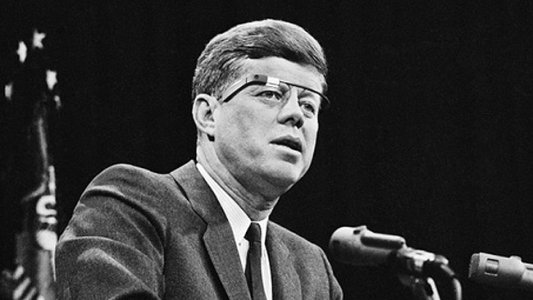
3. Wearable technology including watches, glasses and apparel will become part of millions of people's lives. This will also include connected devices providing more control of our vehicles, including better communication with them as well. This will create a new, early-adopter layer of consumer behavior and connectivity. Brand relationships and unique experiences will drive a new type of notification economy where brands and their products will have the ability to communicate with you about the things that matter the most on the devices you choose. Think Samsung Galaxy Gear smart watches paired to your phones. One of the biggest news items will be the consumer version of Google Glass - look for this around April, 2014 with a cost of $299. I believe the real opportunity for the industry is for content creation and data collection. Dealers will be able to build valuable libraries of images and virtual test drive videos with platforms such as Google Glass.

Activities such as notification alerts from companies, messages from your vehicle and the ability to control connected devices such as the lights and thermostat in your home. Hello Internet of Things. It's here. Other items contributing to changing our mobile behaviors will be shape-shifting mobile devices with bendable glass. Eventually we won't all be clinging to devices in our hands like cigarettes. How is this going to impact the industry? Massive consumer behavior changes as users will continue to explore new ways of staying connected with the things that are important to them.

LYFT.jpg

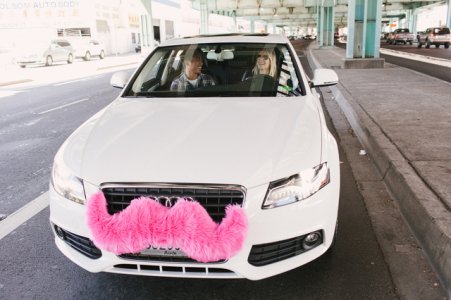
4. Ride sharing will explode into new markets further changing driving habits and ownership expectations of younger drivers. Leaders such as Uber and Lyft will continue to influence large city driving habits as they continue their massive growth, enter mid-size markets and become a mainstream solution for locals and travelers. Both companies are seeing an incredible revenue surge; Uber does $20 million per week in revenue while Lyft is growing 6% per week! Other companies such as Sidecarr, Hailo and Gett will help push this change as well. This could mark the beginning of a cultural shift as their user base grows and the concept of ride sharing becomes an acceptable ownership alternative.

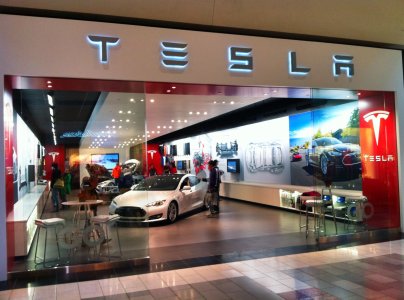
Tesla-Showroom.jpg

5. Tesla showrooms will grow more than 60% as their product line continues to expand with the introduction of the SUV, possibly a pickup truck and eventually a lower cost, entry level sedan. Showrooms could swell from 52 to 80+ and provide even more convenience to a specific segment of buyers. State dealership laws will continue to be challenged and test widely accepted standards. The industry infighting will continue for years; a recent ABI Research study indicated the electric car market shouldn't begin to make a significant impact to the traditional retail market until 2020.

This equates to the 150,000 estimated EV's expected to be sold this year globally year increasing to 2.36 million units in 2020 - growing approximately 48% per year. Should traditional dealers be concerned about these numbers in the short term? The biggest sellers are currently the Nissan Leaf and the Tesla Model S. Nissan sold 16K+ units in the 1st nine months of the year and Tesla sold 9900 units.

old-office.jpg

6. Internal marketing departments will continue to add specialists who focus on their individual areas of expertise. Highly focused automotive search performance officers will become integral members of the marketing teams. Dedicated social media individuals and/or small content teams will continue to expand and work closely with the marketing department, the search team and even the dealership staff to drive the socially aware ecosystem every store should have in place.

A State of Word of Mouth Marketing Survey stated that total social media advertising spending will reach $4.6 billion this year, up 35% from $3.4 billion in 2012; looking ahead, they see social media ad spending climbing to $8.22 billion by 2015. This would indicate a total annual growth rate of around 35% over the next two years. This growth will require highly skilled, dedicated professionals who are prepared to manage these efforts effectively.

What do you think? Have any big predictions for 2014?

For more of Eric's yearly predictions check out his previous posts:
2018 Automotive Marketing Predictions – DealerRefresh

5 Automotive Marketing Predictions For 2017 – DealerRefresh

4 Predictions in 2016 for Car Dealerships – DealerRefresh

4 Predictions That Will Affect Car Dealer Performance in 2015 – DealerRefresh

6 Predictions That Will Impact Automotive Retailing in 2014 – DealerRefresh

Dealer ThinkTank Review 2013 with Kevin Frye

abrams-tank.jpg

Is this a Dealer ThinkTank?
I have seen an M1 Abrams tank while serving in Desert Storm, but never a Dealer ThinkTank, so when I heard about a brand new conference that was going to have its very first event in my own backyard of Cincinnati, I had to attend. And of course, that means I am going to share my experience with you!

What is a Dealer ThinkTank? Well, the only armor it has in common with the M1 Abrams is that perhaps some of the hosts wear Under Armour sportswear under their suits. Dealer ThinkTank is a group of leaders in our industry that look to share ideas, strategies and solutions for front-line dealers. The hosts include Todd Smith, Jerry Thibeau, Joe Webb, Jeff Kershner, Allan Cooper, and Eric Miltsch, each of which have experience in the industry in different areas.

Twitter Alert! - looking for some great folks to follow on Twitter? I have done my best to link each person's name in this review to their Twitter page. And if you are strong enough to handle my sarcasm, feel free to follow me @kevinfrye1, and of course don't forget to follow DealerRefresh / Jeff Kershner)

dealer-thinktank-visits-jeff-wyler-1024x762.jpg


The Dealer ThinkTank team visits the Jeff Wyler Automotive Family
The Best Car Dealer in Cincinnati! Cincinnati is the home of the Jeff Wyler Automotive Family, and I invited the Dealer ThinkTank team to visit our brand new headquarters for a facilities tour with a follow-on discussion. Some of the things the Dealer ThinkTank team were able to see included our modern training facility, our in-house car museum, and our in-house studio (where they watched as we were filming commercials). Best of all was our follow up presentation and discussion on current industry issues. One could quickly see that we had a room full of folks with strong opinions and insight on the future of automotive, and I feel we could have gone on for hours if I had not set a deadline.

Joe Webb loves Skyline, Montgomery Inn, and LaRosa's... Since Joe Webb has some Cincinnati ties, I only felt that it was appropriate that the Jeff Wyler Family treat the Dealer ThinkTank team to dinner at the famous Montgomery Inn Boathouse. I think everyone left with a full stomach and a smile on their face before the big event the next day.

Eric-Miltsch-and-Cliff-Banks-enjoy-Montgomery-Inn-1024x768.jpg


Eric Miltsch and Cliff Banks enjoy some Montgomery Inn ribs in Cincinnati

Location Location Location! Wow - I have been to a lot of conferences, but I must share that the location and setup for the premiere Dealer ThinkTank was first class. A room was setup at the Hilton Netherland in downtown Cincinnati which was decorated beautifully for Christmas. The training room was spacious, with chairs and tables up front for the presentations, and round tables in the back for discussion. There was plenty of great food and drinks, and I would rate an A+ on location and hospitality - great job!

Is this The Right Stuff? The attendees (about 40 in total, mostly dealers) were greeted with all of the hosts getting together on the stage to welcome us, and to share what we would expect for the rest of the day. Seeing these guys lined up on the stage kind of reminded me of the Mercury 7 being introduced by NASA (now who remembers that movie?) I found that many of the people present had traveled up to 4 hours (driving) to attend, and there were many new faces, which I feel is a positive, as many dealers do not have the budget to support travel to one of the bigger events. The Jeff Wyler team had several people attending, and I also saw industry leaders like Ric McCoy, Ben Freedman, Shawn Clos, Cliff Banks, and more.

Dealer-ThinkTank-team-1024x768.jpg


Kicking off Dealer ThinkTank Cincinnati

Live Chat on steroids? I know that Todd Smith is great at Live Chat with websites, but how about actual Live Chat in front of a live audience? Todd talked about "If I Could Go Back into Retail Today", and it was a pleasant surprise for me to see Todd talk about a different topic than I have heard over the years. We were given a list of 10 changes that Todd would make if he were back in the trenches of automotive today, and how he would best address some of the challenges we face.

While I agreed with much of what Todd presented, I think a red flag was raised when Todd suggested a BDC approach in redesigning the sales organization of a dealership. This is a HOT topic in the industry at this time and one that I feel is risky to position with in a conference like this. You could dedicate an entire conference to "To BDC or Not to BDC", and many dealers that took the BDC route several years ago have realized that what they felt was a band-aid to solving their problems of not getting their sales reps to do what they are supposed to do has only created MORE problems. In fact, later during the day during our roundtable discussions, much of the conversation I had with other dealers was how they were struggling with BDC issues. As a dealer who is in the trenches, I disagree that BDC is a solution for the best way to retail today, but I did agree with Todd that if you implement it, you need to restructure pay plans. Let's face it, if your sales reps want to have someone else do the work they don't want to do, they should not expect to continue to be paid the same as before, as the BDC is a tremendous additional expense. Oh boy, see what I mean, this topic can take a life on its own very quickly...

Dealer-ThinkTank-panel-1024x768.jpg


The Dealer ThinkTank panel listens to Jerry Thibeau

Are you overwhelmed trying to keep up with all of your reports? Todd hit the nail on the head that future eCommerce leaders need to leverage Business Intelligence to make better business decisions. This would be a tool that encompasses all of your key performance indicators in one area so as to quickly see the performance of your dealership, as well as make the best decisions to improve your business. I also learned that ActivEngage had a new tool in that area that I look to get a full demo on in the upcoming weeks. Todd - you are a great speaker, I really enjoyed the session.

Who is this California Surfer model guy? Next up was a new face I was not familiar with. Some hotshot named Jeff Kershner who acts like he owns his own website. I must say I was a bit overwhelmed with his celebrity. In fact I thought Glamour Shots had gone out of business years ago, but when I saw Jeff's headshot, I knew he must have found the last open Glamour Shots franchise to get that wind-blown, seductive look down just right. (wow, if this publishes, Jeff must really like me, lol).

jeff-kershner-1024x768.jpg


Jeff Kershner tries on the new fashionable Google Glass look

Crush them under the treads of your tank! Jeff spoke about How to Crush Your Reputation using modern strategies and solutions. My favorite point that Jeff shared was something I have not seen addressed yet at a conference - what do you do with shoppers who are in your showroom using a mobile device (aka "Showrooming" - your new Twitter hashtag - #showrooming)? "If you leave them alone, they will be on their phone" stated Jeff, so of course that means we must never leave these people, right? No, why not give the customer YOUR mobile device, and have them use it while you visit the sales tower. Encourage them to use one of the many great OEM apps, or outside solutions like CarStory that can continue to engage and build value with your shopper when you are busy working their deal, and discourage them from "showrooming" you...

Just call him the Glass-man.  It was a real pleasure for me to meet with Eric Miltsch, who is one of the forward thinkers of our industry, and is very smart to boot. On a side note, Eric is one of my must follows on Twitter, he has surprised me with several great finds on new trends and stories in automotive, along with Cliff Banks. Eric presented "Mastering Effective Content and Search Engine Marketing Strategies". One of his key points was that a dealership can use Google Auto Correct to identify great ideas for content to create and share for your automotive shoppers. I used this same concept last year with a video I created to show what car shoppers think about dealers. This is a very easy way to let Google work for you, great point Eric.

Eric certainly delivered on sharing some very advanced ideas and techniques using structured data in Google Webmaster tools, using all 20 tracking spots in Google Analytics, and more. While I was able to grasp everything Eric shared, my fear is that most of the attendees were a bit overwhelmed with the high level of material that Eric was teaching. I think a challenge that Dealer ThinkTank will need to consider is "Who is your audience" and ensuring they can reach each of their attendees. Eric, my only suggestion would be to work hard to keep it simple, as many of the smaller local dealers that will find appeal to attend Dealer ThinkTank might struggle with the level of your material.

kevin-frye-eric-miltsch-google-glass-1024x768.jpg


Two "glassholes" in a stare-off contest

Show me the money! Many folks know that if you sit up front in one of Jerry Thibeau's presentations, it literally pays as he throws out cash to the front rows. I guess Jerry had a rough night at the casino as he only hit me in the head with a Buffalo nickel, ouch! Jerry presented "The Great Internet Sales Assessment", which was a very useful area for each dealer present, as he reviewed process maps, training your staff, and holding your people accountable. A key part of the presentation was sharing the results of mystery shops of several dealers present, including my own, and while much of the insight and critique was good, I had to strongly disagree with some of what was presented.

There is a difference between idealism and realism... For ALL trainers in the industry, listen to not only myself, but all of the other dealers in the trenches today. The danger in consulting is that every day after you leave the dealership arena to become a trainer/consultant, you often become more disconnected with the reality of what is really happening on the front lines. While it may be ideal to state that auto- responders should not be used during work hours, the reality is that many shoppers would never receive anything from many dealers if they did not get an auto-responder. Further, a well written auto-responder can be incredibly efffective and actually begin to successfully engage with your car shopper before you speak with them directly. Another point to consider - whenever you submit a form to a retailer online, you will always receive a "confirmation email" (aka auto-responder). Our shoppers have been conditioned to expect that.

Of course it is ideal to have personal emails sent to all shoppers. However, It is reality to realize it is not only difficult to get your folks to do that consistently, it is also difficult to get them to do it with proper grammar, etc. I am tired of hearing that "long emails do not work". The reality is that OEM's drive the required content in these initial manually sent emails that make them so long, but I can also show you that these are the most opened, clicked on, and replied to emails we use. My overall concern is to make sure you are aware of OEM requirements, and the reality of operating in a modern dealership before broad recommendations are made. And as always, Jerry did a great job - he is a great friend that I respect immensely (I just respectfully disagreed with some key points).

C'mon Dave, give me a break! One break, coming up... (who knows what classic song features that line from the control room - go ahead and comment!) We had a great lunch followed by some breakout sessions with our peers to address key challenges that each of us face (attendees were surveyed before arriving and the ThinkTank panel assigned groups to work on the various topics during the breakout). Well done, this is a great idea, and each of our hosts sat at a table to moderate the discussion. At the end of the day, each of the tables had someone present their solutions to the challenge they were given.

shawn-klos-ric-mccoy-cliff-banks-1024x768.jpg


Shawn Clos, Ric McCoy, and Cliff Banks join the attendees at Dealer ThinkTank

Is Joe Webb's sister a top selling author named Charlotte? Joe Webb talked about "Earning Trust in the Digital Age" and I loved several of his catch-phrases. "Don't play catfish" - are you that dealer that looks and sounds great online, but when the shopper finally meets you in person, you don't even begin to behave or appear like you indicated??? Or "A basketful of kittens falling out does not help you sell cars". Ouch, that certainly sounds like a lot of the social media solutions that dealers are sold today. If you are telling me that posting cute pictures or asking open-ended questions on social media is not the way to sell cars on Facebook, then a lot of social media gurus are going to be out of work.

How about changing up the way you spiff your sales reps, like offering an incentive for the best dealership review? I also liked Joe's statement that a modern day sales manager is not in touch with what is going on in his dealership if he does not have a CRM dashboard open on his desk. Joe wrapped up a strong session with a personal experience he had with Walt Disney World that carried great impact. Lots of great content, in fact I think Joe could have run several sessions with the ideas he shared. Great passion Joe!

Wasn't one of the Mercuy 7 Astronauts named Cooper? Wrapping up the day was Allan Cooper. While many confuse this Aussie with one of the dancers from the Thunder Down Under, Allan spends his time these days sharing his wisdom in helping other dealers excel. This was my first time meeting with Allan, and I found Allan to be passionate about changing the industry for the better, and his presentation on "Culture Eats Strategy for Breakfast" rang true with me because it addressed a key problem in automotive. There is not a "quick fix". The successful dealer of the future will take the more challenging - but right - approach in changing the culture of their dealership to best meet the needs of our future customers. Allan has a tremendous strength in understanding how to mine one's own database and focusing your time there to increase revenue for your dealership. He is right, and the good news is that with modern day CRMs, big data, and more, a dealer can extract a lot of value from their current customer base. It was a sincere pleasure to meet you Allan.

The dealer presentations and "judging" of the best ideas segment was a bit rough, but for a first event, it brought forth some good content for everyone to benefit from. Each of the hosts then took the stage again for a final "question and answer" panel, which was followed by something I found very impressive. Dealer ThinkTank has decided to "walk the walk" when they talk about "giving back" by choosing a local charity at each location they visit to present a check to. A check was presented to a local food bank in Cincinnati on behalf of Dealer ThinkTank and its attendees - well done!

Dealer-ThinkTAnk-giving-1024x768.jpg


Dealer ThinkTank gives back to the local community

Tisk Tisk Tisk, or Misc misc misc... There was a "product showcase" in the middle of the day by CallSource, the primary sponsor of this event. While there is often a lot of opinion that "vendors should not pitch" their products during presentations, I think that if we as dealers benefit from vendors sponsoring the majority of the cost of a training event, it is only fair that we give them an opportunity to have at least five to ten minutes to share their current solutions and/or products (which, by the way, should be one of the reasons you attend one of these events as you can find great new partners for your dealership). Congrats to CallSource who gave a great presentation by the way, which was not a direct pitch, but clearly shared the benefits of how telephony can help your dealership significantly.

My final two cents...  The training and conference market for automotive eCommerce is becoming very competitive. A dealer could fill a full time schedule with all of the conferences and training events now being offered through the year. It is becoming more and more difficult to differentiate oneself from others, especially when most of the events seem to feature the same speakers you see at all of the other events.

With that said, my humble assessment is just that - focus on humility. I think that any material shared must be closely considered versus the idealism of the idea vs. the reality of implementation and execution in the dealership. I believe that Dealer ThinkTank addresses a large part of our market that cannot afford to attend the larger conferences, and this enables them to get great automotive talent in an area closer, and more affordable to them. With that in mind, these are often smaller dealerships that might not have the significant resources that larger dealerships have, and the material should be focus on strategies that are within their abilities.

Dealer-ThinkTank-Cincinnati-1024x768.jpg


Great folks at the premier Dealer ThinkTank in Cincinnati

Congratulations on a job well done!  Putting together a conference like this and having your first event is a tremendous amount of work. I believe Kelli Holloway at ActivEngage gets a lot of credit for doing the hard work on most of the logistics (and you did very well!) For the rest of you - great news - the second Dealer ThinkTank event will be in Dallas in January. Merry Christmas to each and everyone of you that is working hard to make our industry better every day!

Sound off now! I would always love to read your comments.

Contact At Once! Buys Outsell's Chat Business

Minneapolis, MN and Alpharetta, GA – December 11, 2013 – Outsell (www.outsell.com) and Contact at Once! announced today that Contact At Once! has purchased Outsell’s Direct Chat business and the companies have entered into a strategic agreement to integrate Contact At Once! live chat software with Outsell’s Digital Engagement Platform for mutual customers.

Outsell CEO Mike Wethington said that the company decided to spin off its Direct Chat business so that it could focus on the development of the next generation of its Software-as-a-Service (SaaS) Digital Engagement Platform, which allows automobile manufacturers, agencies, marketing associations and individual dealers to share in the development of brand-consistent, analytics-driven, cross-channel marketing programs.

“We feel strongly that chat is an essential part of an automotive dealer's cross-channel arsenal, and came to the conclusion that we could best serve our clients’ needs by partnering with the company who is the market leader,” says Wethington. “Contact At Once!'s strong track record in the industry, glowing dealer recommendations and innovative products made them the hands-down choice.”

The two companies are also teaming to integrate Contact At Once! live chat software with Outsell's Digital Engagement Platform for mutual customers, enabling features such as:

  • Tightly integrated dealer chat performance reporting
  • The ability to directly engage with consumers browsing inventory -- not only on dealership websites but also third party sites, social media, online advertising, mobile ads and more -- via both chat and text
  • Flexible options for answering chats and texts, including self-service and managed
  • Mobile-optimized options for chat and text connections

Dealers with Outsell-branded Direct Chat on their websites were transitioned to Contact At Once! software and services today. Other dealers serviced by Outsell’s chat center will have the option to migrate at a later point in time. Outsell and Contact At Once! are providing partners and customers with detailed transition plans.

“We are pleased to welcome our new customers to the Contact At Once! family and we look forward to partnering with Outsell on the development of new innovative digital engagement solutions for our mutual customers,” says John Hanger, Contact At Once! Chief Executive Officer.

About Outsell LLC

Outsell (www.outsell.com) is a digital marketing Software-as-a-Service (SaaS) company that is transforming the way automotive brands engage with consumers. Recognized by Inc. magazine as one of the fastest-growing companies in America, the company’s award-winning Digital Engagement Platform enables its clients to engage with consumers in an analytics-driven, brand consistent manner from the national to local level. Outsell drives measurable incremental sales for five of the top automobile manufacturers in North America.

About Contact at Once! Contact At Once! software boosts engagement by making it easy for consumers to connect with auto dealers and ask questions at the moment their interest is piqued. More engagement can translate into more sales, and that’s why 13,000 dealers, the world’s busiest automotive classified sites and many automotive manufacturers rely on Contact At Once! to build relationships with online shoppers. For more information, visit www.autodealerchat.com.

What Are You Tracking?


Demo to Write-Up to Close or Appointment to Show to Close?

I’m on a quest.

I thought this was a simple quest – but I’m in danger of failing.

My quest: change a common belief from the Old School.

I thought it was simple because the changes to the business over the last 15 years have been monumental, historic, and undeniable.

Some day, we may look back at this point in time and equate these changes to selling cars to how the assembly line changed production or the silicon chip affected computers.

So surely, there would be little resistance to minor shifts in process and measurements as a result of these mammoth changes.

Case-in-point:

Tracking Demo to Write-Up to Close has always been important – even critical. Our model dictated that the Test Drive was possibly THE most important checkbox on our Road To The Sale.

Why?

A look at the industry pre-internet provides a clear answer.

The Dealership was the place where people would come to SHOP for vehicles.  People would arrive at the dealership to see colors, to ask questions, to make comparisons, to get brochures.  If you wanted to know something about a vehicle, you had to go to a dealership and ask a Salesperson.

When you saw that new car in your neighbor’s driveway, and you got interested, you couldn’t pull out your laptop and look it up.  What were your choices if you wanted to see what engine that car has, or options for engines? What are the color options? How much did that car cost? 

To get your questions answered, you had to go to the Dealership.

At the Dealership, we had a process in place to turn Shoppers into Buyers NOW.

Up on the lot looking at colors: Meet & Greet, Qualify, Selection, Hood-N-Trunk, Demo, Trial Close, Write-Up, Delivery.

Up on the lot asking about price: Meet & Greet, Qualify, Selection, Hood-N-Trunk, Demo, Trial Close, Write-Up, Delivery.

Up on the lot wants a brochure: Meet & Greet, Qualify, Selection, Hood-N-Trunk, Demo, Trial Close, Write-Up, Delivery.

All these Ups on the lot for different reasons, and we know that the more often we can get them to a Test Drive, the more cars we’re gonna sell – our Closing Percentage goes through the roof when we get that customer behind the wheel!

So tracking Demo to Write-Up to Close is the most important statistic if I want to ensure a fat paycheck every month.

It all made sense.

Until, it all changed.

It changed when the Up Bus broke down. Customers do not come to the dealership anymore seeking answers to their questions.  You know it as well as I do how many customers know more about their particular interest than your best salesperson.

Customers do not need to visit the Dealership to see colors, engine options, prices – so they don’t!

But, they do need to interact with the dealership if they want to drive and buy a vehicle. So, naturally this phenomena has necessitated a shift in focus – from getting them in a car to getting them in the dealership.

The Ups are still “there,” just not where you can physically see them.  They are “shopping” your store at midnight, in their underwear, on their couch with no pressure, no hassle – no Salesperson. And often, they even let us know they are there: they send us the magical Internet Lead or even pick up the phone.

Quick Question: on the Road to a Sale, where does Meet-N-Greet fall in relation to Demo?  Before the Demo, right?  In other words, if there’s no Meet-N-Greet, there’s no Demo, right?

And if customers have no need to come to the Dealership other than to drive a car, is it as important to track those test drives as it used to be?

Today, the Appointment statistic is the old Demo statistic.  We need to sell appointments before we sell cars.  Want to sell more cars and make more money, track Appointment to Show to Close. Work is setting better appointments so more show, and watch your closing percentage soar.  Think about it: how many appointments who show do not purchase?  I’ll bet that’s a small number.

OF COURSE it’s still important to get customers behind the wheel of the car!!  You’re not going to sell many vehicles without test drives!  But the reality of today’s business is that, when customers are actually on the lot, a high percentage are already there with a test drive in-mind, so test drives should be a very high percentage of on-lot activity anyway, rendering the Demo statistic less meaningful.

Simple right? No?

What’s more important in your book?  Demo to Write-Up to Close or Appointment to Show to Close?

I wonder how many industry leaders scoffed at the assembly line or poo-poo’d the silicon chip…

The Most Important Page on Your Dealership Website

I’ve always considered a dealership’s home page to be the most critical page on the site.  It makes sense right?  Most people enter on the home page and my mom always told me, “you only get one chance at a first impression.”

Mal Kenney disagrees.  I recently attended a presentation by Kenney, Van Tuyl Digital Marketing Manager, on the state of digital marketing in automotive.  Kenney and his team deploy more than a million dollars per month in search and see almost 5 million monthly visitors across their dealerships.  So he knows a thing or two about dealership websites, and he says that mom and I are absolutely wrong.

Mal shared research that strongly suggests the best predictor of website conversions is the number of Vehicle Detail Page (VDP) Views per visitor session.  That may not be super surprising, but let’s dig in and consider what that really means.

When looking at VDP views against conversion rate, the correlation is undeniable.  His study showed:

A 0.14 increase in VDP views per customer corresponded to a 62% increase in conversion rate. Real talk: Visitors who view more VDPs are more likely to call, email, or chat.

Why?  These visitors:

  • Are more engaged and interested.
  • Have been exposed to more of your inventory and are more likely to find something worth converting about.
  • Are low funnel shoppers which often means previous research and a desire to learn more about a specific vehicle / features

If we can agree that more VDP page views are good, it stands to reason that having VDP pages that will keep your shoppers shopping is just as critical as the home page which starts their journey.

I could go on and on about displaying 20+ non-stock photos, giving accurate pricing, and using a great vehicle summary to increase and improve VDP conversions . . . .but, I won’t because you already know that.

I want to instead hit on a key piece of Mal’s presentation where he discusses the places you are most likely to find those highly valuable shoppers.

When he segregated the traffic sources of his millions of monthly visitors, he found a healthy balance of organic and paid search visitors along with plenty of direct and referral visitors.

Cool.  That’s great (actually it’s boring).  So what?!

What interested me was his revelation that search traffic SIGNIFICANTLY outperformed the other sources in that all-important VDP views category I discussed earlier.

Paid Search Shopper:

- 25% more likely to view a VDP than a referral shopper

- 70% more likely to view a VDP than a direct shopper

Organic Search Shopper:

- 97% more likely to view a VDP than a referral shopper

- 270%! more likely to view a VDP than a direct shopper

But, Mal!  What does this mean!!

Put simply, Kenney shared, “Search traffic converts the best.”

Why?

Search visitors are the same shoppers who view multiple VDPs and demonstrate the characteristics of a serious low funnel shopper discussed above.  It’s the same group of people.  That means the place you need to go to find them is the search engine results page.  Real talk: Google, Bing and Yahoo.

At this point, you should be saying, “So I know that search brings good shoppers to my site, but it sure looks like Organic does a whole lot better than Paid.  What’s up with that?”

The difference in paid vs. organic likely demonstrates the brand effectiveness of the dealers’ third party efforts on sites like Cars.com and AutoTrader.  Organic search visitors have often already found the dealership and inventory that they like during their previous research. So when it’s time to call the dealership, they simply search on branded terms to see what else the dealership has to offer in terms of inventory.  Check out your highest performing keywords.  Is it your dealership name?  Duh!!!

Paid search visitors on the other hand are just a little higher up in the funnel and still shopping dealerships, therefore are more likely to be allured by the top of page real estate given to paid search results and spend a little less time shopping inventory while they settle in a on a dealership.

Key takeaways #1:  VDP views per visitor is directly tied to conversion rates.  

Action Items

  1. Make it easy to get to your VDPs! If you are getting less than 0.5 VDP views per visitor, then it’s time to have a heart to heart with your website provider.
  2. When they find your VDP, make them glad they did by following the basics of VDP content shared above.  Perhaps more importantly, make it easy for them to pick up the phone and call you about the car they are looking at with a prominently displayed phone number that connects them to someone is sales.

Key takeaways #2:  Search Visitors are more likely to seek out and find your VDPs

  1. Stay active in SEM and measure everything.  If your cost per conversion isn’t based on both calls and form fills, you’re doing yourself a disservice. Once you have the data, consider shifting budget to search to drive more of those visits.
  2. Make sure you own top position for your dealerships branded terms in SEO. This makes it easy for the shoppers that you ALMOST have via your third party publisher sites to find you and become leads on your main website.  The good news is that SEO is all about content.  So if you take care of business on key takeaway number 1, this one should take care of itself.

Want more in store appointments? Drive those VDP views!

Big thanks to Mal Kenney for the fantastic study and permission to share some of his findings.

Patrick Elverum is the COO of Century Interactive and oversees enterprise level partnerships and product development.  He has a knack for the big picture but loves the nitty gritty of digital marketing as well.  Patrick lives in Dallas with his wife and wonderful children.

Google Introduces Their New Review Monitoring System

Latest HOT Discussion in the Forum


EdBrooks_community_profile.png


Blumenthal Reports - Google Introduces Review Monitoring System

Mike Blumenthal (the KING of local marketing) reported today, "Google Intros the Mother of All SMB Review Monitoring Systems"

According to Mike,

"The system, a new module for the updated Places for Business Dashboard, not only shows Google based reviews to dashboard owners and managers, it shows every review that Google has found from the thousands of review sites that it indexes. In addition Google is providing review analytic reports for both the volume and rating stats of reviews from Google and across the web."

"Google has also integrated the owner review response option directly into the dashboard and will now be showing those responses in the review panel on the front page of serps"

My main question, how will it treat automotive specific sites like DealerRater and dealer ratings on Cars.com?

Click here to comment in the forum

Social Media Can (and should) Be a Business Driver


[highlight color="#F0F0F0" font="black"]This is part 2 in a 4 part series about automotive social media strategies that are emerging to help car dealers get true benefit. It’s not just about branding. It’s not about auto-feeding marketing content. With the right strategies in a place, dealers can drive foot traffic and website visitors in a way that can help them sell more vehicles and drive more service customers.[/highlight]

Your Social Media is Rocking. Now What?

By now, you've completed stage 1 and 2, localizing your fan base and getting the algorithms to like you. If you haven't done that yet, refer back to part 1 of this series, The Three Stages of Social Media. Social media is a tool that can drive business to your dealership, but you have to get your presence in order before taking the next steps.

Once you have your presence rocking, it's time to put your social media to work. You're getting interactions with your posts, People are liking, commenting on, and sharing what you're putting up on your Facebook page. You're getting some good play on Google+, Twitter, and Pinterest. You're doing everything well except you are only hearing of anecdotal instances when actual buyers mention that they follow you on social media. This is where Stage 3 comes into play.

Stage 1 and 2 were first and second gear. Stage 3, which is the art of using social media to drive verifiable and steady business to your dealership, is actually comprised of three more gears. Here, we're going to be talking about the easiest and most cost-effective way to drive that business. In the next two articles in this series, we will be talking about the other two ways that you can use social media for driving business. In this article, we're going to cover news feed business posts.

Before we do that, it's important that you understand two important mentalities surrounding social media in hopes of erasing any misconceptions.

Understanding WHY Social Media Works to Drive Business

One common misconception is that social media is in the same marketing group as both search engine optimization and reputation management. There are definitely connections between social media and these other two disciplines. Social media can have a dramatic effect on search engine rankings while reputation management involves sites that are directly entangled with social media. Review sites are social by nature, but that doesn't mean that the same types of strategies apply.

Both search engine optimization and reputation management are passive marketing practices. That sounds worse than it is. By passive, I mean that buyers need to be the active participant. You cannot go after consumers through SEO or RepMan. They need to be in the market searching for a car in order to find your organic listings or reviews.

Social media is proactive. You are taking the buying message to them on their turf (their Facebook news feed, their Twitter stream, etc). They may be in the market for a car today. They may not be. Either way, planting that seed before or during their buying process can be easily done through social media. The same holds true for service; some clients have seen that it's more powerful for driving service business than sales. They may not be thinking about getting their brakes replaced today but if your brake special pops up, it may prompt them to recall that they did hear their brakes squeal embarrassingly as they were picking up their kids from school.

The other misconception is that the mentality behind advertising on social media is like PPC or classified advertising. The reality is that the closest cousin to social media advertising is actually television. People don't think to themselves, "I need to buy a car soon. Let's turn on the television and hope we see an ad," but for many dealers television advertising has a dramatic effect on their overall business.

The same holds true for social media advertising. People don't go to Facebook to see your ads just as they don't turn on the television to see commercials. They do, however, expect both to be part of the price they pay to get entertained. In both cases, they're visiting Facebook or watching television to enjoy themselves. The ads that are part of the equation may be a nuisance to them but they have been accepted. More importantly, they work.

Some say that social media advertising is like "TV-lite" because the cost is so much lower, but the reality is that the number of local people reached per dollar spent on social media is much higher than television. You can spend $10,000 in television advertising to reach 100,000 locals or you can reach $1,000 in Facebook advertising to reach 50,000 locals. The math is pretty easy.

3rd Gear: Mixing in the Business Message

If a network television channel played only television shows with no commercials, they'd quickly be out of business. Conversely, if a television channel played nothing but ads, they wouldn't get any viewers. Having the proper mix of entertainment, education, localization, and business messages is the key to running a proper television channel as well as an effective social media presence.

For this exercise, let's talk exclusively about Facebook. The strategies that apply to the other social networks are easier and less time-consuming but they're also less effective than Facebook.

First, you must find the appropriate voice. I would happily debate anyone who believes that there needs to be irrelevant content on their Facebook page. Between automotive content, customer stories, employee stories, and community interest posts, there's simply no reason to post pictures from 9gag. You may decide that you want to be the automotive hub for your local community with images and videos highlighting cars new and old as well as industry news presented with a localized spin. Your voice may be one centered around community events and charitable support, using your reach to spread positive messages from organizations outside of the dealership. You could make your voice reflect the humanity of the dealership, highlighting the stories that surround both customers, employees, and local "stars" (a little league sports team, for example).

A combination of these and other ideas can work very nicely as well. Diverse or focused, you need to pick a voice that you can effectively communicate.

Once your voice is established, it's time to work in the "brief commercial breaks". This is the tricky part but it can be extremely effective when done right. The idea is to present a variety of business messages that you work into the mix. It could be once a week, once every four posts, or at whatever frequency works best for your dealership's goals. Don't overdo it as these messages can turn people off, but don't be the television network without enough commercials, either.

There are two things you need to remember when crafting your business-driving messages. First, you have to make it social. If you're posting a spotlight vehicle, for example, don't say, "Check out this week's manager's special [link]." Tell a story. Make it social. Find a vehicle that you can communicate about in a post with a good story behind it. Highlight the things that make it special or worthwhile, then go into the details about buying the vehicle itself.

The second thing to remember is to make it as trackable as possible without letting the tracking get in the way of the effectiveness. I covered this a bit on my blog post, "Trackable vs Verifiable: The Social Media Conundrum". For example, if you're posting a used vehicle special that links to the vehicle detail page, either be sure that you website vendor's analytics can distinguish between standard traffic to the page and traffic that came from your post, or add a marker at the end. Putting a question mark followed by the word "Facebook" at the end of the VDP's URL is normally enough to give it distinction without taking away from the intent.

With that understood, I've put together a few examples of business-driving posts that you can play with. The important part is to use these as a guide and come up with your own as well. There are hundreds of ways to skin this particular cat. Find the ones that work best for you.

  • Individual Vehicle Specials - If you think that your inventory tab on your Facebook page is enough to drive business, you're incorrect. Just as with television ads where a handful or even a single car is used to represent the inventory, so too does it work on Facebook. Link to the VDP or special page. Tell a story! Again, and I cannot stress this enough, make sure that you're telling something compelling about the vehicle. What you post doesn't just represent that individual car. It tells of the care that your dealership puts into understanding each individual vehicle. That particular car might not match their needs but if the way that it's presented is compelling enough, they'll still click through and look at other inventory items.
  • Service Offers - This is the only example that is harder because of space limitations. When you run a Facebook Offer, you have to be very concise with your wording. Make it original, catchy, Facebook-exclusive (very important!), and limited. It doesn't cost any more to run 1000 offers than to run 50, but you don't want to run too many. In this case, you're playing the exclusivity card so if you have a limited number, people will take it all more seriously. $14.99 oil changes, for example, can be a great way to get people into the service drive. What they spend from there on other services... well, that's really up to your service adviser.
  • OEM Offer Enhancement - It doesn't get any trickier than this one, but it can also be the most rewarding as a single post can drive multiple showroom visits. This is where you play off the the offers that the OEM is already populating on television and enhance them to make your dealership stand out as "the" dealer to go to for this offer. One clever technique that I saw was a "double down" of a particular rebate. Obviously, this can only be done on certain offers where there's enough room to make it work and certain OEMs are very strict about that sort of wording, but even if you're just reiterating the message that they hear on television or other OEM advertising, you'll be able to take a larger piece of the pie.

There are plenty of ways that you can get your appropriate business driving message out there. The key to all of these is through Facebook advertising. There are those who use post "Boosting" often - I'm not a big fan of it. Individualized ads promoted properly through Power Editor is the way to go (sorry, that's a whole other blog post).

In the next two parts of this series, we will go over the other two ways that social media can drive business: using Facebook buyer-intent data as well as your own custom audience data and utilizing your own dealership's team. Until then, please feel free to comment here or contact me directly if you have any questions.

5 Ways to Get Your Email Ready for the Holidays


Are Your Dealers Holiday Email Campaigns READY?

Yep, it's soon going to be that time of year when online retailers start flooding your customers' inboxes with messages of good tidings and special savings. Here are some tips you can implement NOW, to help your dealer's email marketing be more successful in December.

1. Beat the Rush

Does your dealership normally send out a Happy Holidays email?

Why not get ahead of the inbox stampede and send a Happy Thanksgiving email instead. You might want to mention that a gift card to your service department makes a great gift by helping the recipient maintain one of their most expensive investments.

2. Re-engage Your List

If you have folks on your email marketing list that haven't opened an email from you in a year, do you really think that during the busy holiday season they will start? Probably not.

How about sending a re-engagement campaign to them now to find out if they still want to receive your emails? Clearing out these inactive emails will really help your deliverability in December.

One of the things email providers look at in determining whether or not to deliver your email to the inbox or the spam folder is how engaged your email list is and getting the inactive folks off helps your open rate.

3. Check Your Calendar... Twice

Thursdays in December typically have the highest email volume. Saturdays surprisingly often have great open rates. When you are planning which days to send your emails, keep in mind these events:
Black Friday is November 29
Small Business Saturday is November 30
Cyber Monday is December 2
Green Monday is December 9

4. Reduce Holiday Fatigue

During the holidays it is more important than ever not to fatigue your email database. Take a moment and make sure your sales and service departments are spacing out their email campaigns. Keep your sales force informed as well about which days you'll be sending out campaigns.

5. Make Sure Your Message is Mobile Friendly

Open rates on mobile devices will likely increase even more in December as people are busy running holiday errands. Make sure your message renders well on mobile devices or you will quickly find that busy customers will hit the delete button.

If you want to see what your email looks like on 68 email platforms and mobile devices, take a look at EmailOnAcid.com

What other email tips and tricks do you use during the holiday season?

Brands Expected to Respond to Tweets in One Hour

Great post Jessica. In a case like this, I highly recommend the Mention app. I am notified as soon as a tweet is posted containing our dealership name. It allows me to respond very quickly. It also works if someone makes a post on our Facebook page. We had a customer just this week unfortunately that had a bad experience in our service department. She posted her experience on our FB page. By being able to respond quickly, we were able to address her needs and satisfy her issue before she posted to other review sites.

Brands Expected to Respond to Tweets in One Hour

First - CONGRATS on your Spartan Race, that is awesome :)  I cannot agree more with this piece, however the cynical side of me says that many dealers still struggle to answer a new Internet lead promptly, let alone respond to a tweet. I believe this will take some time, and for many dealers, an outside vendor will assist them in detecting tweets with their name and responding on behalf of the dealership.

Brands Expected to Respond to Tweets in One Hour

This past weekend I ran Spartan Race, a three-mile obstacle run in Milwaukee, WI. While anxiously waiting for the race I was thinking more about going to my favorite Milwaukee restaurant, AJ Bombers.  And, by favorite I mean they have the most incredible bloody marys known to man (and woman).

Sure, the race would be great – but, man, the reward of walking my tired feet onto the peanut shell laden floor and sit my exhausted body down at a table just waiting to be filled with burgers and bloody marys was going to make my Saturday complete.

Well, then this happened:

@whatjruthsaid uggh, sorry to hear that. Saturday and all, plus Bucks home opener. Hope to serve you soon.

— AJ Bombers (@AJBombers) November 2, 2013


@whatjruthsaid Check out @CafeBenelux, their bloodys are the absolute best.

— Chelsey Jo (@ChelseyJo) November 2, 2013

According to a recent article, consumers are expecting a response from a brand mention in one hour. That’s right, just one hour. 53 percent of consumers expect acknowledgement within an hour however, that number rises to 70 percent if the tweet is negative in nature.

And, they’re right.

I wanted AJ Bombers to know I was disappointed I couldn’t stay there. And, more than that I wanted them to acknowledge my disappointment.

Now, let’s just close our eyes and go to pretend land for a minute or two. Let’s say instead of tweeting about being bummed I couldn’t get to my bloody mary I was tweeting about not finding a vehicle when I stopped on the lot to look.

What might those tweets look like:

“Pretty bummed the dealership didn’t have the black Civic Si with black rims I saw on their website.”

On a basic level you have to ask yourself: Who is listening when someone mentions your dealership on social media?

Going further than that, you must ask yourself: Are we doing everything we possibly can to stay proactive so when we are reactive we are taken seriously?

Let’s look at the stats:

Tweet to a brand and expect response in...

Immediately - 14 %

5 minutes to 30 minutes - 19 %

Angry Tweet to a brand and expect response in...

Under one hour - 72% that's up from 53% if the tweet is neutral in nature.

Unanswered Tweet to a brand...

An overwhelming 60% will take a negative action toward that brand.

At the end of the day I didn't get my bloody mary from AJ Bombers, but I did discover a new place in Milwaukee and there's nothing wrong with that. Right?

Question:

If they’re engaging with you via social media chances are they are on the move. What happens if you sent them a link with an alternative vehicle to look at? How does it look on their mobile device?

Filter